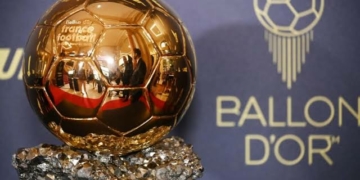

From a European football honour in 1956 to a global symbol of individual excellence, the Ballon d’Or has shaped legacies, fuelled rivalries and sparked decades of debate over who deserves to be called the world’s best player.
When England and Blackpool legend Stanley Matthews received the inaugural Ballon d’Or in 1956, few could have imagined that the award would grow into one of the most coveted individual prizes in world sport.
Nearly seven decades later, the golden ball has become a powerful symbol of footballing excellence, capable of elevating careers, defining generations and provoking fierce arguments among players, supporters and pundits.
From the elegance of Matthews to the brilliance of Johan Cruyff and Michel Platini, and from the emergence of African football icon George Weah to the extraordinary rivalry between Lionel Messi and Cristiano Ronaldo, the Ballon d’Or has mirrored the evolution of the game.
Yet, beyond the glamour of the ceremony and the prestige attached to winning it, one question continues to divide football: does the Ballon d’Or truly identify the best player in the world, or is it a reflection of performances, trophies, reputation and the judgement of voters?
Where it all began
The Ballon d’Or was established by French football magazine France Football in 1956 to recognise the best European footballer playing for a European club.
Matthews, renowned for his dribbling ability, technical brilliance and longevity, won the first edition at the age of 41, beating Real Madrid forward Alfredo Di Stéfano and Frenchman Raymond Kopa.
His victory set the foundation for an award that would become synonymous with individual distinction in a sport traditionally defined by collective achievement.
The early years were dominated by European footballers whose performances in domestic competitions and European club football brought them international recognition.
However, the award’s original eligibility restrictions meant that some of the world’s finest players could not compete for the prize simply because of their nationality.
That limitation would eventually change, transforming the Ballon d’Or from a European-centred honour into a global award.
From a European honour to a global prize
In 1995, the eligibility rules were expanded to include players of any nationality playing for European clubs. The change opened the door for Liberian striker George Weah, who became the first African footballer to win the men’s award that year.
Weah’s triumph, following outstanding performances for Paris Saint-Germain and AC Milan, represented a landmark moment for African football.
The award was opened to footballers worldwide, regardless of nationality or club location, in 2007, further strengthening its international standing.
These changes reflected football’s growing global reach, with elite players emerging from Africa, South America, Asia and other regions beyond Europe.
The Ballon d’Or was no longer simply a recognition of the finest European talent. It had become a global contest, although debates about representation, voting preferences and the influence of major European competitions have continued.
The winners who defined generations
Over the decades, the Ballon d’Or has recognised players whose influence extended beyond individual seasons.
Di Stéfano, whose performances helped establish Real Madrid as a dominant force in European football, won the award twice. Dutch great Cruyff claimed it three times, becoming one of the defining figures of the 1970s through his technical ability, intelligence and influence on the development of modern football.
French midfielder Platini won three consecutive awards from 1983 to 1985, while Dutch striker Marco van Basten collected three during a career marked by extraordinary finishing ability.
Brazilian Ronaldo Nazário, Frenchman Zinedine Zidane and Brazilian Ronaldinho also left their mark on the award’s history, representing different interpretations of footballing brilliance.
However, the modern era has largely been defined by the rivalry between Messi and Cristiano Ronaldo.
Messi has won the men’s Ballon d’Or eight times, while Ronaldo has claimed it five times. Their sustained excellence, individual records and success at club and international levels established a rivalry that dominated football discussions for more than a decade.
Messi’s triumph at the 2022 FIFA World Cup in Qatar further strengthened his case among those who regard him as the greatest player of all time. Ronaldo’s extraordinary goalscoring records, Champions League achievements and longevity have equally secured his place among football’s most celebrated figures.
Their rivalry elevated the Ballon d’Or beyond an annual award, turning the announcement of the winner into a global event watched by millions.
What makes a Ballon d’Or winner?
Determining the best footballer in a given year is rarely straightforward.
Goals, assists, dribbling, defensive contributions, creativity and consistency all provide evidence of individual excellence. Yet football is a team sport, and the success of a player is often closely linked to the strength of the side around him.
For some voters, individual performances should carry the greatest weight. Others argue that winning major trophies, particularly the UEFA Champions League and the FIFA World Cup, should significantly influence the outcome.
The debate becomes more complicated when a player delivers exceptional individual performances without winning major silverware, while another enjoys a successful season with a trophy-laden team.
A striker who scores consistently may attract more attention than a defensive midfielder who controls matches, protects the back four and allows his team to dominate possession.
Similarly, defenders and goalkeepers can find it difficult to compete with attacking players whose contributions are more easily captured by statistics and highlights.
These competing considerations help explain why the Ballon d’Or frequently generates controversy.
Although the award recognises individual excellence, voters must make subjective judgements about performances across different positions, leagues and competitions.
Controversies, snubs and unfinished arguments
The Ballon d’Or’s history is filled with decisions that have divided opinion.
Every year, supporters debate whether the winner was genuinely the outstanding player or benefited from the success of his club, performances at a major international tournament or the reputation built over previous seasons.
The absence of certain players from the winners’ list has also fuelled arguments about the award’s limitations.
Many football followers believe that individual brilliance can be overlooked when a player does not belong to a team competing for the biggest trophies.
Others question whether the voting system adequately recognises players whose contributions are less visible than goals and assists.
Such disagreements have become an established part of the award’s identity.
However, the controversy also reflects the Ballon d’Or’s importance. Few individual football awards generate comparable global attention, and the arguments surrounding its winners often continue long after the ceremony.
The award’s influence is therefore measured not only by the players who win it but also by the debates it inspires.
George Weah and Africa’s place in Ballon d’Or history
For African football, the Ballon d’Or carries particular significance.
Weah’s 1995 victory remains a historic achievement. He was the first African, the first player from outside Europe and the first non-European to win the men’s award under its then-expanded eligibility rules.
His triumph demonstrated that a player from the continent could reach the highest level of individual recognition in world football.
It also provided a powerful source of inspiration for generations of African footballers seeking recognition on the international stage.
Yet the limited number of African winners continues to raise questions about representation and the recognition of talent from the continent.
African players have delivered outstanding performances in major European leagues and international competitions, but the award has remained difficult to win.
Players such as Samuel Eto’o, Didier Drogba, Yaya Touré and Sadio Mané have enjoyed remarkable careers, contributing to the continuing discussion about why more African footballers have not claimed the ultimate individual prize.
Their achievements also highlight the distinction between being an outstanding footballer and winning an award determined by a specific voting process.
The Ballon d’Or remains an important measure of international recognition, but the absence of a trophy does not diminish the achievements of players whose contributions have shaped the game.
Prestige or popularity contest?
In the modern era, the Ballon d’Or operates in a football environment transformed by television, digital platforms, social media and global commercial interests.
Players are now followed by supporters across continents, while their performances are scrutinised through advanced statistics and constant video analysis.
This greater visibility has increased the award’s reach but has also intensified questions about the relationship between sporting merit and popularity.
A player’s reputation, international profile and performances in high-profile matches can influence public perception, even when the voting process is intended to assess footballing achievement.
Nevertheless, dismissing the Ballon d’Or as merely a popularity contest would overlook its historical significance and the expertise involved in selecting the winner.
The award provides a platform for recognising excellence across different generations, while its changing eligibility rules have made it more representative of football’s global development.
Its limitations, however, are clear: no single annual award can fully capture the contributions of every player or settle every argument about greatness.
Beyond the golden ball
From Matthews in 1956 to the global stars of today, the Ballon d’Or has evolved alongside football itself.
It has recognised technical brilliance, goalscoring excellence, tactical intelligence and extraordinary individual achievements. It has also reflected changes in the game’s geography, commercial reach and international influence.
For a winner, the award can become a defining moment, strengthening a legacy and placing a name among football’s most celebrated figures.
For those who never win it, however, greatness can still be measured through trophies, records, influence, consistency and the memories created for supporters.
Ultimately, the Ballon d’Or is both a prestigious individual honour and a reflection of how football judges excellence at a particular moment in time.
Its winners become part of history, but the award cannot provide the final word on who is the greatest player of all time.
The golden ball may recognise one footballer each year, but the enduring greatness of the game belongs to far more players than the names engraved in its history.
We’ve got the edge. Get real-time reports, breaking scoops, and exclusive angles delivered straight to your phone. Don’t settle for stale news. Join LEADERSHIP NEWS on WhatsApp for 24/7 updates →
Join Our WhatsApp Channel