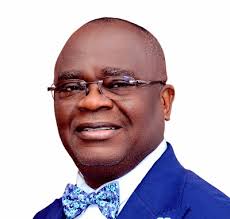
The managing director of the Nigerian Railway Corporation (NRC), Kayode Opeifa, has identified inadequate funding, low investment, vandalism and revenue leakages as the major challenges confronting the corporation.
Speaking during a recent television programme, Opeifa stressed that railway development is highly capital-intensive and requires stronger collaboration between the Federal Government, state governments and private sector investors.
“No developed country attained its current status without an efficient railway transportation system. For us, the major challenge is funding. Railway is highly capital-intensive. State governments and private sector investors must play a part,” he said.
He dismissed concerns about manpower shortages, noting that the corporation is well staffed with competent professionals. According to him, the real constraint lies in funding and infrastructure investment, not human capacity.
Reaffirming his commitment to repositioning the NRC, Opeifa said his previous experience managing Abuja rail services and overseeing transportation in Lagos has equipped him with the expertise needed to restore the corporation to its former glory.
“My past experiences in the management of Abuja trains and transportation in Lagos are driving me towards ensuring that the Nigerian Railway Corporation is brought back to its past glory,” he assured.
He revealed that the corporation is currently optimising existing assets while working to expand capacity.
Plans are also underway to transition to more electronic and electrical systems to reduce vandalism, eliminate revenue leakages and complete ongoing modernisation and network linkages.
Describing the NRC as an organisation recovering from a difficult period, Opeifa said the corporation had “just recovered from a very serious illness and is now in a convalescent state.”
He lamented that several African countries had outpaced Nigeria in railway development, while the country grappled with prolonged economic challenges. He also acknowledged that the bombing of the Abuja-Kaduna train service significantly set back progress in the sector.
Despite the setbacks, Opeifa expressed optimism about the future, saying ongoing reforms and improved security measures are gradually turning challenges into opportunities.
He disclosed that plans are underway to link Kaduna to Kano, extend the Warri -Itakpe line to Abuja, and connect Port Harcourt-Aba to Enugu.
Passengers on the Abuja-Kaduna route, he added, should expect an increase in train frequency soon.
Opeifa noted that the demand for additional locomotives and rolling stock remains high but described it as an opportunity for growth.
He also commended security agencies, including the Nigerian Army, Police, Civil Defence, Department of State Services (DSS), and local security groups for strengthening protection along major rail corridors such as Abuja-Kaduna and Warri-Itakpe.
According to him, the present administration has demonstrated strong commitment to maintenance, with faulty equipment being repaired and new assets procured.
He further revealed that the corporation is collaborating with several state governments and private sector stakeholders, with encouraging responses so far.
In addition, the NRC’s training schools in Enugu, Zaria and Kafanchan are being revitalised to reclaim their pivotal role in manpower development and technical training for the rail sector.
We’ve got the edge. Get real-time reports, breaking scoops, and exclusive angles delivered straight to your phone. Don’t settle for stale news. Join LEADERSHIP NEWS on WhatsApp for 24/7 updates →
Join Our WhatsApp Channel