West Africa confronts a myriad of crises that have in recent years affected children in the region in the most devastating way that demands urgent attention and that is why the ECOWAS Parliament has perhaps taken some bold steps to tackle these scourges.
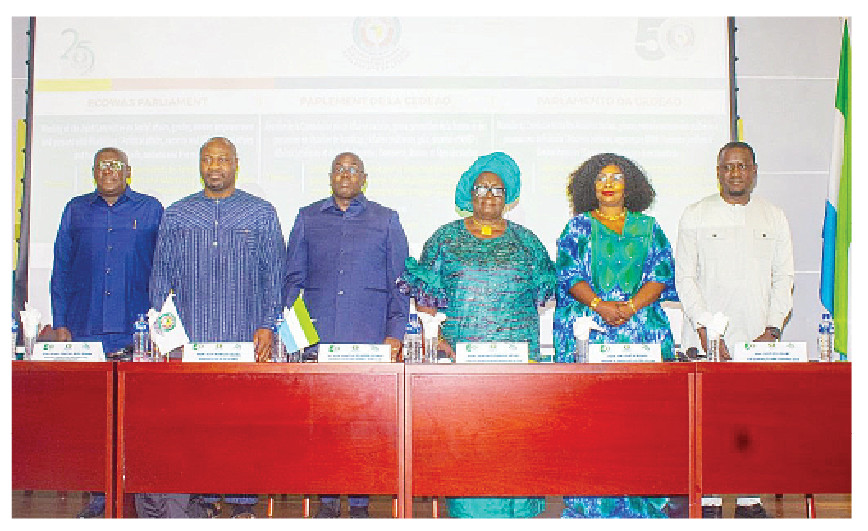
The recent ECOWAS Parliament Joint Committee meeting in Freetown, Sierra Leone centred on protecting children in street situations presented an avenue to strengthen policies, redefine objectives and refocus the priorities of the region to save the vulnerable children from the trap of poverty and deprivation found in the streets.
West African children in street situations are remarkably vulnerable due to a mixture of extreme poverty, systemic family breakdowns, and weak child protection frameworks. These children often dubbed “children of the street” are exposed to severe exploitation, violence, and health risks, with over 60% of trafficked victims in the region being children.
The region faces significant challenges in protecting children, with high rates of malnutrition, out-of-school children, and child labor. Armed conflict, particularly in the Sahel, has forced about 2 million children out- of- school and resulted in over 9,000 school closures and children are susceptible to armed groups for recruitment and sexual exploitation.
It is therefore incumbent on the regional legislators to be more intentional in addressing this crisis and save the future of West African children, especially by making laws to improve their health, education, agriculture and industry.
The consequences of neglect and poor investment in the lives of West African children are unimaginable if concrete steps are not taken to address this menace just as the Speaker of Sierra Leone’s Parliament, Rt. Hon. Segepoh Solomon Thomas, sounded over the rising number of children living on the streets across West Africa, describing the trend as evidence of deep-rooted systemic failures.
He said: “We assemble at a time when our sub-region stands at a critical juncture—one that calls for moral clarity, legislative courage, and coordinated action. The theme of this meeting, ‘Parliamentary Approaches to Safeguarding Children in Street Situations and Addressing Child Exploitation in the ECOWAS Region’, is not only timely but speaks directly to the conscience of our collective humanity.
“The Moral Imperative Children in street situations represent one of the most vulnerable and marginalized populations in our societies. Their presence in our urban and peri-urban spaces is not merely a social anomaly; but a reflection of systemic gaps-economic inequality, family disintegration, weak social protection systems, and, in some cases, the enduring consequences of conflict and instability.
“As legislators and representatives of our people, we must recognize that the plight of these children is not just an isolated welfare issue. It is intrinsically linked to broader questions of human rights, sustainable development, public security, and social justice. Every child forced into the streets is a silent indictment of our governance systems-and a call to action,” he noted.
He also called for stricter enforcement of existing legal frameworks and more rigorous monitoring of public spending on social protection programmes.
“The role of Parliament in addressing this challenge cannot be overstated. Our responsibilities extend beyond law-making; they encompass oversight, representation, and advocacy,” he added.
The Chairman of the ECOWAS Parliament Committee on Social Affairs, Gender, Women Empowerment and Persons with Disabilities, Hon. Veronica Sesay explained that the crisis calls for urgent action on the path of legislators and policymakers.
According to her, “It underscores the need for strengthened legal frameworks, effective oversight, and enhanced cooperation among Member States to ensure that the rights and dignity of every child are protected.
“This gathering provides an important platform for reflection, dialogue, and peer learning among our parliaments. Over the coming days, we will examine existing regional and national frameworks, explore the structural and socio-economic factors that contribute to children living in street situations, and identify practical strategies for strengthening child protection systems across the region.”
To address this huge crisis, policymakers must go beyond rhetoric and build stronger systems and sustained commitment. The lawmakers must also respond with urgency and resolve because the challenge requires more than routine engagement as the region is approaching a critical juncture that calls for decisive, coordinated action from governments and parliaments alike.
We’ve got the edge. Get real-time reports, breaking scoops, and exclusive angles delivered straight to your phone. Don’t settle for stale news. Join LEADERSHIP NEWS on WhatsApp for 24/7 updates →
Join Our WhatsApp Channel