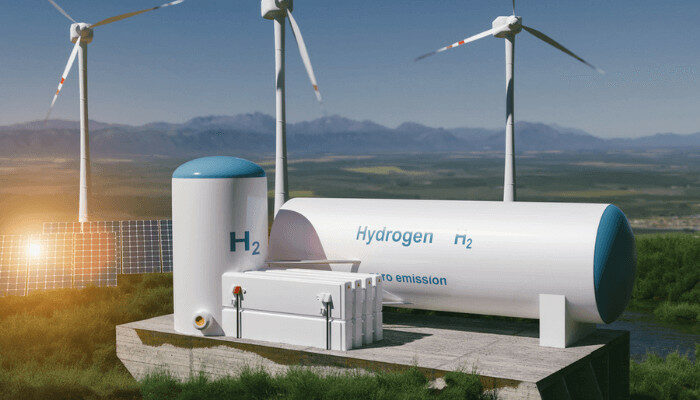
The 3rd German–Nigerian Hydrogen Symposium marked a major milestone in accelerating global drive to build a sustainable and inclusive hydrogen economy.
Co-hosted by the German Federal Foreign Office, the Federal Ministry of Budget and Economic Planning, the Ministry of Petroleum Resources, and implemented through the German-Nigerian Hydrogen Office (GIZ), the two-day high-level event brought together senior policymakers, industry executives, researchers, development partners, and international stakeholders to deepen cooperation between Germany, Nigeria, and the broader ECOWAS region on hydrogen technology, policy, and market development.
Anchored in Germany’s global H2-diplo-Decarbonisation Diplomacy programme, which leverages diplomacy to advance green hydrogen partnerships, the symposium underscored both countries’ shared commitment to reducing carbon emissions, diversifying economies, and building innovative, sustainable energy systems.
Central to the discussions was the official presentation of Nigeria’s National Hydrogen Policy Draft—an ambitious framework designed to unlock the country’s vast hydrogen potential, drive industrial decarbonization, attract long-term investment, and position Nigeria as a pioneering hydrogen hub on the African continent.
In her opening remarks, German Ambassador to Nigeria, Annett Günther, emphasised the strategic importance of the partnership in shaping a sustainable global energy future. “This gathering has become a vital platform where policy meets practice and vision transforms into action,” Ambassador Günther stated.
Ambassador Günther highlighted Nigeria’s competitive advantages, including abundant renewable resources, a dynamic private sector, and growing technical expertise.
She also noted that Germany’s updated National Hydrogen and Import Strategies reaffirm hydrogen’s indispensable role in decarbonising hard-to-abate industries.
The National Hydrogen Policy Draft outlines a clear roadmap for deploying green and low-carbon hydrogen to drive industrial growth, enhance energy security, create jobs, and strengthen climate resilience. According to the Hydrogen Policy Technical Working Group, comprising the Federal Ministry of Budget and Economic Planning and the Ministry of Petroleum Resources (Gas), the policy “positions Nigeria as a regional and global hydrogen leader while accelerating energy transition and industrial development.”
“This framework provides certainty to investors and signals Nigeria’s leadership in climate innovation,” Ambassador Günther affirmed, reiterating Germany’s commitment to supporting its implementation through the German–Nigerian Hydrogen Office in Abuja.
Discussions throughout the symposium focused on translating ambition into implementation, with strong emphasis on private-sector leadership.
Delegate of AHK Nigeria, Bastian Lidzba, stated that, “the success of the hydrogen economy depends not only on sound policy, but on strong partnerships, mobilised capital, and market-driven solutions.”
Reflecting on five decades of bilateral energy cooperation, Country director of GIZ Nigeria & ECOWAS, Dr. Markus Wagner, noted that, the German–Nigerian Hydrogen Office serves as a strategic platform to accelerate global energy transition while positioning Nigeria competitively in emerging energy markets.
We’ve got the edge. Get real-time reports, breaking scoops, and exclusive angles delivered straight to your phone. Don’t settle for stale news. Join LEADERSHIP NEWS on WhatsApp for 24/7 updates →
Join Our WhatsApp Channel