
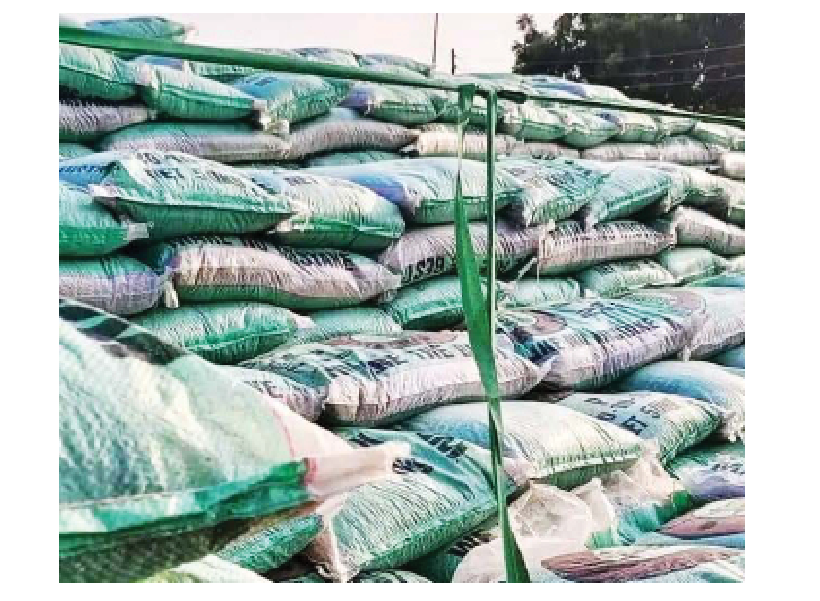
The federal government has taken a major step toward improving agricultural productivity and sustainability by validating a harmonised national fertiliser application manual designed to guide farmers across diverse agro-ecological zones.
Stakeholders validated the manual yesterday in Abuja at a national stakeholder validation workshop convened by the National Agricultural Development Fund (NADF) in collaboration with key public and private sector stakeholders, research institutions and development partners.
The harmonised manual is intended to replace fragmented and inconsistent fertiliser recommendations that have long shaped farm practices, often resulting in inefficient input use, declining soil health and uneven crop yields.
The new framework is expected to provide clear, science-based guidance tailored to specific soil and crop needs.
Speaking at the workshop, the executive secretary of NADF, Mohammed Ibrahim, said the manual was developed through a rigorous technical process that began with a pre-validation workshop in June 2025. He said the document benefitted from multiple rounds of review by experts, including national research institutes and the International Fertilizer Development Center (IFDC).
Ibrahim added that fertiliser remains a critical driver of productivity but warned that its benefits are lost when application guidance is unclear or poorly coordinated. He said a single national manual would help promote efficient nutrient use, protect soil health and strengthen food security outcomes.
He said, “Fertiliser is a major driver of productivity, but it only delivers value when it is applied correctly and responsibly. When guidance is inconsistent or fragmented, we lose efficiency, and we risk long-term damage to soil health. A harmonised national manual helps us promote better yields, smarter input use, and more sustainable farming practices.
The purpose of today’s workshop is clear: to validate the manual, agree on the final technical positions, and ensure it is practical for farmers, extension workers, and other end users across our different agro-ecological zones.”
In his remarks, the director of farm inputs support services, Ministry of Agriculture and Food Security, Abana Waziri Abba, said low soil fertility remains one of the biggest constraints to crop production in Nigeria.
He noted that decades of blanket fertiliser recommendations had failed to reflect variations in soil conditions and farmers’ economic realities.
Abba said the validation exercise marked a shift toward precision agriculture, with a focus on applying the right nutrients at the right rate, time and location. He said the approach would help address nutrient imbalances, reduce waste and improve both yields and farm incomes.
“By validating this manual, we are ensuring that farmers apply the right nutrients at the right rate, at the right time, and in the right place. Our collective objective is to transition from generalized and often inefficient practices to site-specific fertilizer recommendations that are scientifically sound, economically viable, and environmentally sustainable”, Abba said.
Stakeholders said that the validated manual would now move toward national adoption through extension systems and coordination with relevant institutions, ensuring that recommendations translate from policy to on-farm practice.
We’ve got the edge. Get real-time reports, breaking scoops, and exclusive angles delivered straight to your phone. Don’t settle for stale news. Join LEADERSHIP NEWS on WhatsApp for 24/7 updates →
Join Our WhatsApp Channel