

By Ibrahim Nasiru
The recent revelation by the Minister of Power, Olasunkanmi Joseph Tegbe, that over 300 containers of critical electricity equipment have been abandoned at Nigerian ports for nearly two decades is a staggering national tragedy.
It is the ultimate proof that Nigeria’s developmental crisis is often not a lack of funds, ideas, or policies, but deep-seated institutional sabotage and bureaucratic failure.
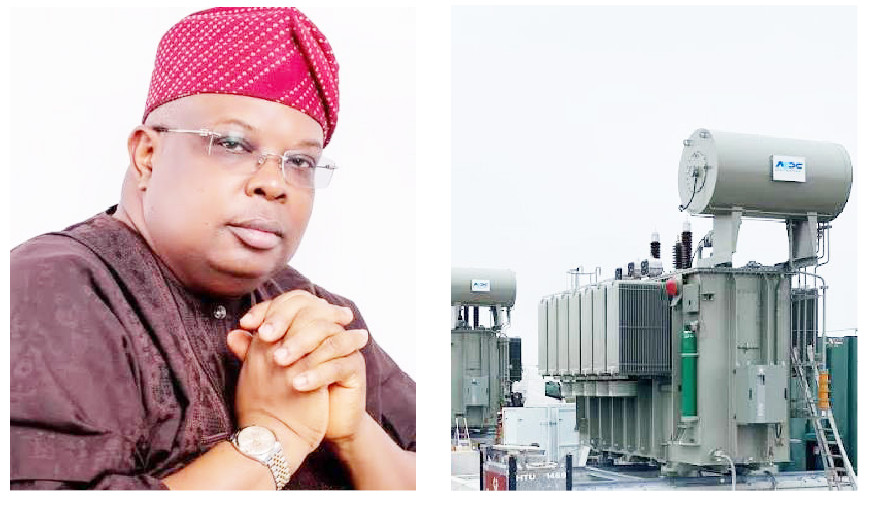
Consider the sheer insanity of the situation exposed after the recent Federal Executive Council meeting. These are not empty boxes; they contain high-capacity transformers, cables, switchgear, and vital transmission equipment imported from Germany and China. They were meant for the East and West Super Grids to raise our national transmission capacity from a miserable 5,000MW to 19,000MW, and to upgrade the vital Lagos-Enugu-Port Harcourt and Abuja-Kaduna-Kano power corridors.
Yet, while multiple administrations borrowed billions of dollars in foreign loans to fund the National Integrated Power Project (NIPP), and while small businesses, hospitals, and factories collapsed under the weight of near-constant grid failures, this critical equipment sat rotting at Apapa and Onne ports. Why? Because the Ministry of Power, the Nigerian Ports Authority (NPA), and the Nigeria Customs Service simply refused to coordinate and settle routine port charges.
For up to twenty years, spanning the Obasanjo, Yar’Adua, Jonathan, and Buhari eras, the state chose to accumulate heavy demurrage on specialized infrastructure rather than complete routine customs clearing. This explains the heartbreaking paradox of the Nigerian power sector: we have a theoretical generation capacity of 13,000MW, but our homes and industries remain in darkness because the physical equipment needed to transport that power was locked away in a port warehouse. This is not just an administrative lapse; it is economic wickedness.
The economic consequences of this institutional gridlock are devastating. While these transformers sat in the salt air of our coastal ports, Nigerian manufacturers were forced to spend trillions of Naira importing diesel and industrial generators. Small barbershops, tailors, and cold-room operators watched their livelihoods vapourize due to a lack of power. By locking up this equipment, the civil service effectively subsidized the generator economy while strangling local production and driving inflation through the roof.
While President Bola Tinubu’s directive to immediately clear and audit these containers is a highly commendable and necessary intervention, the real lesson here goes far deeper than a single emergency order. It exposes a civil service structure that is fundamentally broken and disconnected from national priorities. We cannot build a modern, competitive economy when vital national assets are treated like abandoned luggage by the very agencies paid to manage them.
Clearing the ports is only step one. The Ministry of Power must now ensure that the technical audit of these containers is swift, transparent, and completely free of further contract inflation. Technical experts must aggressively verify what is still usable and what has become obsolete after decades of neglect. Equipment that passes the test must be deployed to ongoing projects immediately, and those responsible for abandoning these containers for two decades must face institutional accountability.
Nigeria cannot run a modern economy on generators while its future sits stranded at the docks. True governance begins when we permanently break the bureaucratic bottlenecks that keep our nation in the dark.
Ibrahim Nasiru
Public Affairs Analyst
We’ve got the edge. Get real-time reports, breaking scoops, and exclusive angles delivered straight to your phone. Don’t settle for stale news. Join LEADERSHIP NEWS on WhatsApp for 24/7 updates →
Join Our WhatsApp Channel


