
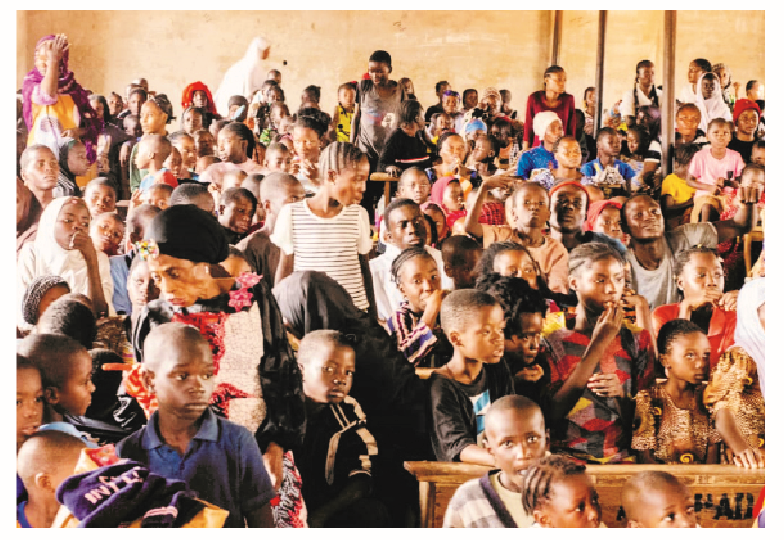
A group, Street Child of Nigeria (SCON), said it has enrolled 48,575 out-of-school children across Borno, Adamawa and Yobe states.
Announcing the successful completion of the Education for Every Child Today (EFECT) project, the group said the programme is a four-year intervention initiative that expanded access to education for tens of thousands of vulnerable and conflict-affected children.
The project was implemented by Street Child UK through its Nigerian partner, Street Child of Nigeria, in collaboration with the Education Above All Foundation’s ‘Educate A Child’ programme and supported by the Qatar Fund for Development.
SCON said, the programme is aimed at addressing barriers preventing children in the North-East from accessing primary education.
The group said the intervention achieved significant progress in school enrolment, infrastructure development, teacher training, and support for vulnerable households.
According to them, a total of 48,575 out-of-school children were enrolled into formal and non-formal education programmes during the four-year implementation period.
In addition, 5,157 caregivers benefited from livelihood support aimed at improving household income and sustaining children’s education.
The project also delivered infrastructure upgrades through 74 Temporary Learning Spaces and Learning Centres, alongside the construction, rehabilitation, or upgrading of 126 classrooms and related facilities across the BAY states.
To strengthen learning outcomes, EFECT trained 400 teachers and education personnel in child-centred and inclusive teaching methods. Community sensitisation campaigns reached 62,852 parents, traditional leaders, and other stakeholders, while 10,815 vulnerable children received child protection and case management services.
Speaking at the closing event, the country director of Street Child of Nigeria, Jummai Lawan-Musa, called for a more deliberate national response to Nigeria’s out-of-school children crisis, stressing that access to education must go beyond policy declarations to targeted interventions for vulnerable households.
She said the EFECT project, implemented in partnership with Education Above All and the Qatar Foundation since 2022, had transformed lives and strengthened communities affected by conflict and displacement.
Lawan-Musa described the initiative as more than statistics, calling it a story of renewed hope for children, families, and communities investing in education.
She emphasised that the project’s success demonstrated the importance of collaboration among governments, communities, and development partners in removing barriers to education.
The programme placed strong focus on reaching displaced and conflict-affected children. Through Temporary Learning Spaces, accelerated learning programmes, and community-based interventions, many learners who had been out of school for long periods were able to return, catch up academically, and transition into formal schooling.
She further noted that the project addressed economic barriers by supporting caregivers with livelihood grants and promoting community ownership of education, contributing to safer and more inclusive learning environments beyond enrolment figures.
As the project concludes, Street Child of Nigeria reaffirmed its commitment to ensuring that every child is in school, safe, and learning.
The organisation expressed appreciation to all partners, including the Education Above All Foundation, Educate A Child programme, Qatar Fund for Development, government authorities, implementing partners, teachers, caregivers, and communities.
It added that lessons learned from EFECT would continue to guide efforts to reduce the number of out-of-school children in North-East Nigeria.
The programme was delivered through three implementing partners — Poku Shodi, Rohe, and ZSF — reaching more than 80 communities across 20 local government areas. It combined education access, household economic strengthening, and child protection interventions.
A key feature of the project was household economic support, with about 65 per cent of beneficiaries being women, particularly displaced caregivers who received business grants, training, and savings support.
The programme also provided psychosocial support for traumatised children, family tracing for separated minors, and child-friendly spaces in conflict-affected communities.
SCON also highlighted collaboration with government authorities, noting that some trained teachers have already been absorbed into public service, strengthening sustainability.
Despite the achievements, the organisation acknowledged some challenges including insecurity, poverty, and weak learning outcomes, with many children unable to read or perform basic numeracy skills despite being enrolled in school.
It warned that enrolment alone is insufficient without improved learning quality, infrastructure, and foundational literacy support.
We’ve got the edge. Get real-time reports, breaking scoops, and exclusive angles delivered straight to your phone. Don’t settle for stale news. Join LEADERSHIP NEWS on WhatsApp for 24/7 updates →
Join Our WhatsApp Channel