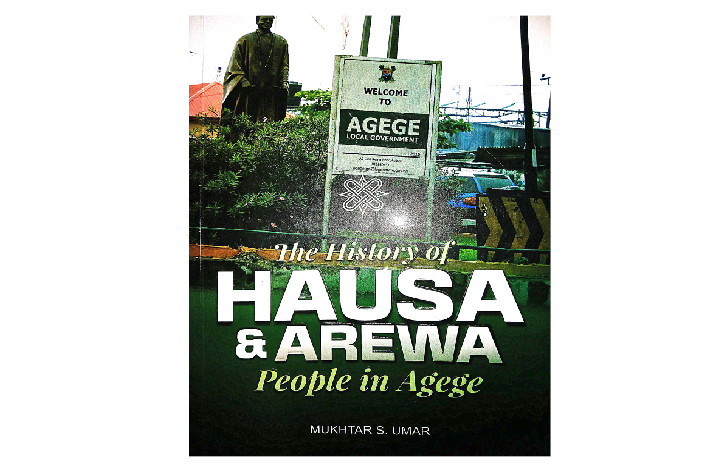
Reading Mukhtar S. Umar’s book reminds me of the title of the Ugandan scholar Mahmood Mamdani’s famous book, Good Muslim, Bad Muslim.
The book is an attempt by an author to document the history of the land of his birth, beginnings and roots.
Umar is not a trained historian or even a social scientist; he is a graduate of the sciences.
It is one of the wonders of this book and the immense significance of the author’s effort and achievement.
Sometimes we meet strange things where we do not expect them.
Sometimes we encounter real, profound scholarly history where we least expect to find it.
Going through this book was more than a shock; it was a pleasant surprise.
The amount of information packaged in these pages, drawn from eyewitnesses, principal actors and the direct participants in the drama and their children, is invaluable and will form a ready source of information for researchers in their quest for further documentation and research on the history and sociology of Yoruba- Arewa relations and economic development.
Although he says he is not writing a social history but “the origins, economic and political life of Agege Arewa community” (p. 415), it is well documented.
There is a lot of information here on the social history and even the sociology of the Arewa people in Agege.
The History of Hausa & Arewa People in Agege, hereinafter referred to as “The History”, is divided into 13 chapters with an epilogue, 2 appendices, and 2 tables.
The first three chapters are chiefly introductory, offering a panoramic overview of Lagos, the Hausa and Arewa people, and the origin of Agege.
The next three chapters deal with the Hausa settlement in Agege, the origin and development of Zango (corrupted to “Sango” by the Yoruba, as in Sango Ota), and the foundation of a new society.
The remaining chapters deal with the business and socio-political settings of Arewa, the development of religion and culture, and other matters of interest to the community.
Agege emerged as one of these settlements where northerners settled at Zango to buy kolanuts from Yoruba women, the wives of the farmers, who picked the kolanuts and interfaced with the Hausa buyers.
These are then transferred to the North, from where they moved to a foreign land.
Large sums of money changed hands in these business interactions, and absolute trust prevailed.
The development of the railway around this period, between 1895 and 1912, and the establishment of Agege as a station made it easier for Hausas to send their consignments to the North, thereby furthering this trade and fostering Agege’s development.
As kolanuts were railed to the North, livestock were brought down to the South to Lagos in return for the teeming population of Lagos.
It was a win- win, symbiotic relationship.
This author has done a commendable job for generations by interviewing many of the old eyewitnesses among Hausa elders before they died and getting their stories firsthand.
The book periscopes the astounding harmony between the Hausa community of Agege and their Yoruba hosts. Yoruba are accommodating, actually the most accommodating people in Nigeria and love strangers especially when you have something to contribute to development.
The Hausa too are naturally honest, humble, simple and trustworthy. Hence the two tribes got along together well for years and Agege was the first place that furnished this interaction. This relationship would result in intermarriages, unions, social groups, partnerships etc.
This book also contains some useful and very important information on the First Republic politics especially the internal battles between the two parties in the North. The Northern People’s Congress (NPC) led by Ahmadu Bello and the Northern Elements Progressive Union led by Aminu Kano.
These two parties were active in the South along ethnic lines and made Agege a hotbed of tension especially during those uncertain days around 1965/66.
The Fulani and elites flocked to NPC while the Hausas flocked to Aminu Kano and NEPU.
Because of the progressivism of Aminu Kano NEPU had a working relationship with Action Group, the party controlling the government of the West. A NEPU member Alhaji Anchau was elected as the first Hausa man to become a councillor in the Ward C in Agege spreading from Oke- koto to AP under AG banner.(p.230) The Hausa of NEPU worked with AG together and attended all the meetings especially in those days after the rigging of the first post- Independence election.
Thus throughout the “Operation wetie” that followed no Hausa man or even any northerner was hurt or killed in Agege because of this working relationship.
The AG combatants spared Agege.(p.238) This shows that contrary to some claims in certain quarters there had been working political relationships between Yoruba and Hausas both before and after Independence.
This book also contains a whole chapter about the religious practice of the Hausa community, of the good things and bad things some do around or before the Ramadan fast – the sheer hypocrisy, double- dealings and “monafiquing”, the fights, the division and eventual factions and separation.
In short there were good Muslims and bad Muslims in Agege at the turn of the century; and even now.
The History is a good book containing real and vital information that are useful for researchers, writers, politicians, development agents etc.
By interviewing those old people and getting their stories before they died he did an immeasurable service and awesome job for generations and placed the community of the learned in his debt.
Sometimes history is too important to leave alone for historians.
Umar has done a good job, he has laid a foundation from where others can build.
We’ve got the edge. Get real-time reports, breaking scoops, and exclusive angles delivered straight to your phone. Don’t settle for stale news. Join LEADERSHIP NEWS on WhatsApp for 24/7 updates →
Join Our WhatsApp Channel