
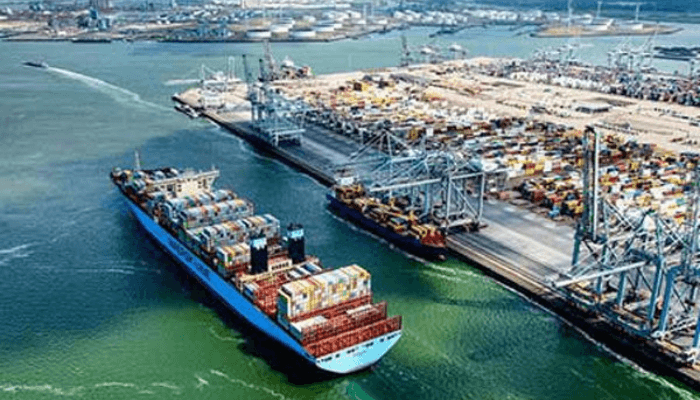
Insecurity and rising operational costs have continued to undermine the viability of Nigeria’s eastern ports, with industry stakeholders warning that shipping lines are increasingly avoiding the corridor despite efforts to reposition the facilities as viable alternatives to Lagos.
Investigations by LEADERSHIP reveal that vessels heading to eastern ports are often compelled to pay illegal fees, locally referred to as “deve” to suspected militants before gaining access to port channels, a development that has further inflated the cost of doing business in the region.
The eastern port network, comprising the Onne Port Complex in Rivers State, Rivers Port Complex in Port Harcourt, Calabar Port in Cross River State, and Delta Ports in Warri, was strategically positioned to decongest the overburdened Lagos ports and serve the South-South, South-East and parts of the North.
However, persistent security concerns and structural limitations have continued to discourage vessel traffic.
Confirming the situation, the President General of the Maritime Workers Union of Nigeria (MWUN), Comrade Francis Bunu, said insecurity has significantly reduced vessel calls to the eastern ports, noting that operators now factor in unofficial security payments when planning routes.
According to the MWUN PG, the governors of the South-South States must come together to secure the waterways against militancy in the Niger Delta.
“Let us hold our governors responsible, they have security votes, what do they do with it.
If the governors of those states come together, they will achieve more and solve the security problem bedevilling the seaports.
“If Delta and Rivers State come together to tackle this menace, businesses in this region will rather come to the port than Lagos seaports, and things will be cheaper.
“I believe a businessman will want to discharge his cargoes closer to his customers. For instance, Port Harcourt, to Asaba, to Adamawa is closer, so the government should fix the security issue at the seaport.”
Industry observers note that beyond direct payments to non-state actors, shipping companies are also burdened by elevated insurance premiums tied to the historical classification of Nigerian waters—particularly the Gulf of Guinea—as a high-risk maritime zone. These war risk premiums, though gradually declining, continue to raise freight costs and reduce the attractiveness of eastern port routes.
Also speaking, a maritime analyst, Adakole Ejegbudu, said that despite significant improvements in maritime security within Nigerian waters, eastern ports continue to suffer low patronage due to structural and commercial challenges.
Ejegbudu, a professional affiliated with the Flotilla Academy of Marine Technology and the Westlawn Institute of Marine Technology, noted that public discourse often overemphasises insecurity as the primary reason for the underutilisation of eastern ports, while ignoring more fundamental constraints.
He explained that the most critical issues limiting traffic to ports in the eastern corridor are narrow access channels and shallow drafts, which make them unsuitable for large vessels.
“The most important reason why shipping companies prefer Lagos and why the eastern ports are underutilised is that the river channels leading to some of them are too narrow to accommodate large vessels. Some also have shallow drafts. These are the fundamental issues,” he said.
According to him, while ports like Onne play a key role in the oil and gas sector, their specialised operations limit their capacity to handle containerised cargo, further reducing their competitiveness compared to Lagos ports.
Ejegbudu recalled that efforts were made under the administration of former President Muhammadu Buhari to improve access to some eastern ports through capital dredging projects in Calabar and Warri. However, he stressed that channel depth and width remain major constraints.
Regarding security, the analyst acknowledged that the Gulf of Guinea, once regarded as one of the world’s most dangerous maritime zones, has seen a marked decline in piracy incidents in recent years.
“In the decade leading up to 2020, most piracy incidents globally occurred in the Gulf of Guinea. But in the last four to six years, the situation has improved greatly, with even reports of zero piracy incidents,” he noted.
He attributed this progress to enhanced maritime surveillance and enforcement, particularly under initiatives such as the Deep Blue Project, which has strengthened Nigeria’s control over its territorial waters.
However, he pointed out that the legacy of past insecurity continues to influence global shipping decisions, especially in insurance.
“Shipping is closely tied to insurance. Because of the reputation our waters had in the past, war risk premiums are still being applied. Shipping companies and their insurers are still operating based on that memory,” he explained.
Ejegbudu emphasised the need for deliberate efforts to reshape international perceptions of the safety of Nigerian waters to reduce insurance costs and attract more vessels.
“We need to change the narrative and consistently communicate that our waters are now safer. That will help build confidence and reduce the fear of piracy and other threats,” he said.
He further highlighted that shipping is largely demand-driven, noting that the concentration of economic activities in Lagos also plays a major role in determining port preference.
“Shipping is a derived business. The market for most goods is concentrated around Lagos more than other regions, and that naturally influences where vessels go,” he added.
Stakeholders argue that unless security concerns are decisively addressed alongside infrastructure upgrades and policy reforms, eastern ports may continue to operate below capacity, missing out on opportunities to drive regional trade, reduce logistics costs, and ease congestion in Lagos.
They stress that restoring confidence among global shipping lines will require a coordinated approach that combines improved security architecture, sustained channel dredging, competitive port pricing, and aggressive investment in hinterland connectivity to unlock the full potential of the eastern maritime corridor.
We’ve got the edge. Get real-time reports, breaking scoops, and exclusive angles delivered straight to your phone. Don’t settle for stale news. Join LEADERSHIP NEWS on WhatsApp for 24/7 updates →
Join Our WhatsApp Channel