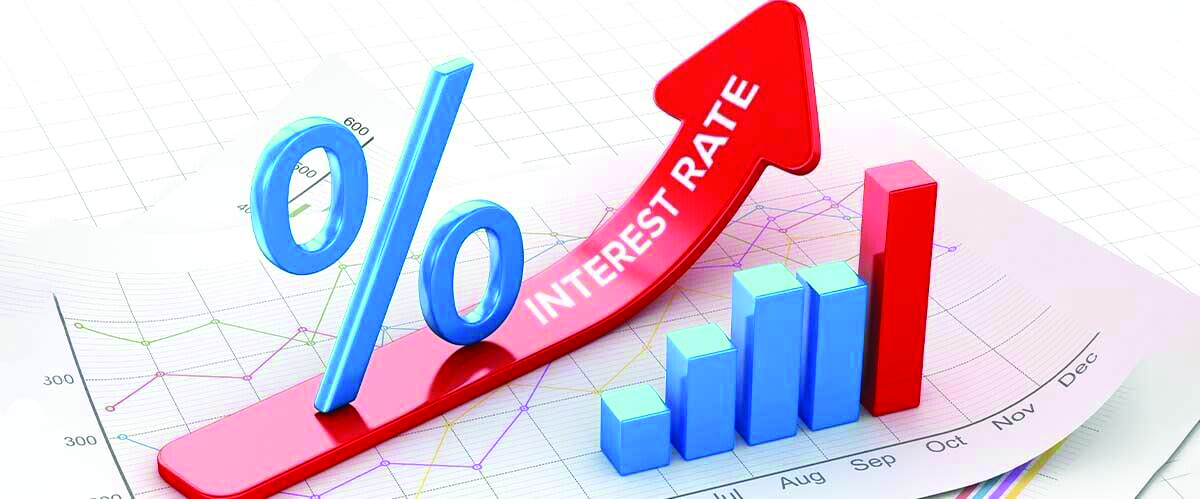
Manufacturing companies listed on the Nigerian Exchange (NGX) are allocating a substantial portion of their resources to debt repayment, which is overshadowing investments in new capital projects. Due to high interest rates, manufacturers are spending N6.02 trillion on debt repayments, while new capital project investments are only receiving N2.74 trillion.
In 2024, manufacturers shifted their focus from expansion to financial consolidation, channeling more cash into debt servicing than into new capital projects.
An analysis of 37 publicly listed manufacturers and service providers by BusinessDay reveals that these firms spent roughly N6.02 trillion on loan repayments last year. This is more than twice the N2.74 trillion they earmarked for capital expenditure.
That N6.02 trillion figure encompasses not only principal but also interest outlays and non‑bank instruments such as commercial papers, marking a 113 percent surge over the N2.83 trillion spent on debt service in 2023. While manufacturers were already allocating more to repay loans than to invest in fixed assets a year ago, the gap widened significantly in 2024, underscoring a pronounced shift toward balance‑sheet repair.
Although aggregate revenues rose for many of these companies, several still recorded steep losses, straining liquidity. This squeeze was exacerbated by rising borrowing costs: Nigeria’s benchmark monetary policy rate climbed to 27.5 percent, and in some cases, commercial‑bank lending rates spiked to 42 percent, rendering credit both prohibitively expensive and hard to secure.
CEO of the Centre for Promotion of Private Enterprise, Dr. Muda Yusuf, highlighted that there needs to be a different strategy for inflation targeting.
“We cannot focus solely on the fact that inflation is high and automatically assume that tightening monetary policy is the only solution,” he observed.
“Fiscal policy must play a larger role in tackling inflation. We are relying too heavily on monetary instruments, and that reliance is becoming excessive.” Muda noted.
Dangote Cement led in absolute figures, investing N836.8 billion in CapEx but repaying nearly N1.62 trillion in loans.
Despite a healthy profit profile, Dangote Cement accessed N1.82 trillion in fresh borrowings during the year—underscoring the high cost of capital.
MTN Nigeria also illustrates the trend. Its capital spending dropped 19 percent to N486.3 billion in 2024 (from N597.6 billion in 2023), while debt repayments climbed to N988.7 billion, more than double its CapEx.
After incurring over US $1.56 billion in foreign‑exchange losses, MTN Nigeria and Airtel Africa aggressively cut its FX liabilities. MTN Nigeria reduced its letters of credit from $416.6 million at end‑2023 to $20.8 million by year‑end 2024.
Nigerian Breweries followed, disbursing N692 billion to service borrowings against N142 billion in new CapEx. Although the brewer drew N371.2 billion in new loans, the skew toward debt repayment, bolstered by N543.3 billion raised via rights issue, highlights a clear preference for liquidity preservation over capacity expansion.
A similar pattern emerges at International Breweries, which allocated N645 billion (including N516.2 billion from its rights issue) to loan repayments but only N71.7 billion to capital projects—barely 10 percent of its total debt‑service outlay.
In the BUA group, BUA Foods and BUA Cement spent N551 billion and N322 billion, respectively, on debt servicing. BUA Foods invested N31.6 billion in CapEx, while BUA Cement devoted N291 billion, primarily to its Sokoto plant.
One of the most consequential outcomes of this deleveraging trend is the trade‑off between immediate financial resilience and long‑term growth. Nigerian firms are effectively choosing to shore up their balance sheets rather than expand capacity or modernise operations. This “short‑term orientation” reflects the challenging cost‑of‑funds environment in which they operate.
“The inflationary pressures we’re facing are largely driven by supply‑side challenges,” Muda Yusuf explains.
“Firms must choose between allocating cash to new investments that drive future expansion and using the same funds to reduce high‑cost debt obligations.”
He added, “If we want to bring down the cost of credit meaningfully, development finance must be prioritised and scaled up significantly.”
As borrowing costs remain elevated and liquidity stays tight, the danger is that underinvestment today could throttle productivity and competitiveness tomorrow.
The question now is whether policymakers and corporate leaders can recalibrate their strategies. They must leverage fiscal tools, bolster development banks, and restore access to affordable capital to ensure that deleveraging does not come at the expense of Nigeria’s industrial future.
While heavyweights like Dangote Cement and MTN Nigeria have maintained capacity to access and service debt, smaller and mid‑tier producers have felt the squeeze most acutely.
We’ve got the edge. Get real-time reports, breaking scoops, and exclusive angles delivered straight to your phone. Don’t settle for stale news. Join LEADERSHIP NEWS on WhatsApp for 24/7 updates →
Join Our WhatsApp Channel