Nigerians may soon face higher pump prices for Premium Motor Spirit (PMS) and Automotive Gas Oil (AGO), alongside rising inflation following escalating tensions around the Strait of Hormuz, one of the world’s most critical oil transit routes.
The development followed a declaration by Iran’s Islamic Revolutionary Guard Corps (IRGC) warning that the strategic waterway could be closed to vessels linked to countries supporting the United States and Israel.
“We will prevent the passage of any ships to or from the ports of countries allied with and supporting America and Israel to any destination and through any passage,” Iran said in a statement.
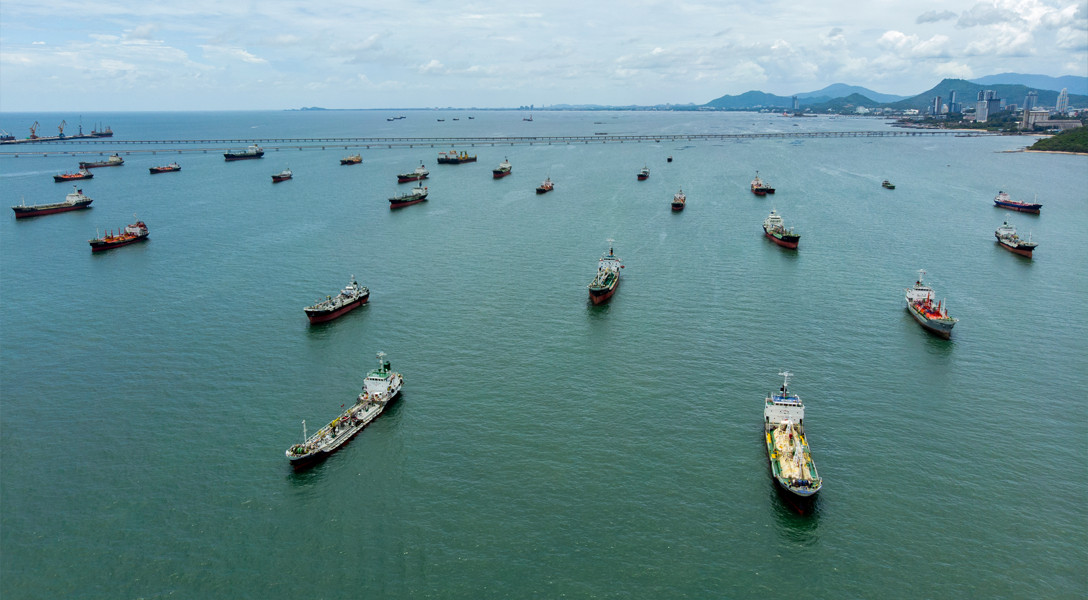
The warning has heightened fears over the safety of the narrow maritime corridor through which a significant share of the world’s oil and gas supplies passes daily.
Maritime experts say any prolonged disruption could send shockwaves through global shipping, energy markets, and food supply chains, with Nigeria also expected to feel the impact.
President of the Nigeria Chambers of Shipping (NCS), Aminu Umar, told LEADERSHIP Weekend that the crisis had already started pushing up oil prices and freight costs globally. “It has been over three weeks now since the Strait of Hormuz was technically shut down due to the war. The most immediate effect we are seeing is the rise in oil prices, which everyone is already experiencing. Once oil prices rise, inflationary pressure follows because it affects virtually every sector of the economy,” Umar said.
He said the disruption was also raising operating costs for shipping companies.
“It is not just about the price of oil itself. Because oil cannot move freely from that region, bunker fuel costs for ship owners increase immediately. Once bunker costs go up, freight rates also increase. That is why freight rates across global shipping routes have already risen.”
According to him, the crisis has also created a shortage of vessels globally, saying, “We are seeing a situation where many vessels are trapped inside the Persian Gulf and cannot come out, while ships carrying cargo to the region cannot go in. Many of them are currently waiting in the Indian Ocean.
“Some vessels are being diverted, but operators are also reluctant to pass through the Red Sea because of fears that the conflict could expand into a proxy war involving the Houthis. All these factors have created a shortage of available vessels globally, and the ripple effects are being felt across the shipping industry.”
Umar, the former Acting President of the Nigerian Shipowners’ Association (NISA) and managing director of Sea Transport Services Nigeria Limited warned that if the conflict persists, Nigerians should expect further increases in fuel prices.
“If the war continues, it will be very difficult to avoid higher pump prices because the ripple effects will continue. Freight costs are already rising, and once freight increases, the cost of transporting crude oil or refined products also goes up.
“For instance, supplying crude to the Dangote refinery, which is currently the largest supplier of fuel to Nigeria, will become more expensive, and those costs will eventually reflect in pump prices.”
He added that higher fuel costs would inevitably worsen inflation.
“Once pump prices increase, inflation will follow. It will definitely create inflationary pressure in the system.”
Also speaking, maritime expert Adakole Ejegbudu, said the disruption could significantly affect global energy and food supply chains.
Ejejuru who is the Technical Director at Flotilla Academy, said any blockage of the Hormuz is an automatic global problem because crude oil is an internationally priced commodity
“At least 20 per cent of the world’s oil and gas passes through the Strait of Hormuz. In addition to that, most Gulf states also receive their food imports through that same route.
“When you put these two factors together, you begin to see the magnitude of the disruption. Any blockage there automatically becomes a global problem because crude oil is an internationally priced commodity. Once prices rise in one region, they rise everywhere.”
Ejejuru said the crisis is already affecting food supply in parts of the Gulf region.
“For instance, as of two weeks ago, several supermarkets in the UAE were already running low on supplies because they could not restock. The only major food item not under immediate threat is grains, because the country maintains strategic grain reserves.”
He warned that shipping companies could take drastic steps if the situation deteriorates further.
“Some shipping companies are already considering invoking an old maritime law that allows them to offload cargo at the nearest available port if they cannot safely complete a voyage. The modern shipping industry has rarely seen that applied, but it still exists under international law.”
According to him, rerouting vessels around Africa would significantly increase shipping costs.
“If vessels are forced to bypass the Strait of Hormuz and go around Africa through the Cape of Good Hope, it would add several weeks to voyages and significantly increase fuel and operational costs.
“Shipping operators estimate that such a diversion could add about one million dollars to the cost of a single voyage.”
Ejejuru warned that Nigeria could be particularly vulnerable because it relies heavily on foreign vessels for its maritime trade.
“One major challenge for Nigeria is that we do not own the ships that carry most of our cargo. If international shipping companies begin choosing which routes to operate because of security concerns, Nigeria could be exposed.
“We have already seen insurers in London cancel coverage for vessels operating around the Strait of Hormuz, and that kind of decision can easily spread globally.”
He added that some countries are already taking measures to shield their shipping fleets from the crisis.
“The United States, for example, has asked a credit agency to provide insurance cover for American vessels, effectively using government funds to absorb the insurance risk. Unfortunately, Nigeria cannot do that because we do not even have vessels in the first place,” he stated.
We’ve got the edge. Get real-time reports, breaking scoops, and exclusive angles delivered straight to your phone. Don’t settle for stale news. Join LEADERSHIP NEWS on WhatsApp for 24/7 updates →
Join Our WhatsApp Channel