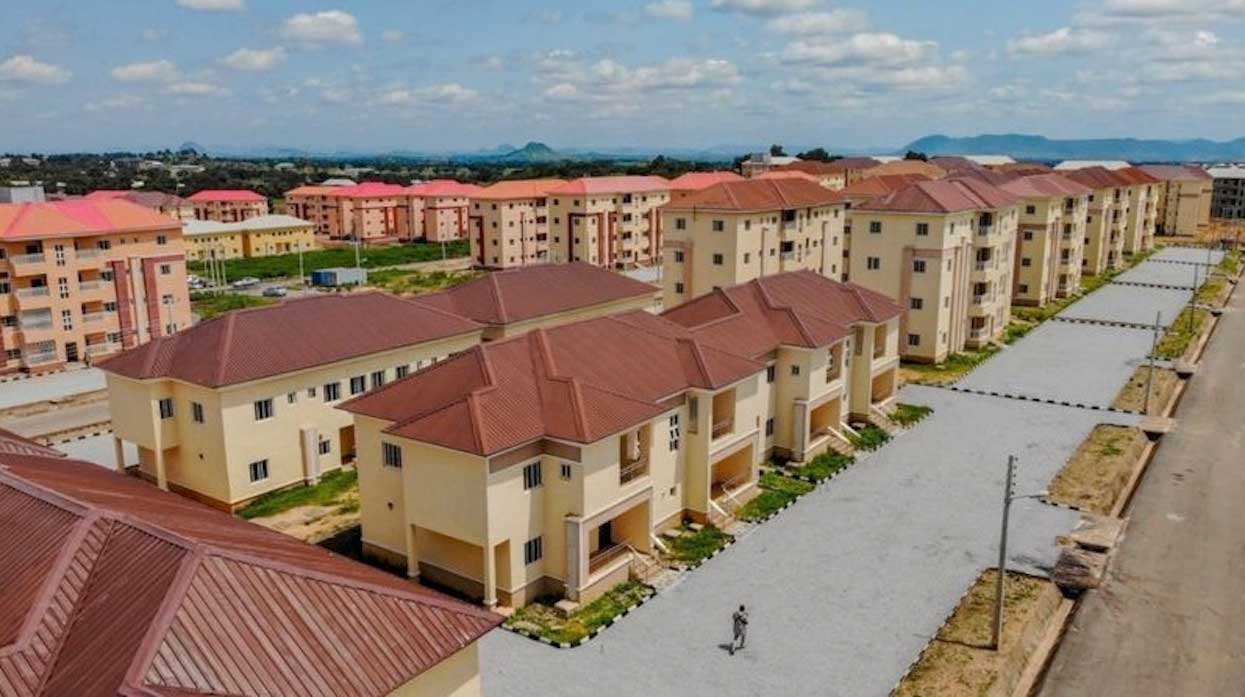
The housing affordability crisis in Lagos is deepening as weak household incomes, high mortgage rates, expensive land and construction financing, inadequate infrastructure and inefficient land administration continue to limit access to decent homes.
This was contained in an 86-page research report titled “Beyond Rent: Mapping Lagos’ Housing-Led Capital Expansion,” unveiled at the hybrid “Beyond Rent: A Lagos Housing and Capital Forum,” organised by GTI Investment Group in Lagos.
The forum, themed “Housing, Capital and the Future of Lagos,” brought together stakeholders to examine the relationship between housing, finance and the long-term economic development of Lagos.
The report’s overview was presented by the Head of Research and Strategy at GTI Investment Group, Mr Abiodun Ogunniyi.
According to the report, the housing crisis cannot be addressed simply by reducing the cost of cement, noting that building materials represent only one component of the broader affordability challenge.
It stated that its modelling showed that even an 82 per cent reduction in cement prices would translate into only about a 14 to 15 per cent decline in house prices.
The report identified low household incomes, elevated mortgage rates, limited access to mortgage financing, inadequate infrastructure, challenges associated with land administration and high overall construction costs as the major constraints to homeownership.
It noted that mortgage penetration in Nigeria remained exceptionally low, with only about 0.6 per cent of households currently relying on mortgage financing.
The report also highlighted the widening gap between rental growth and general inflation in Lagos, with annualised rental increases surpassing 40 per cent along some mainland corridors and reaching approximately 51 per cent in prime Island locations.
This compares with headline inflation of 15.9 per cent as of June, according to the report.
The affordability challenge, it said, was particularly severe among low- and middle-income households.
According to the study, 80 per cent of respondents regarded Lagos as severely unaffordable, underscoring the extent of the housing burden residents face.
It further noted that even households earning about N500,000 monthly could spend between 40 and 60 per cent of their income on rent in some mainland locations.
The report warned that relocating to the outskirts of Lagos in search of cheaper accommodation may not necessarily provide significant financial relief, as higher transportation costs could erode much of the savings from lower rents.
Using Marina as a reference point, the researchers analysed 3,200 property listings across 15 submarkets and concluded that commuting costs could wipe out a substantial portion of the savings generated by lower rents in peripheral areas.
Beyond transportation costs, the report identified infrastructure as an increasingly important determinant of property values and housing demand.
It observed that properties located within one to two kilometres of railway stations could command significant price premiums, highlighting the growing influence of transport infrastructure on real estate values.
The study categorised Lagos’ housing market into three broad segments: locations primarily serving capital preservation, corridors linked to productive employment and peripheral areas experiencing urban expansion.
A major concern identified by the researchers was the mismatch between the type of homes prospective buyers can afford and the properties developers are supplying to the market.
The report found that homes priced below N15 million accounted for about 55 per cent of demand but represented only a small proportion of available supply.
In contrast, luxury properties priced above N200 million accounted for a substantial share of new developments.
“This is a capital architecture problem,” the report stated, warning that the growing focus on high-end developments was leaving affordable and middle-income housing significantly undersupplied.
To address the housing deficit, the researchers urged the government to reform land administration and convert informal land holdings into formal, bankable assets capable of supporting mortgage financing and development loans.
The report also called for greater deployment of long-term institutional capital into the housing sector, particularly pension funds.
It noted that pension fund administrators currently manage more than N31 trillion in assets, with approximately 75 per cent invested in government securities.
According to the researchers, deploying a portion of these long-term funds into productive sectors such as housing could help bridge the sector’s financing gap through Real Estate Investment Trusts and other structured investment instruments.
The report further recommended the use of infrastructure value-capture mechanisms, betterment levies and urban regeneration financing to create additional funding channels for housing and urban development.
It urged the government to prioritise mid-density housing along employment corridors where large numbers of working-class residents live, while encouraging developers to take advantage of opportunities in the underserved affordable housing segment.
For prospective homeowners seeking mortgage financing, the researchers recommended that mortgage repayments should be kept within 30 to 35 per cent of household income.
They also urged financial institutions to adopt location-sensitive underwriting models that consider the relationship between where people live, where they work and the cost of commuting.
The researchers called for stronger collaboration among government policymakers, property developers, financial institutions, academics and capital market operators to address structural weaknesses in Lagos’ housing finance ecosystem.
They stressed that tackling the housing crisis would require coordinated reforms across land administration, finance, infrastructure, transportation and housing supply, rather than isolated interventions focused solely on reducing individual construction costs.
We’ve got the edge. Get real-time reports, breaking scoops, and exclusive angles delivered straight to your phone. Don’t settle for stale news. Join LEADERSHIP NEWS on WhatsApp for 24/7 updates →
Join Our WhatsApp Channel