
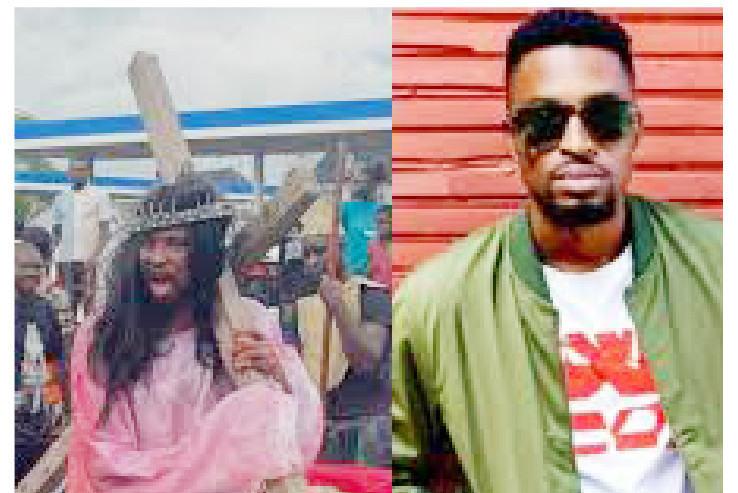
On a day meant to retell the sacrifice and resurrection of our Lord Jesus Christ, death instead took the stage. In Ugep, Cross River State, a community is now left grappling with the painful irony of a Passion Play that ended not in celebration, but in sorrow too heavy for words. RICHARD NDOMA writes on how 40-year-old Mr. Michael Obeten, who stood beside the cross at Holy Cross Catholic Church, Ugep, during Station 12 of the performance, was struck by a thunder effect and never made it home alive.
On Good Friday 2026, 40-year-old Mr. Michael Obeten, fondly called “English Man” by friends and parishioners, stood once again beside the cross at Holy Cross Catholic Church, Ugep, Yakurr local government area. Known for his eloquence and quiet devotion, he had become a familiar presence in the annual Passion Play, guiding younger actors and embodying the role he had performed for years with unwavering commitment.
Dawn had broken over Ugep with the familiar rhythm of Holy Week, the scent of paint and sawdust mingling with morning harmattan dust as parishioners gathered in anticipation. Rosaries in hand, they moved through rehearsals and preparations, unaware that the familiar story of suffering and redemption was about to take an irreversible turn. By the time the performance reached its later scenes, what was meant to dramatise sacrifice had instead descended into real-life tragedy, leaving a community in stunned silence.
Michael wasn’t just acting. Parishioners say he lived the part. He had portrayed Jesus Christ in the church’s Passion Play in 2023 and 2024. This year, 2026, he stepped back from the lead role to coach younger actors, guiding them through the Stations of the Cross with the patience of a teacher.
Obeten, a 2012 Mass Communication graduate of the University of Cross River State (UNICROSS), was known in his community as a man of “deep faith and gentle humour.” Friends and associates described him as a member of the Mass Communication Students Association (MACOSA) alumni who remained rooted in Ugep even as classmates scattered across Nigeria. He was also the primary caregiver for his father, who uses a wheelchair.
For years, Holy Cross had marked Good Friday with a live dramatization of Christ’s final hours. It is theology as theatre, where scripture becomes sweat, splinters, and real tears. Michael’s portrayal had, for many, become inseparable from the ritual itself.
The play reached Station 12, the moment Jesus dies on the cross. To recreate the thunderous sound described in John 12:28, organiaers traditionally used a local explosive device known as “oginigbo.”
This year, the device malfunctioned. A piece of sharp stone from the debris produced by the “oginigbo” reportedly struck Obeten in the head. According to Mr. Stanley Ebri, who said he witnessed the incident, “Late Mr. Obeten fell down instantly as the stone hit him on the head.” At first, some in the crowd thought it was part of the act.
Blood from his head, nose, and mouth made it clear this was no performance,” witnesses recalled. The black shirt, black trousers, and face cap he wore while assisting with microphones and paint were suddenly stained with something no script had called for.
The crowd panicked as Michael fell to the ground. Parishioners and fellow actors lifted him from the grounds of Holy Cross. He was first rushed to General Hospital, Ugep. Doctors there stabilized him as best as they could before referring him to the Federal Medical Centre, Abakaliki, Ebonyi State, for specialist care.
As his condition worsened, he was referred onward to Enugu for more advanced treatment. A close friend who accompanied him confirmed that “he passed away on arrival in Enugu.” Other reports indicated that he died at FMC Abakaliki.
While an official autopsy had not been released publicly, eyewitness and alumni statements described “severe brain injuries” caused by debris striking his head. Family sources said he was “knocked unconscious by the blast.”
Yakurr community residents explained that the device was usually buried in the ground away from stones when used during celebrations. This time, it was reportedly placed on top of stones. The blast shattered them, sending fragments flying, and one of the pieces of stone struck Michael.
He had done this for years,” a church member, Precious Ibiang, told LEADERSHIP Weekend. “Nobody ever imagined it would end this way.” Another member, Miss Jane Okorn, echoed: “Every year on Good Friday, Mike always took part, playing the role of Jesus Christ.”
Though he had handed the main role to younger actors, Michael remained the play’s backbone. He assisted actors with microphones, paint, and other needs when the accident occurred, continuing to guide them through rehearsals and performances.
The moniker “English Man” followed him from school to sanctuary. It reflected his diction, his bearing, and the way he translated both news copy and Gospel into language people understood. In Ugep, names carried weight, and he carried affection.
Beyond the church, Michael’s life was anchored by responsibility. He was described by those around him as a devoted son and a pillar of support to his family, caring almost single-handedly for his father, who was confined to a wheelchair.
His 2007 MACOSA Alumni president at UNICROSS, Comrade Augustine Ekpan, described him as “a leader, a unifier, and a friend to many.” He added that Michael’s death was entirely preventable.
The alumni president alleged that the cannon was discharged by individuals they claimed were not licensed to handle such devices. The blast reportedly sent debris flying, striking Obeten in the head.
The incident left the clergy, church members, and the entire community in mourning throughout the Easter period. The parish priest said, “God knows best,” while parishioners echoed similar sentiments.
The alumni president alleged that the cannon was discharged by “individuals they alleged were not licensed to handle firearms.” The blast reportedly “sent debris flying, striking Obeten in the head.”
News of Michael’s death sent shockwaves through the community. Ugep, a town where everyone is someone’s cousin, felt the loss collectively. Good Friday, a day of solemn reflection, turned into a day of raw mourning
The use of gunpowder effects was meant to “heighten the realism of Christ’s suffering.” Eyewitnesses say that pursuit of realism “reportedly went horribly wrong.” The line between symbol and danger collapsed instantly.
For years, Holy Cross had marked Good Friday with a live dramatisaion of Christ’s final hours. It was theology as theatre, where scripture became sweat, splinters, and real tears. Michael’s portrayal, for many, had become inseparable from the ritual itself.
The play reached Station 12, the moment Jesus died on the cross. To recreate the thunderous sound described in John 12:28, organisers traditionally used a local explosive device known as “oginigbo.”
This year, the device malfunctioned. A piece of sharp stone from the debris produced by the “oginigbo” reportedly struck Obeten in the head. According to Mr. Stanley Ebri, who said he witnessed the incident, “Late Mr. Obeten fell down instantly as the stone hit him on the head.” At first, some in the crowd thought it was part of the act.
Weeks earlier, on March 23, 2026, Michael had shared a reflection on Facebook titled “When Life Feels Like a Closed Tomb,” by Fr. Linus Olom. Based on the story of Lazarus, it spoke of pain, faith, and hope in difficult times.
Since his passing, that message has resonated deeply with many who now read it through the lens of his death. Parishioners reposted it not as prophecy, but as portrait—a man wrestling with mortality long before it met him on a stage.
The use of gunpowder effects was meant to heighten the realism of Christ’s suffering. Eyewitnesses said that pursuit of realism reportedly went horribly wrong, as the line between symbol and danger collapsed.
For years, the faithful at Holy Cross Catholic Church in Ugep gathered every Good Friday to witness a familiar face carry the cross. This year, that face was there to guide, not to hang. Now the church confronts Good Fridays without him.
The accident occurred on Good Friday 2026. He was buried the next morning, Saturday, 7 April 2026. The speed of events left little space between liturgy and burial.
Those who worked with him remembered small things, how he adjusted a boy’s crown of thorns, how he checked microphones so the Seven Last Words reached the back pews. He was assisting actors when he was struck by a piece of stone from the debris.
The “oginigbo” was intended to mimic thunder from John 12:28. Instead, it produced silence, the kind that follows when a community holds its breath and forgets, briefly, how to exhale.
An eyewitness, Pascal Eteng, told LEADERSHIP Weekend that they had never seen such a thing before. Another, Sandra Okoi, said, “This was not the first time ‘oginigbo’ was used, so the organisers should have known better.”
General Hospital Ugep, FMC Abakaliki, then Enugu, each transfer became a prayer. Each mile carried hope that could not hold.
Holy Cross lost more than an actor. It lost a catechist without a title, a director without credit, and a young man who was an active participant in church activities. The Passion Play would continue, but it would not be the same.
A father in a wheelchair lost the son who bathed him, fed him, and wheeled him to Mass. A family lost its pillar of support. Grief in that house was both spiritual and logistical.
His classmates said they lost “a leader, a unifier, and a friend.” The Mass Communication department at UNICROSS said it lost an alumnus who took storytelling seriously enough to bleed for it. The alumni group called for decisive action to prevent a recurrence.
Michael’s death ignited fresh calls for urgent reforms on the use of explosives at public gatherings. Former classmates demanded justice and accountability over what they described as a preventable tragedy.
The parish priest declined extended comment, saying, “It has happened. God knows best.” In a town fluent in proverbs, the sentence carried both resignation and faith.
Fear and grief enveloped residents of Ugep. The Passion Play, meant to make Christ’s death proximate, had made death itself immediate. Children who acted beside “English Man” were left with unanswered questions.
Holy Week continued because it had to. But the Easter Vigil at Holy Cross was quieter. The “Alleluia” was sung, but it cracked.
Yakurr community, where he hailed from, was thrown into mourning. Mourning does not observe the liturgical calendar.
“As Jesus Christ rose on Easter Day, Michael Obeten died acting in the Passion of Christ.” The theology of it remains difficult. Resurrection and burial were separated by a single sunrise.
Even when not wearing the crown of thorns, Michael embodied the role. He did not just act as Jesus Christ; he lived it with quiet devotion. On Good Friday 2026, he was still living it—serving, teaching, helping.
Michael’s Facebook post of March 23, “When Life Feels Like a Closed Tomb,” now reads like a preface he did not know he was writing. The reflection was about Lazarus, about stones rolled away. His own stone came down on April 7, 2026.
What remains is a church re-evaluating its practices, a family relearning how to move through grief, and a town that will tell this story every Holy Week. What remains is the standard Michael set—that devotion is not a costume, but a burden carried.
Michael Obeten carried many crosses: son, caregiver, communicator, catechist, “English Man.” On Good Friday 2026, he was struck down while helping others carry theirs. Residents of Ugep remember him not for how he died, but for how he lived—from Station 1 through Station 12, and in all the unscripted moments between.
The tragedy has forced hard conversations in Yakurr and beyond. Should explosives have any place in liturgical drama? Who approves their use at church events?
Why was the device placed on stones this year when locals said it was usually buried in the ground? These questions are now being asked publicly.
The church has not released an official statement on future Passion Plays. Some argue for retiring explosives entirely. Others call for stricter safety protocols and licensed handlers.
For now, the wooden cross at Holy Cross Catholic Church leans against a wall in the parish hall. The paint Michael mixed is still in a bucket, lid half-closed. The microphone he checked sits on the altar.
To understand the weight of the loss, Ugep residents recall who Michael was off stage. Classmates remember a student who edited the campus press and still tutored freshmen.
His lecturer at UNICROSS and former Head of Mass Communication, Professor Cornel Ellah, said Michael was among the best students. He added, “News of Mike’s death broke my heart. People have no power to negotiate with death.”
Neighbours remember a man who pushed his father’s wheelchair through red-earth roads after Mass, greeting elders in dialect and switching to polished English for visitors.
“He never raised his voice,” said one parishioner. “But when he spoke, people listened. That is why we called him ‘English Man.’”
That gift made him natural for the Passion Play. He translated theology into gesture—the fall under the cross, the gaze at Mary, the whispered forgiveness that reached even the last row.
In 2026, he stepped back from the lead role to coach younger actors. He stood at the side with a clipboard and water, adjusting costumes, whispering lines, and guiding rehearsals.
Station 12 came. The cross was raised. The “oginigbo” was lit. Then came the crack—the wrong kind of thunder—and the fragment that struck Michael.
According to Mr. Stanley Ebri, “Late Mr. Mike Obeten fell down instantly as the stone hit him on the head.” Chaos followed—prayer, panic, and a rush to General Hospital, Uge
From Ugep to Abakaliki to Enugu, each transfer became a prayer. A friend who accompanied him said he passed away on arrival in Enugu, though some reports placed his death at FMC Abakaliki.
The discrepancy matters less to Ugep than the outcome. He was buried on Saturday, 7 April 2026, during the Church’s silence of Holy Saturday.
The parish priest kept remarks brief: “It has happened. God knows best.” The alumni group, however, insisted his death was preventable and called for reforms.
Eyewitnesses and residents continue to debate what went wrong, especially the handling of the device and who authorised its use.
Between faith and accountability, Ugep now walks a narrow road. The same community that says “God knows best” is also asking hard questions.
Michael leaves no children but leaves a father who depended on him almost entirely. He leaves a church forced to reconsider its practices. He leaves a grieving community and a legacy of service.
Ugep will stage the Passion Play again. When Station 12 comes, there will be silence or a recorded sound. There will be a gap where “English Man” once stood.
And there will be memory—of a 2012 UNICROSS graduate, a caregiver, a son, and a man who did not just act the role of Jesus Christ, but lived it with quiet devotion.
On Good Friday 2026, he died helping others carry their crosses. That is how Ugep will remember him.
We’ve got the edge. Get real-time reports, breaking scoops, and exclusive angles delivered straight to your phone. Don’t settle for stale news. Join LEADERSHIP NEWS on WhatsApp for 24/7 updates →
Join Our WhatsApp Channel