
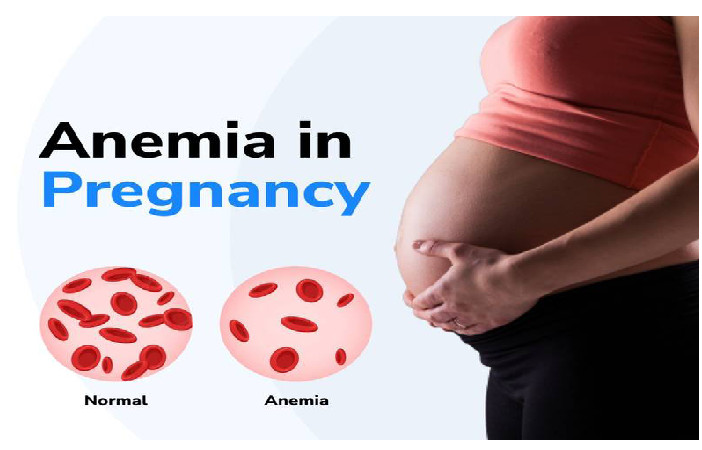
For a pregnant woman battling fatigue, weakness or other symptoms associated with anaemia, a visit to the health facility should offer reassurance and the nutritional support needed to protect both mother and baby.
However, for many women in Nigeria, an essential part of that protection may simply be unavailable.
A new study has revealed that 80.3 per cent of pregnant women surveyed experienced stockouts of Multiple Micronutrient Supplements (MMS) at health facilities, while only 29.4 per cent said the supplements were always available.
The study found that 92.1 per cent of women were willing to take MMS if it was made available, while 62.9 per cent received the supplements during pregnancy where they were available.
The figures point to a supply problem rather than a lack of acceptance among women.
The study, conducted by the Academic and Research Network, Nigeria, in collaboration with the Civil Society Council for Health, Nigeria and presented at the bi-annual press briefing on the anaemia situation in Nigeria, organised by the Civil Society Scaling-Up Nutrition in Nigeria (CS-SUNN), in Abuja, examined community awareness, financing and uptake of MMS as an intervention for preventing anaemia among pregnant women.
It also sought to identify systemic and behavioural barriers and provide evidence-based recommendations for strengthening implementation.
Anaemia during pregnancy is not merely a matter of feeling tired. It can have serious consequences for both mother and child, particularly when nutritional deficiencies are not identified and addressed early.
The Director of Nutrition at the Federal Ministry of Health and Social Welfare, Mrs Adegbite Olufunmilola, described Nigeria’s anaemia situation as a “wide, devastating crisis”, noting that prevalence among pregnant women is above 50 per cent.
She said the country could not afford to accept a situation in which women and children continue to suffer from a condition that could be prevented through appropriate interventions.
According to her, the Federal Government is accelerating the use of MMS alongside iron-folic acid supplementation as part of efforts to prevent anaemia and improve pregnancy outcomes.
The ministry, she disclosed, has reached states with MMS, but only about 10 states have so far commenced its use.
“We are pushing forward to ensure more states key into the use of MMS in Nigeria,” she said, stressing the need for more states to adopt the intervention.
However, even as government pushes for wider adoption, the study suggests that availability remains a major stumbling block.
Perhaps the most revealing finding of the study is that Nigerian women are not necessarily resisting MMS.
The 92.1 per cent willingness to use MMS if available suggests that there is significant room to improve uptake if the supply chain can be strengthened.
Yet only 23 per cent of women surveyed reported daily use.
Researchers said sustained availability and an effective delivery strategy could significantly improve uptake.
The findings, therefore, shift attention from the question of whether women will accept MMS to whether the health system can consistently provide it.
For a woman who begins taking the supplements and later finds that they are unavailable, continuity becomes difficult.
The researchers identified supply-chain management as one of the key areas requiring urgent attention, alongside sustainable financing and stronger monitoring.
They warned that without consistent supplies, the inclusion of MMS in national policies and essential medicines frameworks may not translate into improved health outcomes for women.
Nigeria has already included MMS on its Essential Medicines List, a development described by the researchers as a significant step towards improving access.
However, they stressed that policy recognition must be matched by effective procurement, distribution and availability at the frontline.
Even when MMS reaches a health facility, another question remains: are health workers adequately equipped to guide women on its use?
The study found that only 24.3 per cent of frontline health workers had received formal training on MMS, while 25.1 per cent reported having no job aids to support counselling and delivery.
This creates another weak link in the chain.
It also found that only 37.3 per cent of health workers surveyed were aware of nutrition-related activities in their facilities or communities, pointing to limited visibility of nutrition programmes at the frontline.
Another concern raised by the study is the lack of transparency around nutrition financing.
Only 2.2 per cent of respondents reported the availability of financial audit reports.
The researchers said limited access to financial audit information could weaken transparency and accountability and make it difficult to establish a clear link between financing decisions and service-delivery outcomes.
For nutrition interventions to succeed, they said, funding must not only be available but also properly tracked and linked to measurable results.
Mrs Chidiana Yunana, from the Federal Ministry of Budget and Economic Planning, said the government was strengthening nutrition-responsive public financial management systems at federal and state levels.
According to her, the systems are intended to improve the integration of nutrition into planning, auditing, resource allocation and accountability.
She said the government was also implementing the revised National Policy on Food and Nutrition 2026–2035 and developing the National Multisectoral Plan of Action for Nutrition 2026–2030.
For the Nutrition Society of Nigeria, the consequences of anaemia extend far beyond individual pregnancies.
The Chairman, FCT Chapter of the society, Major Edith Ogheneovo Nwachinaemere, described anaemia as a threat to human capital development.
She noted that anaemia could compromise a child’s development and academic potential, affect the health and reproductive future of adolescent girls, and place both mother and child at risk when a woman enters pregnancy anaemic.
She called for stronger coordination across sectors, sustainable financing, improved access to quality health and nutrition services, promotion of diverse and locally available diets and targeted interventions for vulnerable groups.
Nwachinaemere also urged the media to give nutrition and anaemia the attention they deserve, stressing that journalists have an important role in shaping public understanding, influencing policy dialogue and holding stakeholders accountable.
From stockouts to solutions
The MMS study has exposed a gap between Nigeria’s ambition to tackle maternal anaemia and what many women encounter at the point of care.
The country has the policy framework. Women are willing to take the supplements. Government has begun scaling up MMS, and the intervention is included on the Essential Medicines List.
Yet, frequent stockouts, inadequate health-worker training, weak counselling support and gaps in financing accountability continue to stand between pregnant women and the intervention designed to protect them.
The researchers called for sustained financing, stronger supply-chain management, improved health-worker capacity, counselling tools and better monitoring and accountability.
For Nigeria, the task now is to ensure that MMS does not remain an intervention that exists largely on policy documents but one that is consistently available to the pregnant women who need it.
Because when prevention runs out of stock, the consequences may not end at the health facility, they can follow a mother into childbirth and a child into the future.
We’ve got the edge. Get real-time reports, breaking scoops, and exclusive angles delivered straight to your phone. Don’t settle for stale news. Join LEADERSHIP NEWS on WhatsApp for 24/7 updates →
Join Our WhatsApp Channel