Nothing underscores Nigeria’s determination to combat the challenges of climate change more than its active participation in the Great Green Wall initiative, as demonstrated by the establishment of the National Agency for the Great Green Wall (NAGGW).
The NAGGW has continued to make its impact felt in the eleven frontline states of Adamawa, Bauchi, Borno, Jigawa, Kaduna, Kano, Katsina, Kebbi, Sokoto, Yobe and Zamfara. Apart from planting trees through the erection of shelter belts, the Agency is also empowering residents of communities in these eleven frontline states.
In a bold stride towards sustainable development and poverty reduction, the NAGGW, through its Department of Rural Development and Extension Services, is transforming the lives of rural dwellers in the most severely affected states.
Rooted in a strong mandate to empower communities, this department is playing a pivotal role in unlocking the potential of rural areas by fostering economic growth, improving infrastructure, and promoting climate resilience.
It must be stated that central to the Agency’s mission is community empowerment, promoting skills development, facilitating access to critical resources, and offering livelihood support.
In this way, the agency is equipping rural residents with the tools they need to build stronger, more self-reliant economies. From farmers learning modern cultivation techniques to artisans honing marketable skills, these initiatives are helping communities take charge of their futures.
Recognising the importance of basic infrastructure in improving the quality of life, the Agency has taken decisive steps to provide vital amenities such as clean, efficient stoves, sustainable boreholes, and solar-powered streetlights.
These infrastructure projects not only elevate living standards but also contribute to environmental sustainability, a key priority for the Great Green Wall initiative.
Amidst growing concerns about climate change, the Agency is at the forefront of educating rural communities on adaptation and resilience strategies. Through awareness campaigns and targeted training, villagers are being equipped to safeguard their agricultural activities and livelihoods against the impacts of climate variability, ensuring long-term sustainability.
A data-driven approach underpins all these efforts, which include conducting baseline surveys and maintaining comprehensive data on rural development. The department ensures that planning and evaluation remain grounded in facts and the real needs of the community. This enables continuous improvement and measurable impact across all programs.
At the heart of successful implementation are the well-trained rural extension workers who serve as vital links between the agency and grassroots communities. With specialised training, these extension workers disseminate knowledge and innovations that empower individuals to adopt improved practices and technologies effectively.
Fundamentally, the NAGGW demonstrates how coordinated, community-oriented efforts can instigate transformation in rural areas. Through economic empowerment, improved infrastructure, climate education, and robust data management, the agency is nurturing resilient rural communities ready to thrive amidst challenges, forging a promising path towards a greener and more prosperous nation.
One of the communities that benefited from the economic empowerment gesture of the NAGGW is the Jeke community in Sule Tankarkar Local Government Area of Jigawa State.
For some residents of this community, the NAGGW is a Blessing. In this sleepy community, whose residents are predominantly peasant farmers and cattle rearers, the NAGGW is changing its narrative through its plethora of economic empowerment initiatives.
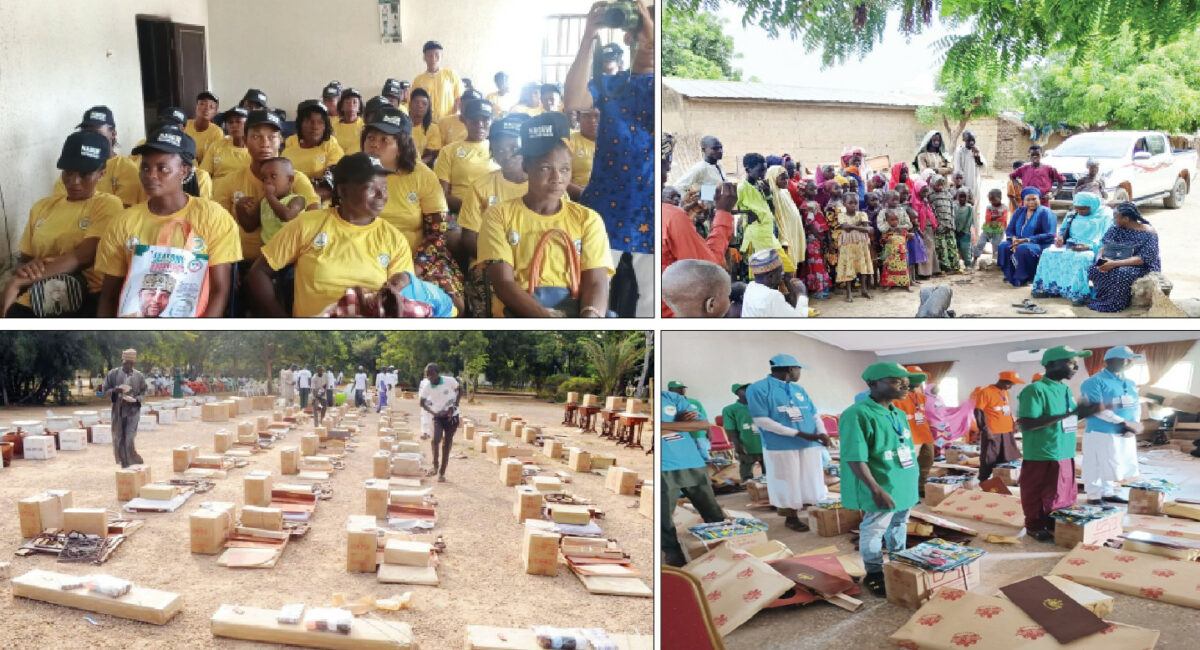
The Agency has empowered scores of residents with different skills, and, fortunately, most of those trained and gifted with work tools are earning a living through the skills they have learnt.
Yakubu Jeke is one of the beneficiaries. He confirmed that the residents were economically empowered with different skills, including sewing, soap and pomade making.
“I am one of the beneficiaries. I was given a sewing machine, and I used it to train five people who are working under me now,” Yakubu said, adding that scores of the residents are economically empowered.
We’ve got the edge. Get real-time reports, breaking scoops, and exclusive angles delivered straight to your phone. Don’t settle for stale news. Join LEADERSHIP NEWS on WhatsApp for 24/7 updates →
Join Our WhatsApp Channel