
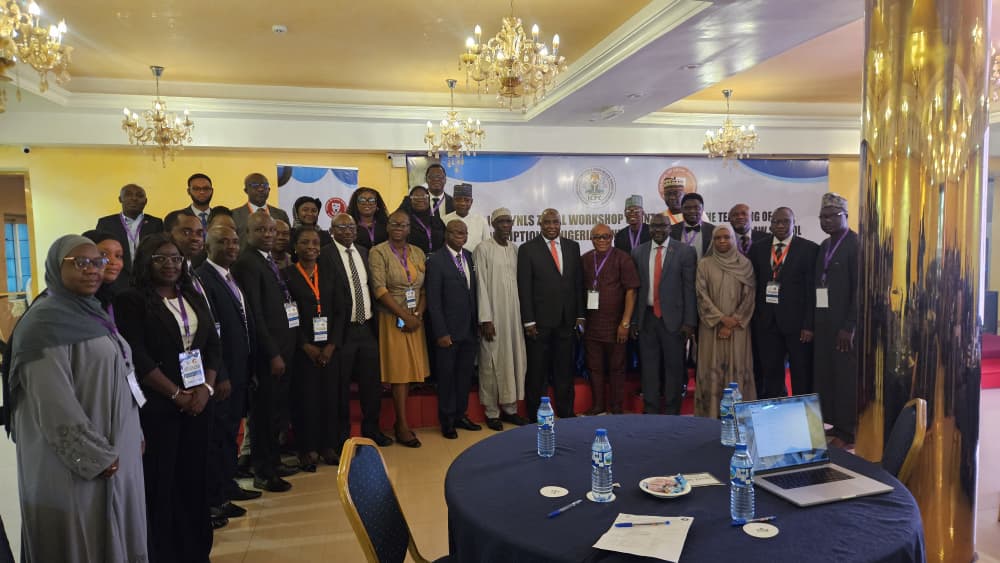
The Independent Corrupt Practices and Other Related Offences Commission (ICPC), has reaffirmed its commitment to institutionalising anti-corruption education in Nigeria’s legal training system, describing it as a critical step towards producing ethical lawyers and strengthening the country’s justice system.
Chairman of the ICPC, Dr. Musa Adamu Aliyu, SAN, stated this in Abuja while delivering the closing remarks at the ICPC/Nigerian Law School Kano Zonal Workshop on the Integration of Anti-Corruption Education into Nigerian Universities and the Nigerian Law School, themed: “Institutionalising Anti-Corruption Education in Nigerian Legal Training.”
Aliyu said corruption remains one of the greatest obstacles to Nigeria’s development, noting that it weakens institutions, undermines the rule of law, erodes public trust, slows economic growth and affects the quality of public service delivery.
According to him, tackling corruption requires more than investigation and prosecution, stressing that prevention, education and the promotion of integrity, transparency, accountability and ethical conduct are equally important.
He described legal education as central to the anti-corruption fight because lawyers serve as custodians of justice and key actors in governance.
“It will produce lawyers who are not only competent in their work but also committed to ethical leadership and national development,” he said.
The ICPC chairman explained that the Commission, established under the Corrupt Practices and Other Related Offences Act, 2000, carries out its mandate through enforcement, prevention and public education.
He said the workshop supports the Commission’s preventive and educational mandate by bringing together stakeholders from faculties of law and the Nigerian Law School to develop a framework for integrating anti-corruption education into legal training.
Speaking in an interview after the workshop, the coordinator of the programme and former Director-General of the Nigerian Law School, Professor Isa Hayatu Chiroma, SAN, said stakeholders will reach an understanding on the modality for implementing the initiative.
Chiroma disclosed that the next phase would involve developing a comprehensive curriculum and setting uniform standards for anti-corruption education in legal training institutions across the country.
He noted that lawyers and aspiring lawyers occupy strategic positions in society and must be equipped with the knowledge, ethical values and professional standards required to prevent and combat corruption.
We’ve got the edge. Get real-time reports, breaking scoops, and exclusive angles delivered straight to your phone. Don’t settle for stale news. Join LEADERSHIP NEWS on WhatsApp for 24/7 updates →
Join Our WhatsApp Channel