
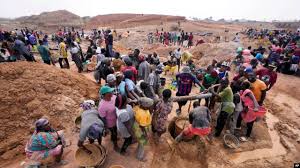
The Nigeria Extractive Industries Transparency Initiative (NEITI) has raised concerns over illicit mining activities, weak regulatory enforcement, and criminal infiltration of mining communities, warning that the trend is depleting Nigeria’s mineral wealth and slowing economic diversification efforts.
The warning was contained in a statement issued on Thursday by NEITI’s Director of Communications and Stakeholders Management, Mrs Obiageli Onuorah, following the release of a policy brief titled: “Stemming the Scourge of Illicit Financial Flows in Nigeria’s Mining Sector.”
NEITI said that despite Nigeria’s abundant deposits of gold, lithium, limestone and gemstones, the solid minerals sector continues to underperform due to illicit financial flows driven by illegal mining, smuggling, tax evasion, corruption and money laundering.
According to the statement, “The stark underperformance is driven by illicit financial flows that continue to erode the sector’s potential by facilitating: Revenue leakages and tax evasion, Illegal mining and smuggling activities, corruption and weak institutional oversight, and money laundering linked to organised criminal networks.”
The agency noted that the sector generated only N401 billion in revenue and contributed 0.72 per cent to Nigeria’s Gross Domestic Product, according to its 2023 industry audit, despite the country’s vast mineral endowment.
NEITI attributed the situation partly to weak coordination among regulatory bodies in the sector.
It stated, “Severe fragmentation of regulatory oversight across institutions, including the Ministry of Solid Minerals Development, the Mining Cadastre Office, NEITI, Nigeria Customs Service, Nigeria Financial Intelligence Unit, and relevant state agencies. Each institution collects sector-relevant data in siloes, with limited interoperability and no integrated sector-wide digital monitoring system.”
The organisation also expressed concern over the use of shell companies and opaque ownership structures in mining operations, warning that such practices allow politically exposed persons, criminal actors and undisclosed foreign interests to conceal their involvement in the sector.
According to the policy brief, “Mining licenses are frequently held through special purpose vehicles, shell companies, and layered corporate structures that obscure the natural persons who ultimately own or control extractive assets.”
NEITI further noted that verification of beneficial ownership data across government agencies remains weak and largely dependent on self-declaration, creating loopholes that enable corruption, trade misrepresentation and money laundering.
The agency also revealed that more than 70 per cent of mining activities in Nigeria are carried out by artisanal and small-scale miners, many of whom operate outside formal regulatory systems without licences, documentation or traceability records.
It added that about 80 per cent of mining activities in the North-West—particularly in Zamfara, Katsina and Kaduna states—are conducted illegally.
NEITI warned that minerals extracted from illegal sites are often blended with legally sourced materials, making traceability difficult and creating channels for illicit minerals to enter formal export markets.
It further explained that weak regulation of artisanal mining has hindered effective monitoring, taxation and enforcement, leading to what it described as “parallel mineral economies” operating outside government control.
To address the challenges, the agency recommended seven key reforms, including stronger inter-agency coordination, integration of anti-money laundering measures into mining governance, formalisation of artisanal mining, mandatory disclosure of beneficial ownership, legal reforms and improved community participation.
NEITI said the proposals are consistent with existing national and international frameworks such as the Companies and Allied Matters Act, the Proceeds of Crime Act, Financial Action Task Force standards and Nigeria’s Open Government Partnership commitments.
It stated, “Stemming the scourge of IFFs in Nigeria’s mining sector requires coordinated institutional reform, better data systems, stronger transparency mechanisms, and inclusive engagement of the ASM communities.”
The policy brief was developed by NEITI in collaboration with the Federal Ministry of Solid Minerals Development and the Africa Network for Environment and Economic Justice, with support from the UK Foreign, Commonwealth and Development Office.
We’ve got the edge. Get real-time reports, breaking scoops, and exclusive angles delivered straight to your phone. Don’t settle for stale news. Join LEADERSHIP NEWS on WhatsApp for 24/7 updates →
Join Our WhatsApp Channel