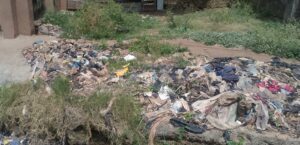
Indiscriminate dumping of refuse in Lokoja, the Kogi State capital, has continued to raise concerns over public health, environmental pollution and flooding, with residents urged to adopt proper waste disposal practices.
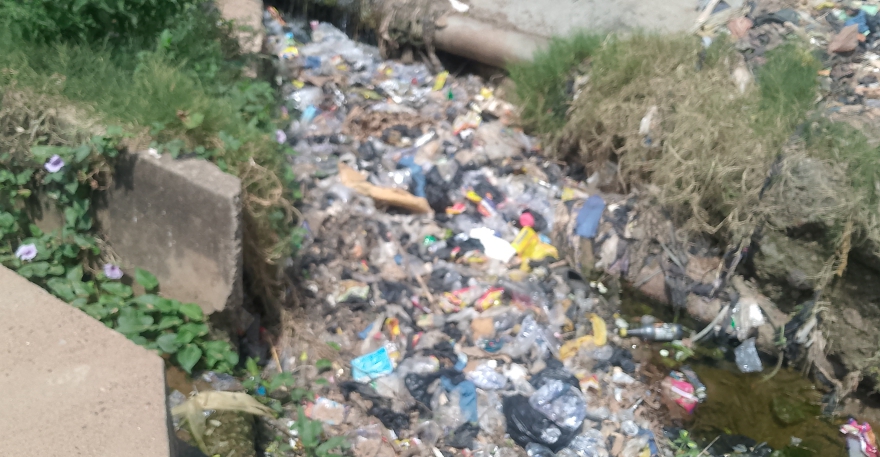
A LEADERSHIP investigation revealed that residents frequently dump refuse at unauthorised locations, including roadsides, open spaces and drainage channels, obstructing the free flow of rainwater and increasing the risk of flooding.
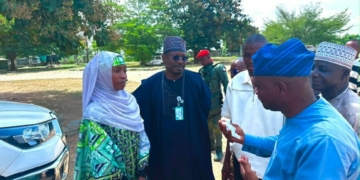
The Commissioner for Environment and Ecological Management, Engr. Joseph Oluwasegun Stephen expressed concern over the practice during an on-the-spot assessment of the state’s temporary dumpsite along the Felele Expressway in Lokoja.
The commissioner lamented that indiscriminate waste disposal posed serious threats to residents’ health and safety, stressing the need for efficient waste collection and disposal systems to maintain environmental hygiene.
He said the state government was working towards ensuring a healthy and sustainable environment and urged residents to dispose of their refuse only at approved dumpsites to prevent environmental degradation and associated health hazards.
The concerns over waste management in Lokoja are not new. In February 2024, the state government raised the alarm over the expansion of the temporary dumpsite at Felele towards the adjoining road, calling for intervention to improve waste management.
The government subsequently collaborated with the National Water Resources Institute to assess the suitability of proposed dumpsite locations in Lokoja, including their environmental and public health implications.
Similarly, the Kogi State Development Plan 2024–2056 identifies inadequate waste disposal and processing facilities as major environmental challenges, noting that residents often dump refuse in built-up areas, drainage channels, uncompleted buildings and open spaces.
The state’s environmental strategy also set targets to curb indiscriminate waste dumping and improve waste disposal, highlighting the need for sustained investment and effective implementation of sanitation policies.
Meanwhile, the state government has intensified efforts to address improper waste disposal at the International Market, Natako, Lokoja, where indiscriminate dumping had reportedly persisted for about 15 years.
The clean-up exercise was led by the Chief Consultant of the International Market, Comrade Adams Babangida Jimoh, in collaboration with the Nigeria Forest Security Service, market management and traders’ unions.
The team moved through the market for more than two hours to enforce compliance with sanitation directives and discourage traders from indiscriminately dumping refuse.
Babangida expressed appreciation to Governor Ahmed Usman Ododo for supporting the initiative, saying it was aimed at making the market cleaner, safer and more conducive for commercial activities.
The Market Chairman, Hassan Inuwa, also commended the government and the chief consultant, disclosing that new measures were being introduced to reposition the market and improve sanitation.
He said the market management would engage shop owners to ensure compliance, adding that traders willing to abide by the new rules would retain their spaces. In contrast, abandoned shops could be reallocated to more responsible users.
Inuwa praised the governor for introducing a monthly sanitation policy at the market and assured that traders would support efforts to sustain the initiative.
Speaking with LEADERSHIP in Lokoja, the Chairman of Kogi NGOs Network (KONGONET), Hamza Aliyu, said indiscriminate refuse dumping had consequences beyond making the city dirty, describing it as a public health, environmental, economic and governance concern.
He warned that dumping plastics, nylon, food waste, and other refuse into gutters, culverts, and waterways obstructs the flow of rainwater and could worsen flooding in Lokoja, a city with communities vulnerable to flooding.
According to him, blocked drainage channels could result in flash floods, damage homes and roads, disrupt businesses and expose residents to avoidable losses.
Aliyu called for reliable waste collection services, adequate designated disposal points, regular drainage clearing, stronger enforcement against illegal dumping, and improved recycling and waste-processing facilities.
He also urged residents to take responsibility for keeping their surroundings clean by properly bagging refuse, avoiding drainage channels and waterways, participating in community sanitation exercises and reporting cases of illegal dumping.
Recent concerns over refuse accumulation and blocked drainage channels in Lokoja have further underscored the need for coordinated action by government agencies, market authorities, community leaders and residents.
Stakeholders maintained that addressing the problem requires more than periodic clean-up exercises, stressing the importance of a functional waste management system, consistent enforcement of sanitation regulations and sustained public enlightenment.
They said that keeping Lokoja clean should be treated as a public health and flood-prevention priority, requiring a shared commitment by the government and residents to ensure a safer and healthier environment.
We’ve got the edge. Get real-time reports, breaking scoops, and exclusive angles delivered straight to your phone. Don’t settle for stale news. Join LEADERSHIP NEWS on WhatsApp for 24/7 updates →
Join Our WhatsApp Channel