
A civil society organisation, the Resource Centre for Human Rights and Civic Education (CHRICED), has warned that Nigeria is approaching a breaking point as insecurity, economic hardship and governance challenges worsen across the country.
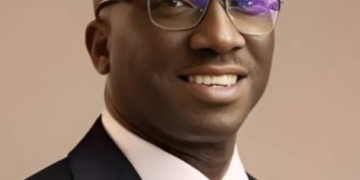
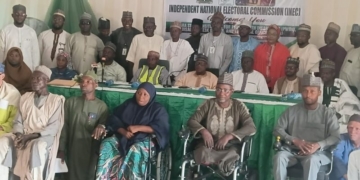
CHRICED’s executive director, Ibrahim Zikirullahi, gave the warning on Tuesday in Abuja at a state of the nation press conference, where he said the situation has eroded public confidence and placed citizens under severe strain.
He said many Nigerians now live in fear amid rising cases of abductions, killings and attacks by armed groups across different regions.
According to him, more than 1,100 people have been abducted since January 2026, while several others, including security personnel, have been killed in renewed violence.
Zikirullahi said insurgent groups such as Boko Haram and ISWAP continue to mount attacks in the North-East, while banditry and kidnapping have intensified in the North-West and North-Central.
“The country is facing what is effectively an undeclared war, with vast areas turning into ungoverned spaces where armed groups operate freely,” he said.
He also cited recent killings in Plateau State and parts of the Middle Belt as evidence of what he described as an expanding geography of violence, noting that the attacks have led to displacement, loss of livelihoods and growing humanitarian concerns.
The CHRICED boss further expressed concern over a recent airstrike in the Borno axis, which reportedly hit civilians, saying such incidents highlight gaps in Nigeria’s security operations.
On the death of a senior military officer, Brigadier General Oseni Braimah, during an attack on a military formation in Borno, Zikirullahi said the incident underscores vulnerabilities in the country’s defence system.
“If a senior officer can be killed in such circumstances, it raises serious questions about the safety of ordinary citizens,” he said.
He criticised what he described as inadequate official responses to security crises, noting that symbolic visits to affected communities without concrete actions do little to restore public confidence.
Zikirullahi also raised concerns over alleged harassment of opposition figures and shrinking civic space, warning that threats to press freedom and dissent could undermine democratic development.
On the economy, he said rising inflation and unemployment have pushed many Nigerians into poverty, with basic commodities becoming increasingly unaffordable.
He noted that petrol prices now range between N1,350 and N1,500 per litre, while the cost of cement has risen significantly compared to previous years.
“Families are making painful choices daily, including skipping meals and withdrawing children from school,” he said.
The organisation also decried what it described as growing public sector extravagance amid widespread hardship, as well as increasing debt levels without clear repayment strategies.
On social services, Zikirullahi said the education and healthcare systems are under severe pressure, with rising out-of-school children and poor medical infrastructure.
He further raised concerns over reported forced evictions of indigenous communities in the Federal Capital Territory, calling for respect for citizens’ rights and due process.
CHRICED urged the federal government to undertake comprehensive security reforms, adopt transparent public spending and prioritise job creation, education and healthcare.
It also called on political parties to strengthen internal democracy and on the Independent National Electoral Commission (INEC) to uphold its independence to sustain public trust.
Zikirullahi said Nigeria’s recovery would require deliberate, coordinated and people-centred actions across all sectors to restore confidence and stability.
We’ve got the edge. Get real-time reports, breaking scoops, and exclusive angles delivered straight to your phone. Don’t settle for stale news. Join LEADERSHIP NEWS on WhatsApp for 24/7 updates →
Join Our WhatsApp Channel