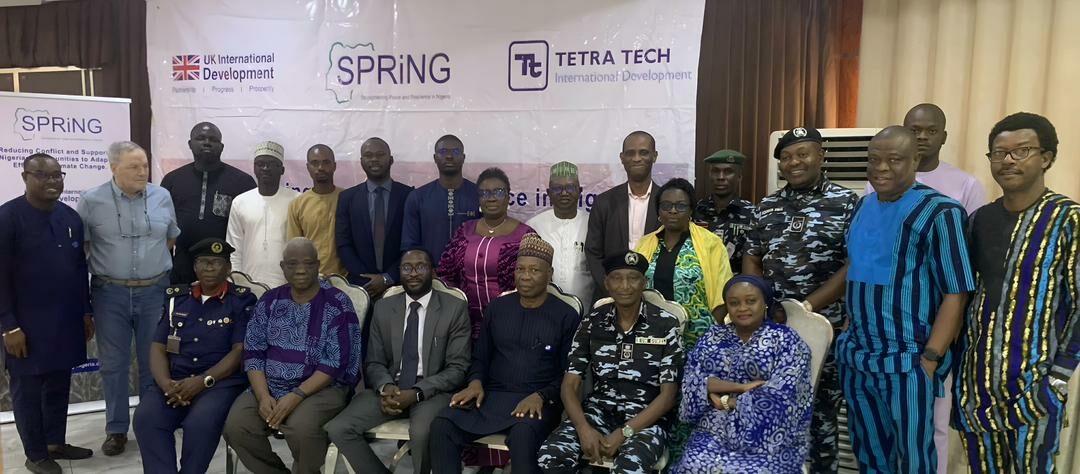
As part of efforts to address insecurity in Nigeria, the Strengthening Peace and Resilience in Nigeria (SPRiNG) Programme has convened a workshop and policy dialogue on the policy paper to brainstorm over the proposed state police.
The workshop, titled “State Police in Nigeria: Prospects and Challenges,” brought together senior security actors, policymakers, development partners, and experts to advance informed dialogue on the ongoing national debate on state policing.
Speaking at the event, the Team Leader of SPRiNG, Dr Ukoha Ukiwo, emphasised the need to ground security reforms in evidence and inclusive dialogue.
“The conversation on state policing must go beyond political rhetoric. It requires careful consideration of accountability, human rights protections and institutional capacity,” Ukiwo said.
He added that through the policy paper, SPRiNG was supporting an informed, evidence-driven national dialogue that prioritises citizen safety, trust and sustainable peace.
Held at the weekend, the event provided a platform for discussions on the opportunities, risks and institutional requirements associated with state policing within the context of Nigeria’s evolving security challenges.
Presenting the policy paper, Professor Etannibi Alemika outlined the potential benefits of state policing, while drawing attention to concerns regarding constitutional safeguards, accountability, funding, inter-agency coordination, and the risk of political interference.
In their remarks, speakers at the event noted that while decentralised policing may offer opportunities for improved local responsiveness and community trust, its success depends on strong legal frameworks, institutional oversight and effective coordination across federal and state governments and security actors.
In a statement issued after the workshop, SPRiNG said the programme had reaffirmed its commitment to supporting evidence-based policymaking, inclusive engagement and collaborative approaches to security sector reform in Nigeria.
SPRiNG emphasised the need for continuous collaboration with government institutions, civil society, and development partners to strengthen peace, resilience, and trust between citizens and the state.
Participants at the workshop included Deputy Inspector-General of Police, Mohammed Usman Gumel, who represented the Inspector-General of Police; Conflict Adviser at the British High Commission, Pirmah Rimdans and Director of Research and Planning at the National Institute of Police Studies, Nigerian Police Force, ACP Ogbonnaya Nwota.
Others include the Head of Department for Local Training at the National Security and Civil Defence Corps (NSCDC), DCC Onyeogu Benedicta, and Director-General of the Office for Strategic Preparedness and Resilience (OSPRE), Chris Ngwodo, among other stakeholders.
We’ve got the edge. Get real-time reports, breaking scoops, and exclusive angles delivered straight to your phone. Don’t settle for stale news. Join LEADERSHIP NEWS on WhatsApp for 24/7 updates →
Join Our WhatsApp Channel