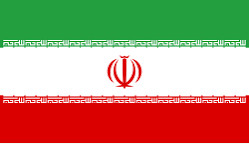
Iran on Monday dismissed Washington’s declaration of a massive economic pressure campaign, saying it contradicts US claims that Tehran’s military and nuclear capabilities had been dismantled.
Iranian Deputy Foreign Minister Kazem Gharibabadi questioned the need for a major economic offensive if the United States had already succeeded in destroying Iran’s military and nuclear capabilities.
“Your narrative doesn’t add up: you say that Iran’s military power has been ‘dismantled’, 100 per cent of its military factories ‘destroyed’ and its nuclear programme ‘buried’,” Gharibabadi said in a post on X.
He added that the reported need for “the largest financial invasion in history” and the mobilisation of “all institutions and powers” of the United States raised questions over whether Washington’s actions represented a victory or an admission of defeat.
Earlier, US Treasury Secretary Scott Bessent wrote in the Financial Times that Washington was launching what he described as the “single greatest financial offensive marshalled against an adversary”, referring to it as an “economic D-Day”.
Bessent also posted on X that the measures followed the United States’ alleged dismantling of Iran’s military capabilities, destruction of nearly 100 per cent of its military factories and burial of its nuclear programme.
Bessent is scheduled to explain the new US sanctions on Iran on Monday.
Meanwhile, Iran’s Foreign Ministry warned countries against joining the US economic campaign.
Foreign Ministry spokesman Esmaeil Baqaei said countries participating in the campaign would “definitely” face consequences.
The United States and Israel triggered the Middle East war with a massive wave of strikes against Iran on February 28, prompting Iranian retaliation across the region.
An April 8 ceasefire brought an end to nearly 40 days of intense bombardment, but control of the Strait of Hormuz soon emerged as a major flashpoint in the conflict.
Iran has controlled the vital energy route since the war began. Reopening the strait, which is crucial to global oil and gas supplies, has become a priority for Washington.
However, Tehran insists the waterway will remain closed until the United States lifts its naval blockade on Iranian ports, removes oil sanctions and unfreezes Iranian assets held abroad.
Last week, US President Donald Trump announced that Washington would intensify economic pressure on Iran “on an unprecedented scale”.
The United States has also urged other governments, including China, to join efforts to further isolate Iran’s economy.
In an article published Monday in Iran’s Ettela’at newspaper, Foreign Minister Abbas Araghchi said Tehran’s relations with China had taken on “deeper, more structural, and more comprehensive dimensions”.
Iran has faced US and international sanctions since the 1979 Islamic Revolution.
Trump has repeatedly pursued a “maximum pressure” policy of economic sanctions against Iran, reinstating the approach after returning to office in January 2025, following a similar campaign during his first term.
Iran has consistently rejected the sanctions policy as ineffective, maintaining that economic pressure and threats will not force Tehran to change its position.
We’ve got the edge. Get real-time reports, breaking scoops, and exclusive angles delivered straight to your phone. Don’t settle for stale news. Join LEADERSHIP NEWS on WhatsApp for 24/7 updates →
Join Our WhatsApp Channel