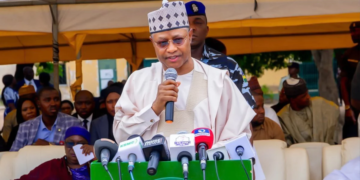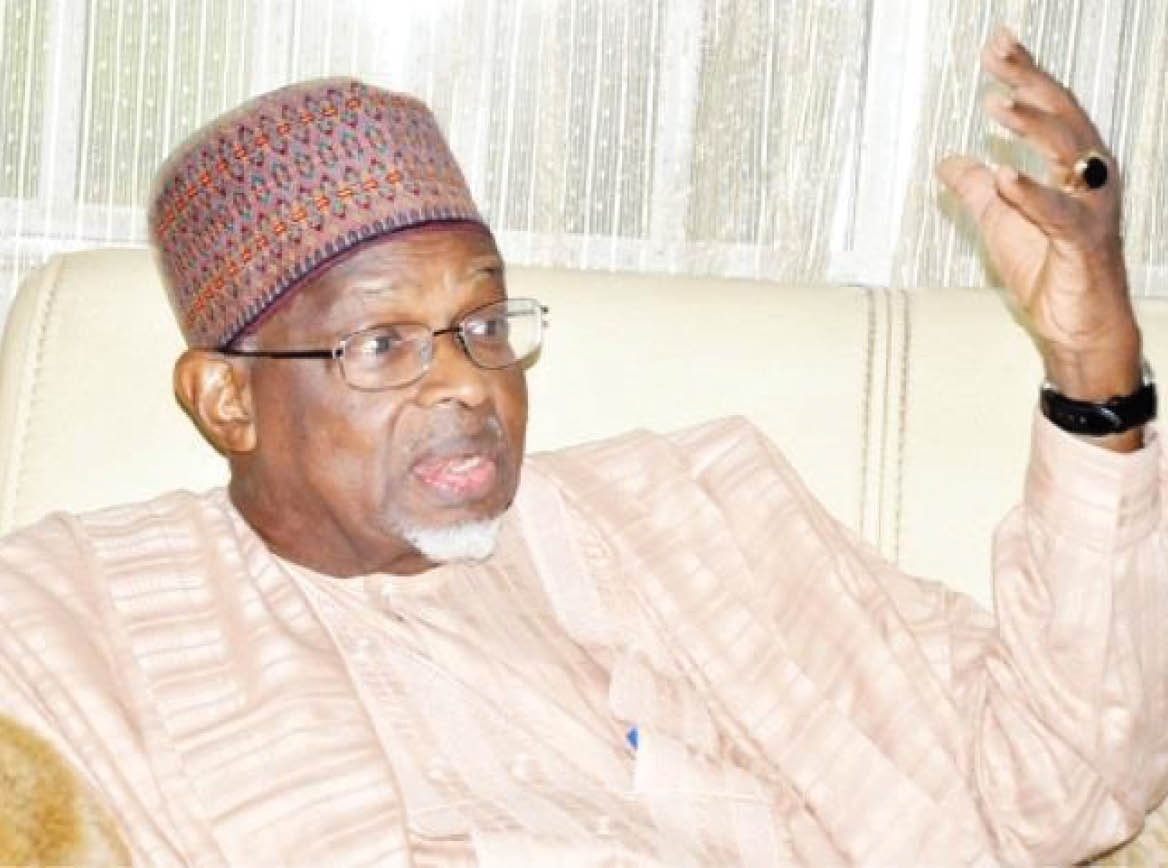
In a season when genuine statesmanship is regrettably in short supply, Professor Jibril Aminu’s death at the age of 85 marks the closing chapter of a unique era of Nigerian public service, one characterised by deep intellect, humility in leadership, and an unflinching commitment to national development.
Though he had receded from the public eye in recent years, Aminu’s impact in academia, medicine, diplomacy, and politics remains writ large on the fabric of Nigeria’s post-independence evolution.
Born in the then-quiet town of Song in Adamawa State in 1939, Jibril Aminu rose from humble beginnings to become one of Nigeria’s most distinguished technocrats and public intellectuals.
He experienced personal loss early in life with the death of his father, yet he was nurtured by the enduring love and mentorship of his mother and uncle — a foundation he would often acknowledge as central to his lifelong resilience and determination.
It is a testament to his brilliance that from Song Elementary School and Barewa College, he would find his way to the University of Ibadan and later to the hallowed halls of the Royal Postgraduate Medical School in London.
But Prof. Aminu was never content with merely acquiring titles and qualifications. He used every feather in his cap to strengthen public institutions. From his tenure as a pioneering executive secretary of the National Universities Commission (NUC) to his stewardship as Vice Chancellor of the University of Maiduguri, he proved that academic excellence could coexist with administrative competence.
He was a central figure in laying the foundation for Nigeria’s now-famous 6-3-3-4 education system. He was also instrumental in establishing the Modibbo Adama University and Federal College of Education in Yola — institutions that continue to shape the lives of thousands of Nigerian youths.
Prof. Aminu’s foray into politics was never an afterthought or an accidental detour. Rather, it was a natural extension of his intellectual activism and belief in public service.
As minister of education and later minister of petroleum and mineral resources under the Babangida regime, he brought clarity, policy depth, and a strategic mindset to portfolios often muddied by politicking and corruption. It was during his time as petroleum minister that Nigeria saw the indigenisation of its oil exploration efforts, a move that reinforced national sovereignty in a vital sector.
Many Nigerians also remember him for his brief but significant diplomatic stint as Nigeria’s Ambassador to the United States (1999–2003) at a time when the country was struggling to reassert itself on the global stage post-military rule.
He served with quiet dignity, building bridges between Nigeria and its diaspora while strengthening bilateral relations with one of the world’s superpowers.
As a senator representing Adamawa Central from 2003 to 2011, he was deliberate, vocal, and unafraid to challenge entrenched interests. Indeed, his outspoken views on controversial issues, from opposing immunity for governors and presidents to arguing for the loss of office for defecting politicians, placed him in a rare category of Nigerian public figures who chose principle over popularity.
Yet, what made Jibril Aminu truly exceptional was not merely the number of offices he held, but how he occupied them. In an age where public service often degenerates into private gain, he stood out as a man driven by ideals and duty. Even in retirement, his voice did not grow timid. As a delegate to national conferences, including the 2014 National Conference, he remained active, reflective, and bold in shaping ideas about Nigeria’s political structure and future.
In one of his most thought-provoking public speeches in 2001, he even dared to question whether federalism, in its current dysfunctional form, was in Nigeria’s best interest. That kind of intellectual courage is in short supply today.
Indeed, Prof. Aminu belonged to a generation of Nigerian leaders who did not merely seek office but sought purpose in public life. His death, therefore, leaves a profound void, not just in Adamawa State but in Nigeria’s broader leadership ecosystem.
His footprints in the sand of time span from the University of Ibadan and Howard University lecture rooms to the chambers of the Senate and the global oil diplomacy of OPEC. He was a professor, a statesman, a mentor, and, above all, a patriot.
President Bola Tinubu, Vice President Kashim Shettima, and other notable Nigerians rightly mourned him as a man of “uncommon brilliance” and “intellectual depth.”
If his life teaches us anything, it is that greatness in public life is not accidental. It is built on sacrifice, on discipline, on vision, and on a relentless pursuit of nation-building.
As a newspaper, we mourn his passing but celebrate a life well-lived in the service of others. We urge the federal and Adamawa State governments to immortalise him, not just by naming buildings or streets after him, but by reviving the education and public service values he stood for.
As a newspaper, we implore Nigeria’s younger generation to study the life of this remarkable man. In doing so, they may discover that it is still possible to serve with honour and leave a legacy not of wealth, but of impact.
Farewell, Professor Jibril Aminu. Nigeria salutes you.
We’ve got the edge. Get real-time reports, breaking scoops, and exclusive angles delivered straight to your phone. Don’t settle for stale news. Join LEADERSHIP NEWS on WhatsApp for 24/7 updates →
Join Our WhatsApp Channel