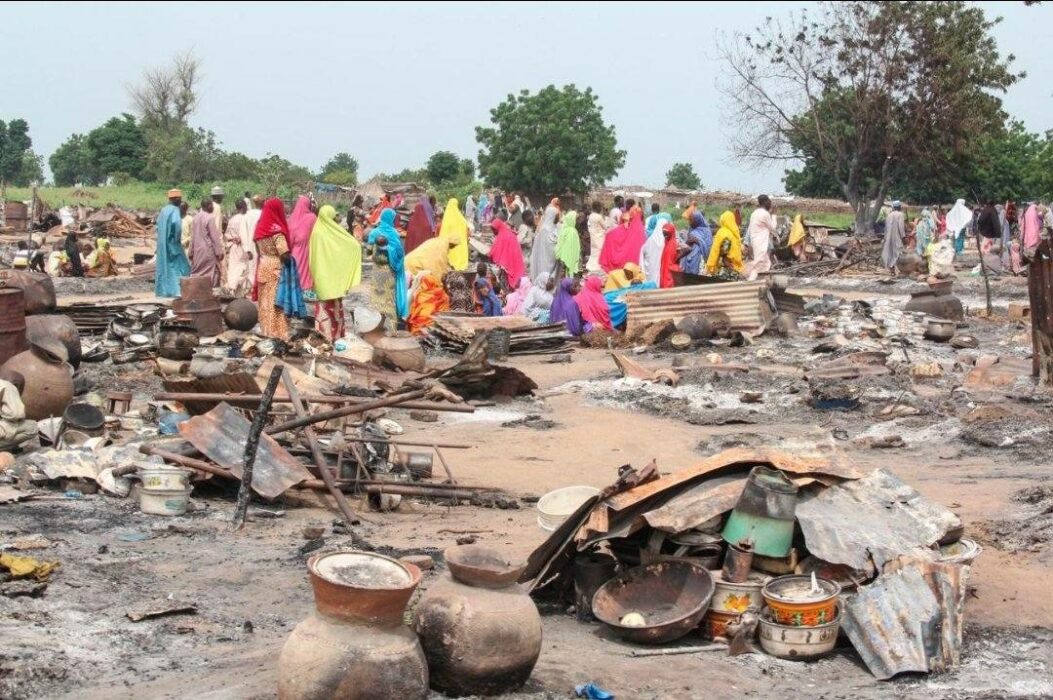
The Nigerian Air Force airstrike on the Jilli village market in Yobe State on 11–12 April 2026 has left another trail of civilian blood across the Northeast. Local sources and eyewitness accounts report that between 100 and 200 civilians — mostly farmers, traders and market women — were killed when the strike hit the busy weekly market near the Borno border.
Amnesty International and Reuters have confirmed the high civilian toll, describing it as one of the deadliest single incidents in recent years. The military initially stated that the target was a terrorist enclave used by Boko Haram/ISWAP fighters and has since announced a full investigation into the civilian casualties. Once again, a community already battered by insurgency finds itself mourning the very forces sent to protect it.
This is not an isolated tragedy. Nigeria has witnessed a disturbing pattern of airstrikes that end up killing civilians. In December 2023, the Tudun Biri drone strike in Kaduna killed between 85 and 120 people at a religious gathering. In April 2024, another strike in Zamfara during Eid celebrations claimed at least 33 lives.
Similar incidents occurred in Sokoto and Zamfara in late 2024 and early 2025, each time followed by official promises of investigation, compensation and improved targeting protocols. Yet the cycle repeats. Between 2017 and September 2024 alone, at least 17 documented accidental airstrikes resulted in over 500 civilian deaths, according to BBC Pidgin and SBM Intelligence. The Jilli strike is, therefore, not an anomaly; it is the latest chapter in a long and painful record of collateral damage in counter-insurgency operations.
The government and military maintain that these operations are necessary responses to a ruthless enemy that deliberately embeds among civilians. Militants and bandits frequently use markets, villages and religious gatherings as cover, making precise distinction difficult under intense operational pressure. The military has consistently argued that it acts on credible intelligence and that civilian casualties, though tragic, are unintended consequences of asymmetric warfare.
In the case of Jilli, the Air Force has pledged a thorough investigation and expressed condolences to the affected families. Yet despite these assurances after every incident, the pattern persists, raising legitimate questions about the effectiveness of existing safeguards.
Why do these incidents continue despite repeated assurances? The reasons are systemic. Intelligence failures remain the most cited factor: militants and bandits often operate in civilian-populated areas, blurring the line between combatants and non-combatants. Pressure on the military to deliver quick results in the face of relentless banditry and insurgency sometimes leads to rushed targeting decisions. Technical limitations, inadequate real-time surveillance and poor coordination between ground forces and air assets compound the problem. More troubling is the culture of limited accountability. While internal investigations are routinely announced, independent civilian oversight is rare, and prosecutions for operational errors are virtually non-existent. Compensation, when paid, is often delayed or inadequate, leaving grieving families without closure or justice. This pattern erodes the moral authority the military has historically commanded as a disciplined and professional force.
Philosophically, the recurring civilian deaths from airstrikes expose a deeper fracture in the social contract.
The 1999 Constitution places the security and welfare of the people at the heart of government responsibility. The military, as the ultimate guarantor of that security, bears an even heavier ethical burden. When the very institution entrusted with protecting citizens becomes a source of avoidable death, the bond of trust that sustains national cohesion is severely strained. Citizens in the Northeast and Northwest, already grappling with hunger, forest loss, governance fatigue and survival economics, now face the added trauma of fearing both terrorists and the forces sent to defeat them. This loss of confidence is not abstract; it directly undermines the intelligence-sharing and community support that are essential to winning the war against banditry and insurgency.
The consequences are far-reaching. Each incident deepens public distrust in the military, as vividly illustrated by the recent public challenge from dismissed soldier Soja Boi over welfare and transparency.
Families of the fallen or injured carry not only grief but also a sense of betrayal. In the North, where communities are already stretched by displacement and economic hardship, these tragedies fuel resentment and make reconciliation harder. Nationally, they weaken the legitimacy of the security apparatus at a time when unity and public support are most needed. The cycle of strike, denial, investigation and repetition risks turning military operations into a source of instability rather than a solution to it.
Yet Jilli must not become just another footnote. This moment offers a genuine opportunity for institutional renewal. The Nigerian military and the federal government must move beyond routine promises. An independent, civilian-led investigation — perhaps involving respected human rights bodies — is essential to establish the facts and recommend systemic changes. Improved real-time intelligence, stricter rules of engagement in populated areas, and investment in advanced surveillance technology are urgently required. Transparent compensation mechanisms and support for affected communities must become standard, not discretionary. Above all, leadership must communicate with empathy, acknowledging the human cost rather than minimising it, while continuing to confront the terrorists who exploit civilian spaces.
The Nigerian people have shown extraordinary resilience in the face of insecurity and hardship. They expect the same integrity and accountability from the institutions that protect them. The blood of Jilli is a silent alarm that the pattern of civilian casualties from military airstrikes can no longer be tolerated as collateral damage. Nigeria must answer this alarm with urgency, moral courage and genuine reform. Only then can the military regain the full confidence of the citizens it serves, and only then can the long war against terrorism and banditry be won with the support of the very communities it seeks to liberate.
We’ve got the edge. Get real-time reports, breaking scoops, and exclusive angles delivered straight to your phone. Don’t settle for stale news. Join LEADERSHIP NEWS on WhatsApp for 24/7 updates →
Join Our WhatsApp Channel