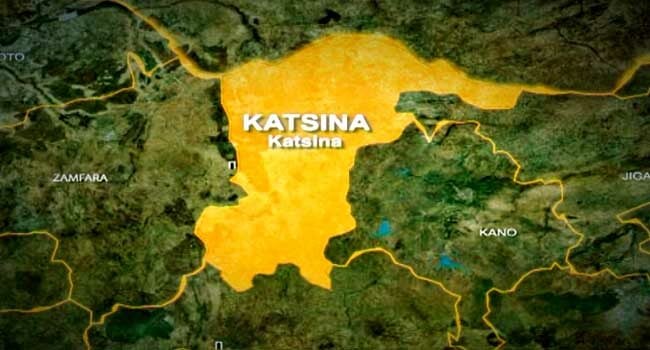
In a packed hall of entrepreneurs, investors, and government officials, the Director-General of the Katsina Investment Promotion Agency (KIPA), Ibrahim Tukur Jikamshi, delivered a message that resonated far beyond policy briefings.
With a vision sharply focused on 2026, he laid out a transformative blueprint for the state a strategy that links land ownership, digital literacy, and micro, small, and medium enterprise (MSME) growth to the broader goal of economic empowerment.
At the heart of Jikamshi’s presentation was a stark truth: land without certification is dead capital.
He painted a vivid picture of residents who own homes or farms but cannot leverage them for investment because their properties lack a Certificate of Occupancy (C of O).
“Without a valid C of O, your house or farm cannot help you grow your business or secure loans,” he warned.
To address this, the state has digitized land records, streamlined verification through the Geographic Information Service, and set a 16-day ultimatum for issuing new certificates starting January 2026.
The message was clear: residents must act fast or risk seeing their properties remain financially inert.
Jikamshi did not stop at land. He reminded the audience that government alone cannot drive economic growth. It is the private sector, he argued, that employs more people and creates wealth.
Using Alhaji Dahiru Mangal’s investments in rice and fertilizer production as an example, he underscored the potential of indigenous entrepreneurs to transform the local economy.
To support such investment, KIPA has created a Public – Private Partnership (PPP) Unit and Project Facilitation Funds, easing barriers to entry for businesses from feasibility studies to permits and licensing.
These measures, combined with an uptake arrangement for faster business registration, are designed to encourage companies that can generate exports and add value, not just operate as local trading ventures.
The DG also turned attention to the justice system, noting that disputes over contracts and business transactions can cripple growth.
In response, Katsina has established five commercial small-claims courts across Kasanda, Daura, and Futura, capable of resolving cases within 60 days.
He outlined plans to expand these courts to other commercial towns and provide specialized training for magistrates and police officers. For Jikamshi, fast and transparent dispute resolution is as critical to investment confidence as finance or infrastructure.
The narrative of reform then moved into the digital realm. Jikamshi highlighted the state’s fiber optics expansion, facilitated by a zero right-of-way fee policy for telecom operators.
An agreement with IPNX, involving ₦2 billion investment, will bring high-speed internet to previously underserved areas.
Complementing infrastructure development is a robust digital literacy plan: 5,000 youths will receive training in advanced ICT skills, preparing them to thrive in a global economy increasingly dominated by technology, robotics, and data-driven enterprises.
“Digital literacy is no longer optional, it is a necessity if we are to compete in the 21st century”, he added.
The reforms are also deeply rooted in supporting MSMEs, the backbone of the state’s economy.
The Government Enterprise Development Agency will manage a ₦5 billion MSME Support Fund, offer business clinics, and digitize registration processes.
The goal for 2026 is ambitious: provide access to finance for at least 2,000 MSMEs, formalize 30% of unregistered businesses, and generate 5,000 direct and indirect jobs.
These initiatives aim to transform small enterprises into engines of growth that can sustain employment and economic expansion.
But underlying all these measures is a broader philosophy: competitiveness is the ultimate solution. Jikamshi reminded the audience that Katsina, with its population of over 11 million, faces pressures from limited land and a growing demand for services.
Federal allocation formulas may treat the state like any other, but citizens’ productivity, skills, and business acumen are what will truly determine its progress. Investments, proper land certification, digital competence, and MSME growth are not just policy checkboxes, they are instruments for empowerment and prosperity.
As the session concluded, the message resonated: Katsina has laid the foundation, from certified land to broadband networks, from expedited courts to MSME support.
The next step lies with the people. Those who seize these opportunities can convert idle assets into active wealth, rural farms into business hubs, and raw talent into competitive advantage on a global scale.
In 2026, Katsina is not just talking about reform, it is building an ecosystem where policy meets productivity, and opportunity becomes real wealth.
The challenge is clear, the tools are ready, and the clock is ticking for residents to embrace this transformation.
We’ve got the edge. Get real-time reports, breaking scoops, and exclusive angles delivered straight to your phone. Don’t settle for stale news. Join LEADERSHIP NEWS on WhatsApp for 24/7 updates →
Join Our WhatsApp Channel