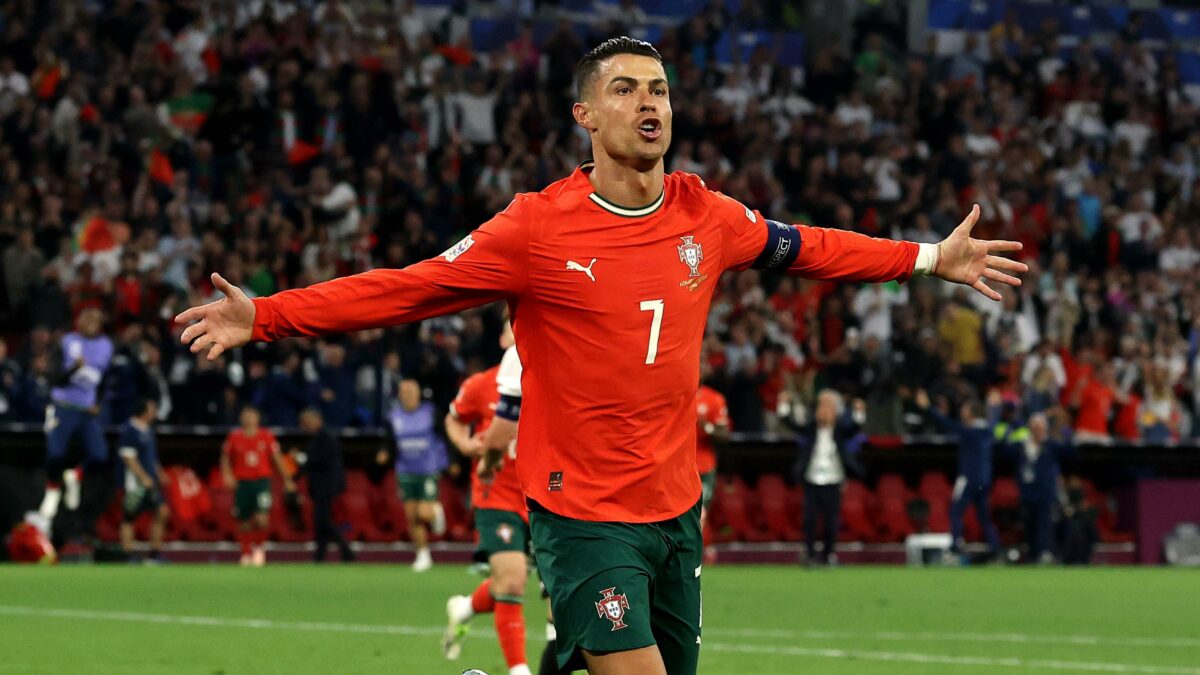
As debates swirl around Cristiano Ronaldo’s continued role in Portugal’s starting eleven at the age of 41, former Real Madrid teammate Toni Kroos has offered a blunt and insightful explanation, the veteran forward remains the team’s most lethal attacking weapon inside the box.
The comments come after Portugal’s underwhelming 1-1 draw against DR Congo on Wednesday, June 17, in their opening group-stage match at the 2026 FIFA World Cup.
Despite playing the full 90 minutes, Ronaldo struggled to impose himself on the game, managing just 25 touches of the ball—only five of which came inside the opposition’s penalty area.
His performance reignited familiar criticism that the Al-Nassr star, now in the twilight of his legendary career, may no longer warrant an automatic starting berth under manager Roberto Martinez.
Yet Kroos, who shared the Bernabéu dressing room with Ronaldo for four trophy-laden seasons between 2014 and 2018, dismissed any suggestion that the Portuguese captain is being selected on reputation alone. In an interview cited by Madrid Xtra, the retired German midfielder made it clear that Ronaldo’s inclusion is purely tactical and performance-based.
“Ronaldo is not just playing because his name is Cristiano Ronaldo,” Kroos stated emphatically. “It’s because he’s still their best attacker in the area.”
The German’s assessment underscores a key nuance in Ronaldo’s evolving game. While the five-time Ballon d’Or winner no longer possesses the blistering pace or dribbling verve of his younger years, his movement, aerial prowess, and predatory instincts in crowded penalty boxes remain world-class.
Kroos argued that Portugal’s current squad, though rich in creative wingers and midfield technicians, lacks a more clinical alternative who can convert half-chances into goals with Ronaldo’s consistency.
Indeed, the numbers behind Ronaldo’s international career remain staggering. With 229 caps over 23 years, he stands as the most-capped footballer in men’s international history.
His 143 goals for Portugal are also a global record, far surpassing the tally of any active player. While his influence in open play may have diminished, his mere presence forces opposing defences to adjust their shape, often creating space for teammates like Bruno Fernandes and João Félix to exploit.
Martinez, for his part, has shown no inclination to drop his captain. In post-match comments, the Belgian coach praised Ronaldo’s leadership and off-the-ball work, even when the goals aren’t flowing.
However, the draw against DR Congo—a side ranked 25 places below Portugal—has intensified scrutiny on whether the team’s attacking setup is too reliant on a player who, by any historical measure, is defying age but not gravity.
Kroos’s defence, however, offers a compelling counterpoint: in high-stakes tournament football, where matches are often decided by a single moment inside the six-yard box, Portugal simply does not have a more reliable finisher than Ronaldo. Until a younger striker emerges with the same cold-blooded efficiency, the No. 7 shirt will remain firmly in the starting lineup—not out of sentiment, but out of necessity.
As Portugal prepares for their next group fixture, all eyes will be on Ronaldo to silence his doubters with the one currency that has always defined his career: goals.
We’ve got the edge. Get real-time reports, breaking scoops, and exclusive angles delivered straight to your phone. Don’t settle for stale news. Join LEADERSHIP NEWS on WhatsApp for 24/7 updates →
Join Our WhatsApp Channel