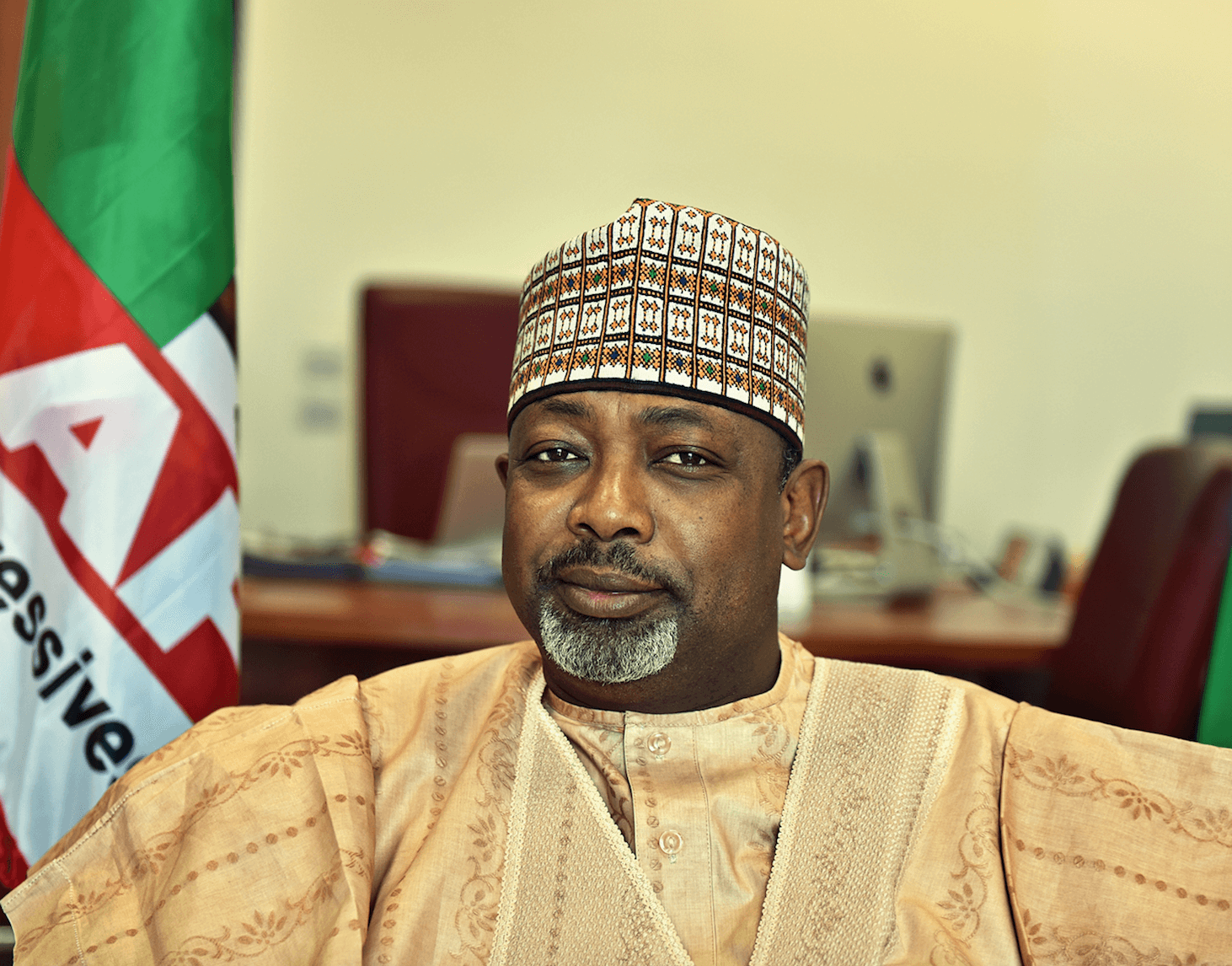
Minister of Agriculture Abubakar Kyari has been in the news a lot lately, distributing fertiliser alongside First Lady Remi Tinubu or standing side by side with the management of the Bank of Agriculture as it promises to invest N200 billion in the sector.
But despite the thousands of tonnes of fertiliser and hundreds of billions of naira being committed, Nigeria remains one of the few major economies still dependent on hoes, cutlasses and wheelbarrows.
Yet it plans to feed the 400 million people its population is projected to reach by 2050 by relying on an estimated 30 to 40 million smallholder farmers whose primary tools are hoes and cutlasses.
By some estimates, that is one of the biggest food security challenges in the world. Clearing land manually with cutlasses means Kyari may struggle to expand agricultural output unless more of those farmers gain access to tractors and other modern equipment.
So far, however, the current system has sustained the country. Although only tens of thousands of farmers have access to tractors, smallholders still produce about 85 per cent of Nigeria’s food.
Recent studies show that over the past six to ten years, medium-scale farms of between five and 100 hectares have increased their share of Nigeria’s crop output from about 7 per cent to roughly 18 per cent, making them the fastest-growing segment of the sector.
There are also large commercial operators with the financial resources to engage in mechanised farming. With access to improved seed, irrigation, machinery and storage, they generally produce higher yields per hectare.
Olam Agri is probably the largest operator, with a 13,500-hectare rice farm in Nasarawa State. About 4,400 hectares are currently under active cultivation, supported by an integrated rice mill capable of producing 200,000-220,000 metric tonnes of milled rice annually.
Kaboji Farm in Niger State, owned by Flour Mills of Nigeria, has 10,000 hectares, with about 4,500 hectares under cultivation, and is widely regarded as one of Nigeria’s largest fully mechanised commercial farms.
Other major operators, including Presco and BUA, are expanding, while SMK Farms and Niji Group each cultivate close to 7,000 hectares. Overall, however, there are still too few modern commercial farms to meet Nigeria’s food security needs, and most concentrate on high-value commercial crops.
Through the Renewed Hope Agricultural Mechanisation Programme, Kyari has launched 2,000 tractors and 9,000 farm implements. It is a drop in the ocean compared to the estimated 30 million farmers.
However, if implemented effectively through shared mechanisation rather than individual ownership, Kyari’s plan to build a nationwide mechanisation service industry—using cooperatives, private providers and government partnerships to make tractors available on demand—could significantly improve the sector’s future.
We’ve got the edge. Get real-time reports, breaking scoops, and exclusive angles delivered straight to your phone. Don’t settle for stale news. Join LEADERSHIP NEWS on WhatsApp for 24/7 updates →
Join Our WhatsApp Channel