Fresh facts have emerged that the Lagos State government will spend N1.4 trillion on infrastructure and development projects in 2026.
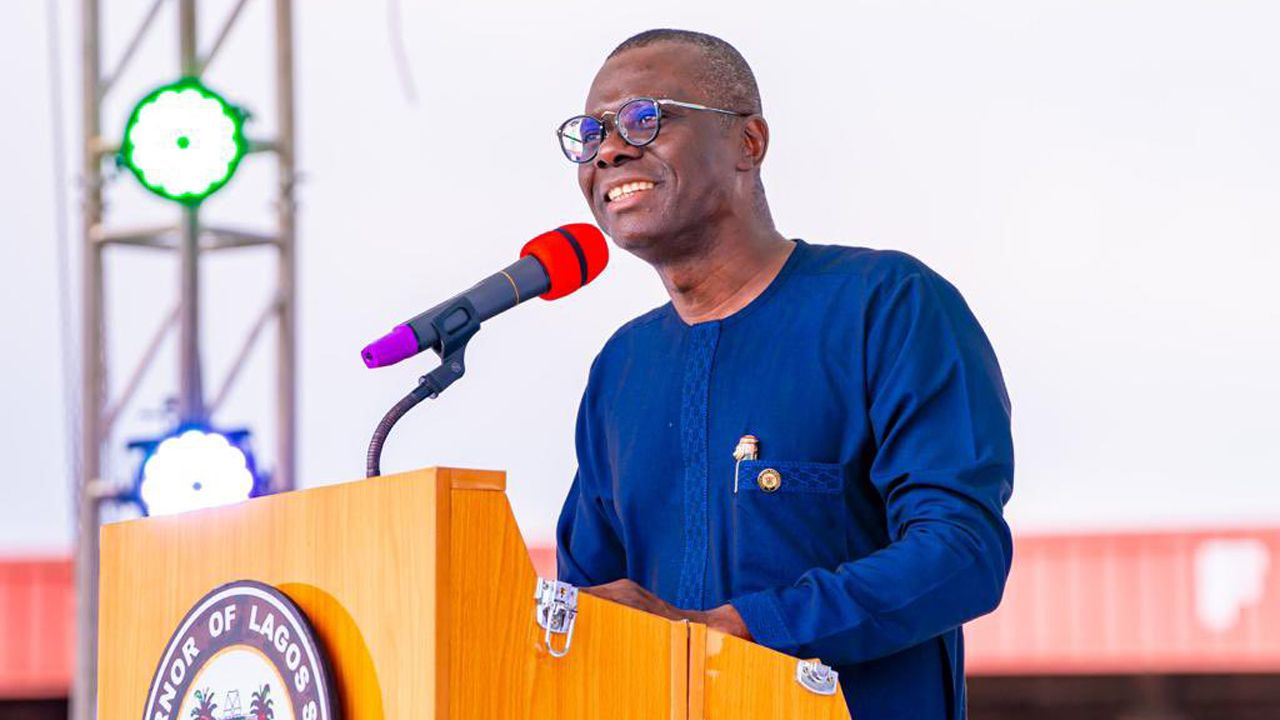
The state’s commissioner for Economic Planning and Budget, Ope George, revealed this at the 2026 ministerial briefing, saying the year 2026 N4.4 trillion signed into law by Governor Babajide Sanwo-Olu, christened “Budget of Shared Prosperity”, is strategically structured to strengthen infrastructure sustainability, economic diversification, institutional reforms and inclusive social development across Lagos State.
During the ministerial press briefing at the Bagauda Kaltho Press Centre, Alausa, Ikeja, George disclosed that the N4.444 trillion budget comprises N2.338 trillion capital expenditure and N2.106 trillion recurrent expenditure, representing a 53:47 capital-to-recurrent ratio designed to accelerate economic growth and improve the quality of life of Lagos residents.
According to the commissioner, N1.467 trillion was earmarked for critical infrastructure projects across key sectors, including transportation, healthcare, education and public works, in line with the state government’s infrastructure sustainability agenda.
He explained that major projects such as the Opebi-Mende Link Bridge and the Eti-Osa/Lekki/Epe Expressway Phase IIB are expected to reduce traffic congestion, improve connectivity, stimulate economic activities, and unlock investment opportunities across strategic economic corridors.
George stated that the Opebi-Mende Link Bridge will serve as a major alternative route linking residential communities such as Mende and Maryland to the commercial districts of Ikeja, thereby reducing pressure on major traffic bottlenecks, including Kudirat Abiola Way and Mobolaji Bank Anthony Way. He added that the project is expected to drive property appreciation, commercial expansion, logistics efficiency, and urban renewal within the axis.
On housing delivery, the Commissioner revealed that the state government is prioritising the completion of several housing schemes targeted at low- and middle-income residents, including the 504-unit LAGOSHOMS Sangotedo Phase II, Epe Housing Scheme, Ibeshe Phase II, Late Abdul-Wahab Oke Benson Estate, LAGOSHOMS Ajara-Badagry, and the Egan Mixed Housing Scheme.
He noted that the project aims to reduce the housing deficit and expand access to affordable housing across the State.
In discussing economic diversification, George disclosed that ₦87 billion was allocated to food security initiatives, including the Lagos Wholesale Produce Hub. In comparison, ₦35 billion was earmarked for tourism infrastructure projects, such as the Badagry Point of No Return and the Lagos Heritage Centre.
He added that ₦112 billion was also committed to energy and power development to reduce operational downtime, enhance productivity, and improve the State’s economic competitiveness.
The Commissioner further explained that institutional reforms remain a key pillar of the budget, with ₦33 billion allocated to technology and digital transformation initiatives aimed at automating government processes, improving revenue generation, and enhancing the Ease of Doing Business in Lagos State through faster and more efficient service delivery.
We’ve got the edge. Get real-time reports, breaking scoops, and exclusive angles delivered straight to your phone. Don’t settle for stale news. Join LEADERSHIP NEWS on WhatsApp for 24/7 updates →
Join Our WhatsApp Channel