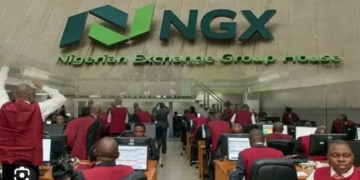
The Securities & Exchange Commission (SEC), stated that, Nigeria’s exit from the FATF gery list and the launching of the T+2 settlement cycle makes Nigeria a great investment destination.
Nigeria officially transitioned from a T+3 to a T+2 settlement cycle, marking a major advancement in modernising its capital market.
The executive commissioner, Operations, SEC, Bola Ajomale, who represented the director-general of the commission, Emomotimi Agama stated this, at the press briefing of the official launching of the T+2 settlement held at the weekend in Lagos.
He stated that, “this is a good development and it will challenge us to develop sharper surveillance and build capacity to detect errors faster. As Nigeria exits the grey list, this move is a step in reaffirming to the world that Nigeria is a great investment destination.”
He noted that, with this development, the dispute resolution department in SEC will be functional with additional manpower and the monitoring department will be further empowered.
The chairman of the CSCS Plc, Temi Popoola said, the shift represented a strategic step toward global best practice.
Popoola described the transition as a historic milestone that would strengthen liquidity, reduce risk and enhance investor confidence.
He said, the move signalled Nigeria’s commitment to building a market anchored on efficiency, transparency and competitiveness.
According to him, the new cycle laid a stronger foundation for foreign investor participation and supports the national economic target of a $1 trillion economy.
Popoola said the shift positioned Nigeria to align with global reforms, including advanced markets moving toward T+1 settlement cycles.
“The transition to T+2 settlement cycle is not merely an operational achievement, it is a strategic signal. It is a signal that Nigeria is committed to building a market that is anchored on efficiency, transparence and global competitiveness. This positions Nigeria to participate effectively in the next generation of capital market innovation,” he said.
Popoola explained that, the achievement reflected months of coordinated work among regulators, operators, intermediaries and technology partners across the value chain.
He also acknowledged the T+2 Steering Committee for addressing the technical and regulatory requirements needed to safeguard market integrity.
Also speaking, the managing director and chief executive officer of CSCS, Haruna Jalo-Waziri said the transition followed extensive stakeholder engagement, testing, capacity building and market-wide awareness activities.
He said, the move was supported by major technology upgrades, including the recent migration to IBM Power 10 systems, which was completed seamlessly.
He recalled that the market once relied on manual processes and physical share certificates that delayed settlement and increased counter-party risk.
Jalo-Waziri said, post-trade processes were now 95 per cent automated, to delivering faster settlement, lower risk and improved reliability for all market participants.
He commended the CSCS board and risk-management teams for approving key investments and ensuring full compliance with global settlement standards, stating that the new system offers higher processing speeds, improved automation, and enhanced market connectivity.
“Investors, brokers and custodians can now enjoy faster settlement, lower counter-party risk and a more predictable post-trade environment,” he said.
We’ve got the edge. Get real-time reports, breaking scoops, and exclusive angles delivered straight to your phone. Don’t settle for stale news. Join LEADERSHIP NEWS on WhatsApp for 24/7 updates →
Join Our WhatsApp Channel