
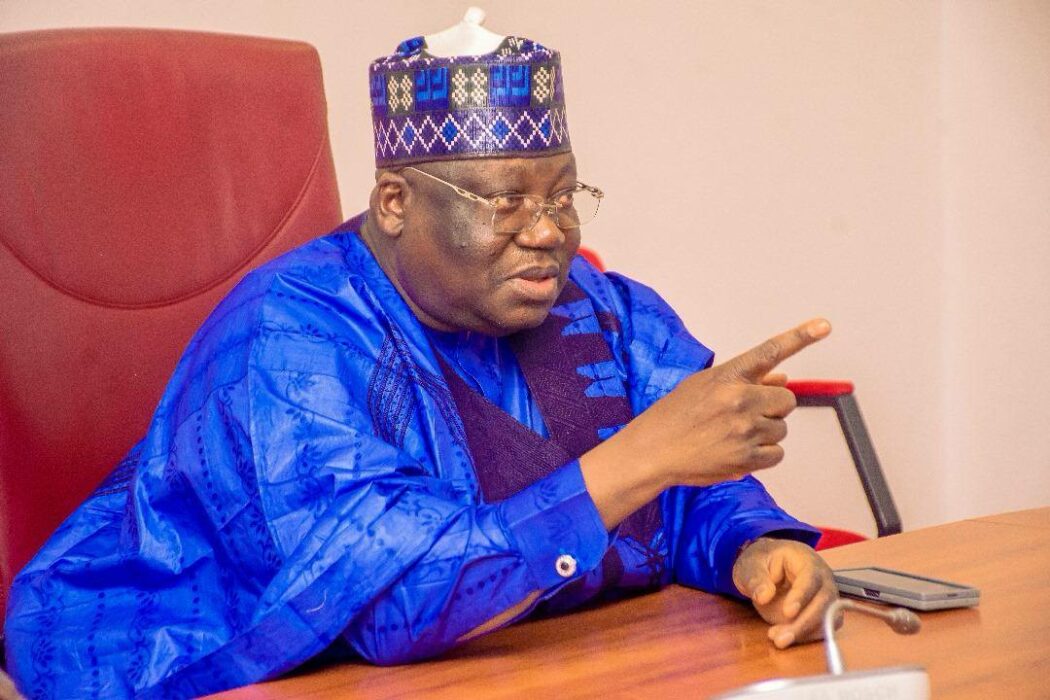
Former Senate President Ahmed Lawan, has called for a fixed percentage of Nigeria’s revenue to be allocated to the Armed Forces and other security agencies to strengthen their capacity to acquire weapons, equipment and operational platforms.
Lawan, who chairs the Senate Committee on Defence, made the proposal in a goodwill message at the third edition of the Defence Correspondents Association of Nigeria (DECAN) conference in Abuja.
The conference was themed: “Beyond Kinetic Warfare: Harnessing Technology and Intelligence-Led Operations for Nigeria’s National Security.”
Although he did not specify the percentage of national revenue that should be dedicated to security funding, Lawan said increased government earnings should lead to improved investment in the country’s security architecture.
He also proposed bulk purchases of military equipment and called for security budgets to be placed on first-line charge to address delays in the release of funds to the Armed Forces and other security agencies.
Lawan said the National Assembly had consistently approved funding requests submitted by the executive for the military and other security agencies.
“For us in the National Assembly, it is our duty to support the arm of government, to ensure that whatever resources are available and are required, are requested by the arm of government, we support that and we even give more.
“And today, I am over 27 years as a member of the National Assembly, I have not seen any request sent by the executive for the armed forces and other security agencies that has not been approved. In fact, in most cases, they were always approved. Because we believe that security is first,” he said.
The former Senate president said the security and welfare of citizens remained the primary responsibility of government, adding that the legislature would continue to make resources available to security agencies within the limits of available funds.
“Let me at this point suggest that as we receive more and more revenues, better revenues than before, especially outside of the war, I think we need to have more platforms, more weapons, purchase in bulk. Maybe we need to dedicate a certain percentage of our resources to arm our armed forces and other security agencies to safeguard this country,” he said.
Lawan argued that security personnel could not be expected to achieve optimal results without adequate equipment and funding. He said placing security budgets on first-line charge would help address challenges associated with delayed releases and ensure that agencies received resources when needed.
He also urged journalists to highlight the work of security agencies and their contributions to national safety, despite continuing incidents of banditry and other criminal activities.
Lawan said Nigeria had made progress in tackling insecurity but stressed that more needed to be done.
“I believe that our armed forces are still working so hard and therefore from time to time when we face banditry, it’s not a good reason for anyone to say Nigeria is totally insecure. It’s not true. I believe that we have moved from where we were to a better situation now but we can make this better, far more better,” he said.
Meanwhile, the Minister of Information and National Orientation, Mohammed Idris, said defence reporting required courage, sound judgment and a clear understanding of the responsibilities involved in reporting military operations, security threats and the sacrifices of personnel.
Idris, who was represented at the event by the Director-General of the Voice of Nigeria, Mallam Jibrin Baba Ndace, said military operations must be backed by reliable intelligence, modern technology, effective coordination among security agencies and cooperation with local communities.
He added that the underlying conditions that enable criminal groups to recruit, operate and threaten the lives and livelihoods of innocent people must also be addressed.
According to him, President Bola Ahmed Tinubu’s administration has prioritised national security through the modernisation of the Armed Forces, intelligence-led operations, improved surveillance and stronger coordination among security and intelligence agencies.
Idris said the president directed the preparation of a comprehensive National Threat Assessment and a rolling five-year Strategic Defence Operations Plan in August 2026 to improve coordination, establish clear priorities and guide the deployment of resources.
He also disclosed that the administration was committed to improving the welfare of security personnel, noting that Tinubu approved salary increases ranging from 30 to 80 per cent for Armed Forces personnel in August, effective from September 2026.
He said the increases recognised the sacrifices of personnel who risk their lives to protect the country.
We’ve got the edge. Get real-time reports, breaking scoops, and exclusive angles delivered straight to your phone. Don’t settle for stale news. Join LEADERSHIP NEWS on WhatsApp for 24/7 updates →
Join Our WhatsApp Channel