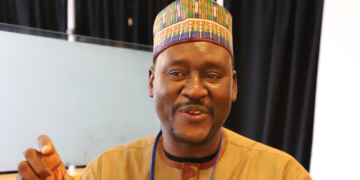
In this interview with SAMSON ELIJAH, a former Chairman of the Inter-Party Advisory Council (IPAC) and current National Coordinator of the Coalition of United Political Parties (CUPP), Chief Peter Ameh, explains why democracy is deteriorating across the sub-region, why military juntas are gaining unusual public support, and why ECOWAS appears increasingly ineffective
Why are military coups resurging across West Africa?
The resurgence is the direct consequence of failed civilian leadership. Many presidents in West and Central Africa have turned democracy into a personal project, amending constitutions to scrap term limits, manipulating elections, jailing opponents, and capturing state institutions. Leaders like Alpha Condé in Guinea, Alassane Ouattara in Côte d’Ivoire, and the long-ruling Gnassingbé dynasty in Togo are clear examples. These ‘constitutional coups’ destroy public trust long before any soldier fires a shot. When people see no jobs, no security, and no hope through the ballot box, they stop opposing military takeovers, some even cheer them. When democracy stops delivering safety or livelihoods, people easily welcome anyone promising change, even soldiers, which is the worst form of government.
Are these triggers unique to Africa?
No. Weak institutions and corrupt elites trigger coups everywhere. We saw it in Myanmar (2021), Sudan (2019–2021), and throughout Latin America in the 1960s–1980s when military juntas toppled failing governments. What makes Africa more vulnerable is the legacy of artificial borders, French neo-colonial influence, and the weakness of political culture. But the root causes, poverty, corruption, bad governance, are universal.
Why are coups more frequent in West and Central Africa than elsewhere?
Former French colonies in the Sahel, the so-called Françafrique zone, face extreme poverty, jihadist wars, and long-standing political manipulation. Their armies were never fully brought under civilian control. We are also witnessing a contagion effect: once Mali’s coup succeeded, Burkina Faso followed, then Niger. One successful coup inspires the next.
Why can’t ECOWAS repeat its 2017 success in The Gambia?
In 2017, Yahya Jammeh stood alone, no real popular base, no powerful foreign backers. ECOWAS could pressure him easily. Today’s juntas enjoy massive popular support, Russian weapons, Wagner mercenary backing, and have formed their own alliance. Any intervention now would mean a regional war, not a quick operation.
What pathways exist to restore democracy?
First, ECOWAS must rebuild credibility by punishing constitutional coups the same way it punishes military coups. Second, it must strictly enforce the 2001 Protocol on Democracy and Good Governance. We also need stronger parliaments, truly independent electoral commissions, and real economic programmes to address youth unemployment. And Africa must break the monopoly of external powers, French interests, Russian opportunism, Chinese influence, and build genuine African-owned security arrangements.
Are we seeing the same patterns as the 1970s–early 1990s?
Yes and no. The triggers are the same: greed, corruption, and broken economies. But today’s coups enjoy stronger popular support, especially among young people. Many junior officers genuinely hate corruption and foreign interference. The major difference is that people now openly say, ‘Democracy is not working for us.’ That sentiment was almost taboo in the 1990s. Until civilian leaders behave better, soldiers will keep finding open doors. Our task is to advocate for sincere democratic leadership and strong institutions—so that soldiers stay in the barracks, where they belong.
We’ve got the edge. Get real-time reports, breaking scoops, and exclusive angles delivered straight to your phone. Don’t settle for stale news. Join LEADERSHIP NEWS on WhatsApp for 24/7 updates →
Join Our WhatsApp Channel