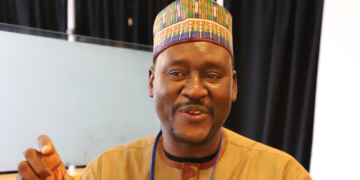
In this interview with GODWIN ENNA, Katsina-based consultant and politician Zuberu Muhammed Lawal discusses the factors driving military coups in West Africa and explains how the region has become a focal point of intensifying global competition. He highlights how major powers from Russia and China to France and other emerging players are racing to secure influence in a region that was once peripheral but now sits at the heart of shifting geopolitics, with its choices shaping the balance of power far beyond its borders
Some West Africa countries have recently witnessed a troubling resurgence of coup d’états, from Guinea to Niger and other north-western regions. From your assessment, what are the major forces driving these recurring military takeovers?
The foremost factor driving these coups is widespread corruption. Corruption in many West African countries has reached a point where it undermines every aspect of governance. Citizens see their nations generating immense revenue from natural resources, yet their everyday realities do not reflect these national riches. Roads are poor, healthcare is inadequate, unemployment is high, and basic welfare is ignored.
When a population feels deprived while a small group benefits disproportionately, frustration builds. This creates a vacuum of trust. In such environments, the military often perceives itself as the only institution capable of “rescuing” the state, even though history has shown that military rule rarely solves corruption and often worsens it. Once a coup occurs, corruption tends to become even more entrenched, masked by secrecy and absence of democratic oversight.
Beyond corruption, what structural or external factors contribute to this destabilization across the region?
Another major factor is economic dependence on foreign powers, especially in Francophone West Africa. Many people do not realize the extent to which some African economies remain tied to former colonial rulers. Countries like Niger, Mali, Burkina Faso, and Guinea rely on France for the printing of their national currency. This gives France significant control over their financial systems.
Imagine a nation with vast resources gold, uranium, oil yet without control over its own currency and financial policies. Such a country cannot fully exercise sovereignty. Many citizens in these nations view this dependence as a form of neo-colonialism. In Niger, for example, the realization that France retains substantial control over their resources fueled public anger and contributed greatly to the acceptance of the coup.
It is extremely significant. West Africa is now a battleground for global power competition. Russia, France, China, and even other emerging powers are vying for influence.
France, historically the dominant player, wants to maintain control over former colonies and their resources. Russia, on the other hand, is seeking to expand its geopolitical presence and sees Africa as a strategic partner. China’s rapidly growing influence through infrastructure, mining, and loans adds another layer of competition.
This rivalry puts enormous pressure on fragile political systems. When different global powers support different political factions, instability naturally follows. Military leaders may feel emboldened if they believe international actors will back them in exchange for resource access. This is one of the unspoken realities behind several coups.
Focusing on Benin Republic, what role should Nigeria play in preventing instability from spreading to neighboring countries?
Nigeria has both a responsibility and a strategic interest in ensuring stability in Benin Republic. The ties between both countries go beyond diplomacy. There are historical, cultural, and economic connections that span generations.
Benin is practically an extension of south-western Nigeria, just as parts of Niger have deep cultural ties to northern Nigeria. Instability in Benin will spill over into Nigeria, leading to security challenges, refugee inflow, and trade disruptions.
The Nigerian Senate’s approval to support peace efforts in Benin is the right step. Democracy in West Africa must not be allowed to collapse one country at a time. Nigeria, being the largest democracy in the region, must take a leadership role. If Benin falls to a coup, the ripple effects could destabilize the entire region.
You mentioned BRICS earlier. How does the rise of BRICS influence the political dynamics of West Africa?
BRICS originally Brazil, Russia, India, China, and South Africa has now grown into a bloc attracting many developing nations. Its rise is reshaping global economics. Countries like Niger and Burkina Faso have already expressed interest in joining.
Why? Because BRICS offers an alternative to Western-controlled financial systems. It gives African nations the possibility to negotiate better trade deals, seek loans without political conditions, and partner with countries that treat them more as equals.
However, this increased competition for African resources also brings risks. The value of strategic minerals like uranium is rising dramatically sometimes from as low as $3.50 per gram to over $300. This sudden wealth attracts both foreign exploitation and domestic corruption. If governance is weak, this influx of opportunity may trigger more political struggles or even justify military takeovers.
Military rulers often cite insecurity as their reason for intervening. Do you believe insecurity is a legitimate justification?
Insecurity is a serious issue but using it as a justification for coups is misleading. In many cases, the military itself is part of the problem.
Take Nigeria as an example. There are times when the military and police have full knowledge of security threats but fail to take action because they are “waiting for orders.” This bureaucratic bottleneck weakens the state’s ability to respond to crises and creates a perception of government failure.
To fix this, governors must be granted clearer operational authority over security agencies within their states. National and state governments need coordinated security strategies that address the root causes poverty, food security, unemployment, and lack of education. Without these reforms, insecurity will continue to serve as a convenient excuse for military intervention.
What is your message to West African leaders and citizens regarding the future of democracy in the region?
My message is that democracy must be protected at all costs. Leaders must work relentlessly to fight corruption, use national resources transparently, and ensure that citizens feel the impact of good governance.
The people must enjoy the wealth of their nations access to quality education, healthcare, security, and economic opportunity. If social justice is absent, citizens will lose faith in democratic institutions, and the military will always find a reason to intervene.
West Africa has the resources and the potential to be a model of stability. What is needed now is visionary leadership, strong institutions, and the political will to make democracy meaningful for every citizen.
We’ve got the edge. Get real-time reports, breaking scoops, and exclusive angles delivered straight to your phone. Don’t settle for stale news. Join LEADERSHIP NEWS on WhatsApp for 24/7 updates →
Join Our WhatsApp Channel