As Nigeria celebrates a historic drop in malaria prevalence, from 42 per cent in 2010 to 15 per cent in 2025, stakeholders warn that the country’s environmental sanitation crisis remains one of the biggest obstacles to progress.
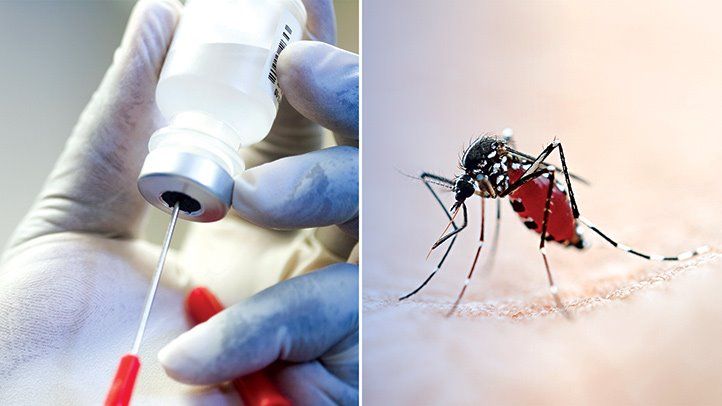
While mosquitoes are the direct carriers of the malaria parasite, the conditions that allow them to multiply rapidly are largely human-made, and widespread across communities.
According to public health experts, poor waste management, blocked drainage systems, stagnant water pools, and indiscriminate refuse disposal have created thriving breeding grounds for Anopheles mosquitoes, turning many neighbourhoods into hotspots for malaria transmission.
In urban centres like Lagos, Abuja and Port Harcourt, mountains of refuse and poorly maintained drainage channels trap water for days, especially during the rainy season. These pools of stagnant water become perfect breeding sites. In peri-urban slums and rural communities, open defecation, unpaved roads, and lack of proper waste disposal further compound the problem.
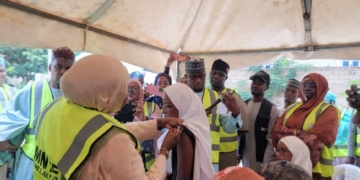
Environmental health expert, Juliet Ajawura, said these sanitation failures directly undermine Nigeria’s malaria control efforts, including bed-net distribution, chemoprevention campaigns and the rollout of malaria vaccines in selected states.
“The truth is simple: you cannot spray your way out of malaria when the environment keeps producing mosquitoes faster than we can eliminate them,” she said.
Nigeria still accounts for the highest malaria burden in the world, with millions of cases and thousands of deaths annually, particularly among children under five and pregnant women. The economic cost is equally heavy, draining household incomes and reducing national productivity.
Despite improved data, expanded interventions, and renewed political will, uncontrolled mosquito breeding hotspots across states and communities still threatens the country’s 2030 elimination goal.
The Group Managing Director, Society for Family Health (SFH), Dr. Omokhudu Idogho, expressed deep concern that despite massive investments in nets, medicines, and vaccines, Nigeria risks slowing down its progress if environmental challenges remain unaddressed.
“Some of our states need serious environmental rework. You see drains blocked everywhere, larvae worming in stagnant water. It’s not just about giving people nets; we must clear the places where mosquitoes can breed. If we do that, we can rapidly achieve what we want,” Idogho said.
He warned that many states still host large mosquito breeding sites that counter the gains made through Insecticide-Treated Nets (ITNs), Seasonal Malaria Chemoprevention (SMC), and the ongoing rollout of the malaria vaccine.
However, the federal government has reaffirmed its commitment to reducing malaria prevalence and deaths by 50 per cent by 2030, describing the disease as a major public health emergency requiring urgent and sustained action.
The Minister of State for Health and Social Welfare, Iziaq Salako, made this known during a press briefing to commemorate World Malaria Day 2026 held in Abuja.
Salako said Nigeria currently bears a disproportionate share of the global malaria burden, accounting for 24 per cent of cases and 31 per cent of deaths, according to the World Malaria Report 2025.
Despite the high burden, he noted that the country has recorded significant progress, with malaria prevalence declining from 42 per cent in 2010 to 15 per cent in 2025.
He added that no state in Nigeria is currently classified under high transmission, with 27 states now categorised as moderate transmission and nine states, along with the Federal Capital Territory, classified as low transmission.
“The progress we have made shows that when Nigeria commits, and partners align, results are possible. However, progress is not victory, and we must sustain the momentum,” he said.
The minister said the federal government has developed a National Malaria Strategic Plan (2026–2030), aligned with global and national health frameworks, to guide interventions across the country.
He explained that the plan adopts a subnational approach, allowing strategies to reflect the realities of different states.
We’ve got the edge. Get real-time reports, breaking scoops, and exclusive angles delivered straight to your phone. Don’t settle for stale news. Join LEADERSHIP NEWS on WhatsApp for 24/7 updates →
Join Our WhatsApp Channel