
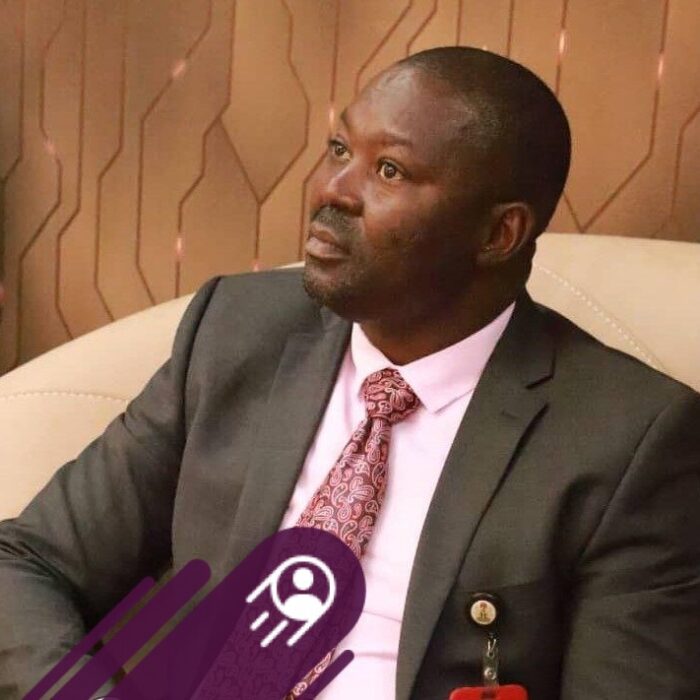
A university professor from the Nigerian Defence Academy (NDA), Prof. Sharkdam Wapmuk, has called for a thorough and intensive training of Nigerian teachers in the Mandarin-Chinese language to boost Nigeria-China economic relations.
Prof Wapmuk also acknowledged that the Chinese have studied Nigerian languages, including several African languages. “That is one of the reasons they have been able to make serious inroads in Nigeria and across Africa.”
Prof Wapmuk stated this during a one-day Seminar, “Advancing Knowledge Exchange: Bridging Africa-China Dialogue Through Scholarly Exchange” by the Institute for Peace and Conflict Resolution, IPCR, under the Federal Ministry of Foreign Affairs.
The interface, which brought together members from academia, policymakers, and journalists, focused on strategies for promoting and disseminating the Contemporary World Nigeria Magazine.
The Scholar also commended President Bola Tinubu’s bold initiative in adopting the Mandarin language, adding that it is one thing to make policy, but implementation is another.
“Where are the teachers? Have we trained enough Mandarin teachers to fill the job openings? It’s a common reaction we encounter occasionally when the issue of learning Mandarin or Chinese arises. People’s reactions tend to be negative, he said.
Prof. Wapmuk further noted that, considering the global scenario and the changes occurring within the International system, one would agree with me that China is a rising power. With the shift in the worldwide system, the emergence of a significant power means countries will rush to engage that power.
If that is so, why don’t we ensure that we are also prepared for that engagement?
According to him, the language barrier is one of the significant issues countries face when engaging with one another. Therefore, to me, we are even late in learning the language. We should have taught it long ago.
“What I’m saying is that China has emerged as a power to reckon with, hence the need for us to meet them not only halfway but to take our rightful place at the table. And language is a key tool for that engagement. But the key issue now is that we must move quickly to train teachers in this regard.”
Meanwhile, the Director General IPCR, Dr Joseph Ochogwu, in his remarks, revealed the relationship between Nigeria, Africa and China as one of the most consequential of the 21st century, characterised by deep historical roots, rapidly expanding diplomatic and economic ties, and growing people-to-people connections.
“This partnership holds immense potential for shaping a more prosperous, stable, and equitable future, not just for our continent, but for the world.”
According to Ochogwu, who was represented by IPCR director of finance and accounts, Mr Sunday Daji, stated that it is also a timely opportunity to align this effort with President Bola Ahmed Tinubu’s 4Ds Policy Doctrine and the vision of the Renewed Hope Agenda.
“Under the 4Ds—Democracy, Development, Demography, and Diaspora—Nigeria is repositioning itself on the global stage. These principles are not only strategic priorities; they are reflections of our national identity and our aspirations.
“Contemporary World provides a unique space for dialogue between nations with different political systems, and supports initiatives for sustainable growth, local innovation, and people-to-people connectivity. The increasing role of Nigerian professionals and intellectuals abroad calls for platforms that bridge domestic and global perspectives.”
The Commissioner, Plateau State Ministry of information and communication, Rt. Hon. Joyce Ramnap, represented by the permanent secretary, Nanman Jonah, emphasises that meaningful and sustainable collaboration does not emerge spontaneously, as it requires deliberate government support at all levels.
These include creating an enabling environment for collaboration, strengthening legal and institutional frameworks, providing financial support and incentives, fostering international partnerships, promoting the dissemination of innovative knowledge, enhancing public engagement and information flow, promoting peace, stability, and inclusion, as well as leveraging academic collaboration for national renewal and development.
In the same vein, Dr Olalekan Babatunde, Coordinator of the editorial team at Contemporary World Magazine, stated that the magazine was established on November 18, 2022, and has published five issues since its inception.
Babatunde admitted that it is essential for Africans — particularly Nigerians — to wake up and begin conducting research with the Chinese on issues that concern the Global South and Africa, such as development, poverty, health, climate change, AI, technology, and many others.
We’ve got the edge. Get real-time reports, breaking scoops, and exclusive angles delivered straight to your phone. Don’t settle for stale news. Join LEADERSHIP NEWS on WhatsApp for 24/7 updates →
Join Our WhatsApp Channel