By Maxwell Guma
A Nigerian in urgent need of medical attention should not have to worry about whether their bank account is large enough to keep them alive. Yet for many citizens, access to quality healthcare depends not only on the severity of their illness but also on their ability to afford treatment.
For the wealthy, travelling abroad for specialised medical care may be an option. For millions of ordinary Nigerians, poorly equipped public hospitals, inadequate professional care and limited access to essential medical services may be their only hope.
This is the uncomfortable inequality at the heart of Nigeria’s healthcare crisis: while some people can seek treatment beyond international borders, others must depend on a health system they may struggle to trust, afford or access.
The question is no longer simply why Nigerians travel abroad for medical treatment. It is why the country has not sufficiently strengthened its healthcare institutions to ensure that more citizens can access safe, reliable and affordable treatment at home.
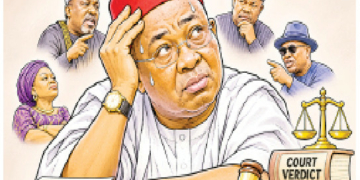
Why do many politicians and wealthy Nigerians feel it necessary to seek medical treatment abroad?
THE REALITY
Nigeria’s healthcare challenges extend beyond a lack of hospital buildings. A functioning health system requires qualified personnel, modern diagnostic equipment, essential medicines, reliable electricity, adequate funding and effective management.
A hospital may have a building, but what happens when a patient arrives and finds that the necessary equipment is unavailable, a specialist is inaccessible, or the cost of treatment is beyond their means? These are recurring concerns in Nigeria’s healthcare system.
Beyond inadequate facilities, concerns about unprofessional conduct, poor patient relations and delays in attending to patients raise serious questions about the quality of care in public hospitals.
During the thanksgiving week in July 2026 at Cornerstone Christian Centre, Keffi, a man from my church shared an emotional account that caught my attention.
I watched as he cried uncontrollably while delivering his thanksgiving speech. One of his statements particularly struck me. Referring to the Federal Medical Centre (FMC), Keffi, he said: “Please, pray that nothing should happen to you and you’re rushed to FMC Keffi. My dad died before his time because of how nonchalant the workers there are.”
He continued speaking, but his words had already raised a troubling question about the experience of families who believe that delays or poor treatment contributed to the loss of their loved ones.
His account was deeply moving. However, the circumstances surrounding his father’s death, including the treatment received and the timeline of events, would need to be independently established before drawing conclusions about responsibility.
Nevertheless, such accounts underscore the importance of examining patient experiences, investigating complaints and ensuring that healthcare facilities are accountable for the services they provide.
For patients whose conditions require urgent attention, timely medical care is essential. No one should fear that seeking help at a hospital could expose them to avoidable delays or inadequate treatment.
The Financial Cost of Seeking Healthcare Abroad
According to data from the Central Bank of Nigeria, Nigerians spent approximately $4.74 million on foreign healthcare services between May 2023 and March 2025.
These figures reflect spending on foreign healthcare services and should not be mistaken for the total cost of medical tourism. Nevertheless, they demonstrate why the financial dimension of overseas healthcare deserves attention.
The goal should not be to prevent every Nigerian from seeking medical attention abroad. Some complex procedures may require expertise or facilities that are not readily available locally.
Rather, the goal should be to build a health system capable of providing a wider range of specialised services to Nigerians, regardless of their economic status.
When healthcare facilities are inadequate, medical professionals are unavailable and patients experience delays, the consequences can be devastating. For a patient whose condition requires urgent attention, these are not administrative inconveniences. They can become matters of life and death.
The Struggle to Retain Medical Professionals
Nigeria also faces the challenge of retaining trained medical professionals.
Poor working conditions, inadequate remuneration and limited professional opportunities have contributed to the exodus of healthcare workers seeking better prospects abroad.
The result is a system that must find ways to train, retain and adequately support the professionals its citizens require.
A healthcare system cannot function effectively without qualified personnel. Even where hospital buildings and medical equipment are available, shortages of trained professionals can restrict access to essential services.
Addressing this challenge requires more than recruiting new workers. It also requires improving working conditions, providing adequate remuneration, creating opportunities for professional development, and ensuring that healthcare workers can perform their duties in properly equipped facilities.
Without sustained attention to these issues, Nigeria risks continuing to lose professionals whose skills are essential to improving patient care. For a low-income family, an illness can become a financial emergency long before it becomes a medical emergency.
The cost of consultations, laboratory tests, medication, transport and hospital admission can place enormous pressure on household finances. When a condition requires specialist care, the financial burden may become even more severe.
Unlike wealthy patients who may be able to consider treatment abroad, many Nigerians have no realistic alternative to the facilities available in their communities.
This inequality makes public healthcare more than a policy issue. It is a question of fairness, dignity and the right to life.
The Nigerian government must therefore prioritise healthcare funding, ensure approved budgets translate into functioning services, strengthen health insurance, and reduce the financial barriers that prevent citizens from seeking timely medical care.
Increased funding alone is not enough. Nigerians also need transparency in the use of health allocations, effective procurement systems, proper equipment maintenance, and accountability for the delivery of promised services.
Every public hospital should be evaluated not merely by the money allocated to it or the buildings it occupies, but by its ability to provide safe and effective care for those who depend on it.
A hospital’s true value lies not merely in its physical structure but in whether patients can receive the treatment they need when they need it.
Political Leaders and Medical Treatment Abroad
Nigeria’s medical tourism debate becomes more significant when the country’s political history is considered.
Over the years, several prominent Nigerian leaders have travelled abroad for medical treatment, prompting questions about the capacity of the country’s healthcare system to provide specialised care for its citizens.
The broader concern is whether Nigeria has developed sufficient healthcare capacity to ensure that its citizens can access appropriate and reliable treatment, regardless of their economic circumstances.
For an ordinary Nigerian who cannot afford international travel, the alternatives may be limited to local facilities, even when specialist services are hard to access or expensive.
Nigeria does not need a healthcare system that merely encourages citizens to remain within its borders. It needs one that gives them sound reasons to seek treatment at home.
That requires investment in modern diagnostic and treatment facilities, the recruitment and retention of qualified professionals, reliable electricity and water supplies, adequate stocks of essential medicines, and stronger patient-protection mechanisms.
It also requires governments at the federal and state levels to identify the most urgent gaps in public hospitals and to publish clear, measurable plans to address them.
Teaching hospitals and federal medical centres need the resources and personnel to fulfil their mandates. Primary healthcare facilities must also be strengthened so that preventable conditions are detected and treated before they become emergencies.
Equally important is financial protection.
A hospital cannot be considered accessible simply because its doors are open. If patients cannot afford the consultations, tests or medication they need, access remains limited.
Health insurance, transparent pricing, effective implementation of existing health policies, and support for vulnerable households should therefore form part of the solution.
The private sector can contribute through responsible investment and partnerships, but essential public healthcare must not become a privilege reserved for those who can pay the highest prices.
Who Will Save the Poor?
The Nigerian government cannot guarantee that every medical procedure will always be available in the country. However, it has a responsibility to build a health system that meets the population’s essential needs and steadily expands its capacity to provide specialised care.
Political leaders, policymakers and public officials must be judged by the quality of the public services they help deliver. Healthcare should be among the clearest measures of that responsibility, as the consequences of failure can be irreversible.
A country that trains doctors but cannot retain enough of them, builds hospitals without adequately equipping them, or allocates funds without ensuring that services improve must confront the gap between policy promises and patients’ experiences.
Nigerians should not have to wait for a prominent official to experience a health emergency before public attention turns to the state of the country’s hospitals.
The patient in a rural community, the student unable to afford a medical bill, the mother seeking emergency care and the worker whose savings are drained by treatment deserve the same seriousness from those responsible for public healthcare.
The Nigerian government must therefore prioritise healthcare funding, ensure approved budgets translate into functioning services, strengthen health insurance, and reduce the financial barriers that prevent citizens from seeking timely medical care.
The country must also establish stronger accountability mechanisms to ensure that hospitals deliver the services expected of them and that complaints about poor treatment are given appropriate attention.
Ultimately, the measure of progress is not how many Nigerians can afford to fly abroad when ill. It is how many can walk into a hospital at home and receive timely, safe and effective treatment without being pushed into financial hardship.
A nation’s healthcare progress should not be measured by how many of its wealthy citizens can afford treatment abroad, but by how reliably its hospitals can care for those with nowhere else to turn.
The true test of Nigeria’s healthcare system is not whether the wealthy can access treatment elsewhere. It is whether the country can provide reliable care for the millions who have nowhere else to turn.
Guma is a 200 Level student of Journalism and Media Studies at Nasarawa State University, Keffi
We’ve got the edge. Get real-time reports, breaking scoops, and exclusive angles delivered straight to your phone. Don’t settle for stale news. Join LEADERSHIP NEWS on WhatsApp for 24/7 updates →
Join Our WhatsApp Channel