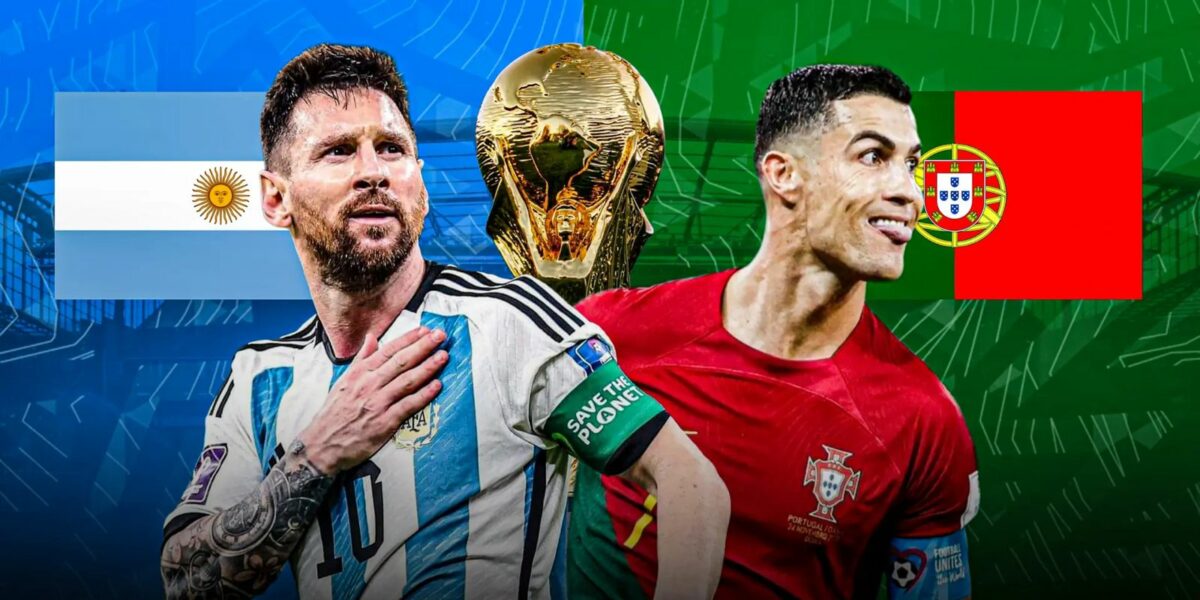
The 2026 FIFA World Cup offers football the ending it has never quite managed to deliver – a competitive meeting between Lionel Messi and Cristiano Ronaldo on the sport’s biggest stage.
It is a scenario that is driving global betting interest, particularly in the Arab world. Ronaldo’s presence in the Saudi Pro League (SPL) has deepened engagement with World Cup markets.
The reputable sportsbooks listed at arabworldcupbet.com have been inundated with wagers on Ronaldo in player-focused markets such as Golden Boot winner. ArabWorldCupBet provides timely updates along with specialised advice to help punters make informed choices about betting.
For the bettors who have been following Ronaldo’s career, a blockbuster meeting with Messi at the World Cup would be the highlight of the summer.
Group Stage: Why the Split is Essential
Argentina gave been drawn in Group J alongside Algeria, Austria and Jordan, while Portugal are in Group K with Colombia, Uzbekistan and DR Congo.
Both teams are expected to progress comfortably, but the exact finishing positions in the groups will determine whether a final meeting remains possible or disappears early.
If Argentina and Portugal win their groups, the bracket is likely to align them on a collision course before the final, most plausibly in the quarter-finals if both navigate their opening knockout matches.
The situation becomes even more restrictive if both teams finish second, with a potential meeting in the round of 16 depending on how the bracket unfolds.
The only scenario that guarantees separation until the final is a split outcome, where one team finishes first and the other finishes second. That specific combination pushes them onto opposite sides of the knockout draw, ensuring they cannot meet until the final in New Jersey.
This is where tournament dynamics become interesting. While finishing first is usually the objective, a second-place finish could theoretically create a more desirable long-term pathway, albeit at the cost of a more difficult immediate opponent.
In simple terms, the group stage is about positioning and will dictate whether the narrative surrounding Messi and Ronaldo will survive beyond the first week of knockout football.
Knockout Stage: Navigating the Gauntlet
Even if the group stage produces the required split, the journey to the final is extremely demanding under the expanded format.
Teams must now win five consecutive knockout matches, starting from the round of 32, which increases the margin for error and adds another layer of unpredictability.
Argentina are widely expected to top their group, and doing so would likely give them a more controlled entry into the knockout stage.
Their early opponents would probably include a runner-up or one of the better third-placed teams, allowing them to build momentum before facing stronger opposition in the later stages.
The challenge for Argentina is about sustaining consistency across an additional knockout round, which increases physical and tactical strain on an ageing core led by Messi.
Portugal’s path is less straightforward. Colombia are a genuine threat in Group K, meaning Portugal could realistically finish second, which could maintain separation from Argentina.
However, that would come at the cost of a more difficult round of 32 fixture, potentially against a group winner from a stronger pool.
Portugal’s squad depth, including players capable of carrying creative and attacking responsibility alongside Ronaldo, will be crucial in navigating this tougher early route.
The expanded format introduces another wildcard in the form of third-placed qualifiers, whose final rankings can reshape the bracket in unpredictable ways.
That uncertainty means even a carefully aligned pathway can shift after the group stage concludes, making it harder to project exact matchups.
Ultimately, both teams must combine favourable positioning with sustained performance, because any slip in the knockout stage will end the possibility of a final meeting immediately.
Dream Showdown: The Final That Defines an Era
If the pathways align and both teams navigate the knockout phase successfully, the final in New Jersey would deliver one of the most significant moments in football history.
This would be their first competitive meeting at a World Cup, despite both players featuring in multiple editions since 2006 and defining a memorable football era. It would also likely be their final appearance on this stage, given their ages and the physical demands of elite international football.
The contrast in their journeys adds further intrigue. Argentina head into the World Cup with continuity, cohesion and a system built around Messi’s influence, while Portugal rely on a blend of experience and emerging talent to support Ronaldo in what is expected to be his final tournament.
The revised format has created a pathway that makes this meeting possible, but it still demands precise outcomes and near-perfect execution from both teams.
The 2026 World Cup could deliver the chapter that has been missing from football’s greatest rivalry – a final where Messi and Ronaldo share the same stage with everything at stake.
We’ve got the edge. Get real-time reports, breaking scoops, and exclusive angles delivered straight to your phone. Don’t settle for stale news. Join LEADERSHIP NEWS on WhatsApp for 24/7 updates →
Join Our WhatsApp Channel