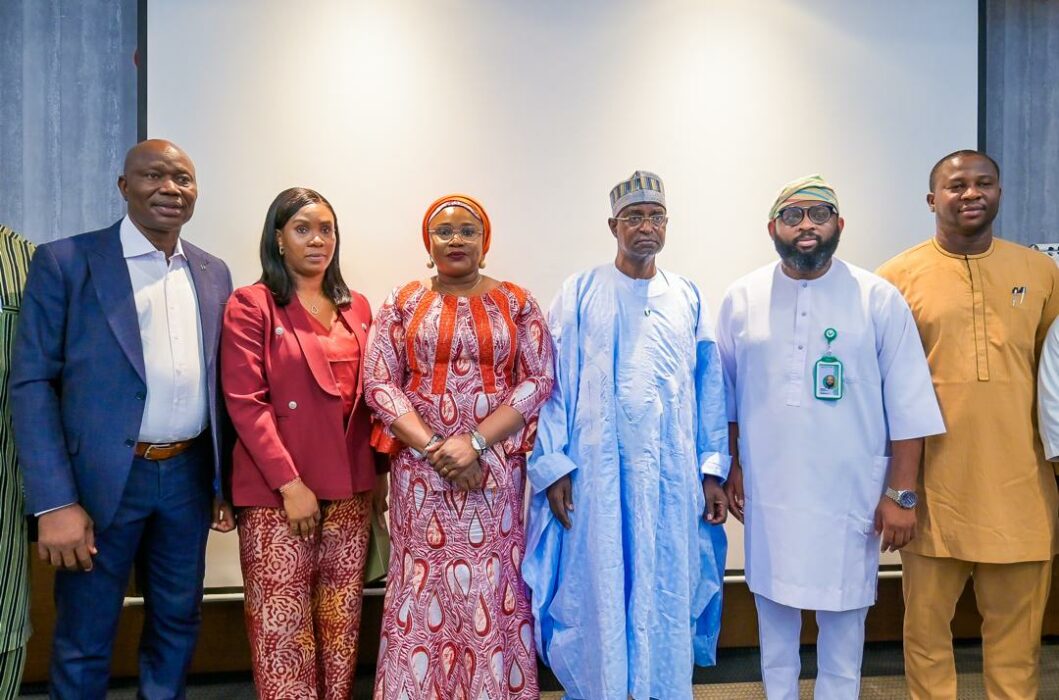
The Federal Ministry of Livestock Development (FMLD) has launched a multi-stakeholder workshop on the National Livestock Data Baseline and the Validation of the National Livestock Monitoring and Evaluation (M&E) Framework, aimed at modernising the sector.
The event, held on Wednesday in Abuja, brought together stakeholders to align national livestock data and establish a coordinated system for tracking sector performance.
Delivering her speech and on behalf of the minister, the ministry’s permanent secretary, Dr. Chinyere Ijeoma Akujobi, emphasised that the workshop represents a critical milestone in the ministry’s transformation agenda.
She said under the guidance of President Bola Ahmed Tinubu’s Renewed Hope Agenda, the ministry is prioritising food security, job creation, revenue expansion, improved service delivery, and modernisation of livestock production systems.
“The ministry’s deliverables are derived from Mr President’s priority activities. Each department further develops its own deliverables, cascading down to individual officers. These are tracked, assessed, and periodically evaluated to ensure strategic coherence, accountability, and meaningful contribution to our shared goals,” said.
Mrs Akujobi stressed that all livestock sector activities, including animal health, extension services, production, planning, research, database management, disease surveillance, traceability, and grazing reserve development, must feed into a unified ministry-wide performance system.
According to her, harmonised, accurate, and timely data will enhance decision-making, resource allocation, and investment readiness.
The head programmer of De Olimage Company Limited, Josephine Okeke, explained the technical framework of the M&E system.
She said the ministry’s M&E platform integrates over 400 indicators from the National Livestock Gas (NL Gas) strategic document and the Ministerial Performance Board, consolidating them into eight sectorial goals to measure results.
The system includes a data collection solution and an interactive dashboard to visualise progress, track activities, and enable predictive analytics for informed decision-making.
Okeke highlighted that the system is designed to monitor outcomes rather than just outputs, ensuring that each activity contributes to measurable results.
She added that the baseline study will serve as the foundation for tracking performance from 2025 to 2035, supporting Nigeria’s goal of achieving a $74 billion contribution from the livestock sector to national GDP.
The workshop provided participants with the opportunity to refine baseline methodologies, validate performance indicators, assign ownership to each indicator, and establish a reliable reporting architecture for the livestock sector.
We’ve got the edge. Get real-time reports, breaking scoops, and exclusive angles delivered straight to your phone. Don’t settle for stale news. Join LEADERSHIP NEWS on WhatsApp for 24/7 updates →
Join Our WhatsApp Channel