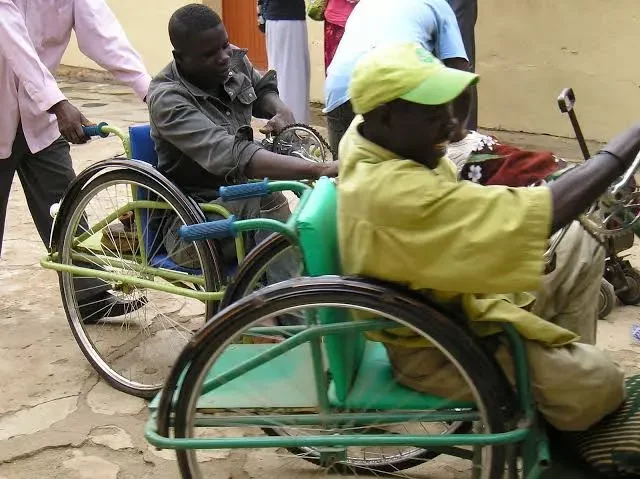
Language not only reflects culture but also shapes it. In discussions surrounding marginalized identities, particularly disability, the choice of words significantly affects perception, policy, and societal response. In English, the shift from “disabled persons” to “persons with special needs” or “persons with different abilities” mirrors efforts to reduce stigma and promote dignity. However, in indigenous languages like Hausa, such terminological changes may not yield the same effect. This is therefore an attempt to critically examines the use of nakasa (disability) and bukata ta musamman (special needs) in Hausa-speaking Northern Nigeria, uncovering their meanings, cultural applications, and political implications.
According to Fishman (1972), language operates within a social context and reflects the values, norms, and hierarchies embedded in a society. Therefore, changes in terminology must be interpreted in the cultural and linguistic settings in which they occur. However, Oliver (1990) posits that disability results not from impairment itself, but from societal structures that exclude and marginalize those with impairments. This model advocates for removing societal barriers rather than disguising impairments with euphemistic language.
Together, these frameworks enable a culturally grounded insight of Hausa disability discourse and inform the study’s critique of terminological politics.
Conceptual Clarity: ‘Nakasa and Bukata ta Musamman’
In the Hausa lexicon, ‘nakasa’ refers to a clear physical or cognitive limitation, such as blindness (makaho), deafness (kurma), among others. This term is well understood and accepted, particularly when not used pejoratively. For example, the proverb nakasa ba kasawa ba ce (disability is not inability) reflects an inclusive and dignifying worldview.
In contrast, bukata ta musamman means ‘special needs’ and is broadly interpreted. A Hausa speaker might say:
“Kowa yana da bukata ta musamman; wani kudi yake nema, wani aure, wani ilimi da sauransu.”
(Everyone has special needs: some need money, some a spouse, some education and so on.)
Thus, equating masu bukata ta musamman with nakasassu is linguistically inaccurate and semantically misleading in Hausa thought.
Political Motivations for Euphemism
The preference for masu bukata ta musamman in official Hausa communication stems from global disability advocacy, donor influence, and political correctness. This was observed in NGO reports and governmental policies such as the National Policy on Special Needs Education.
However, many Hausa-speaking persons with disabilities challenge this shift. A blind interviewee from Katsina stated:
“Ba laifi ban ne don an kira ni makaho. Haka Allah ya so ya gan ni. Amma ba ni da kasawa.”
(It is not offensive to call me blind. That is what Allah has destined on me. But I am not incapable.)
This sentiment reflects the empowerment embed Historical Figures as Cultural Evidence.
Moreover, examples from Hausa oral history reinforce the community’s longstanding respect for individuals with disabilities. Notable figures include:
- Audu Makaho Birnin Kabi, a blind singer who sings the Hausa Tabuka Epic.
- Salisu Sa’in Makafin Zazzau, a blind poet whose oral compositions shaped local historiography.
- Aliyu Namangi, a 20th-century blind poet and educationist.
- Malam Yahaya Makaho, a contemporary poet whose songs reflects current realities.
These individuals were referred to by their impairments without insult, and their abilities earned them reverence.
Cultural Semantics and the Risk of Misrepresentation Replacing ‘nakasassu’ with ‘masu bukata ta musamman’ under the guise of politeness may backfire. When words are imported without contextual grounding, they often distort the indigenous worldview. In Hausa, disability is not necessarily taboo or shameful; thus, sanitizing it with euphemism undermines both linguistic integrity and cultural self-expression. This is evident as portrays in the Hausa adage ‘Nakasa ba kasawa ba ce.’
Conclusion
This discussion has demonstrated that Hausa society maintains a clear conceptual boundary between ‘nakasa’ and ‘bukata ta musamman’. The use of the latter as an euphemism for the former is rooted not in linguistic necessity but in the politics of advocacy and donor alignment. This argues for a culturally grounded approach to disability discourse, one that respects local semantics while affirming inclusion.
Rather than imposing external frameworks, Hausa communities should be empowered to use their own linguistic and cultural tools to advance disability rights. Naming disability (nakasa) honestly and respectfully remains more effective than masking it with imprecise terminology.
We’ve got the edge. Get real-time reports, breaking scoops, and exclusive angles delivered straight to your phone. Don’t settle for stale news. Join LEADERSHIP NEWS on WhatsApp for 24/7 updates →
Join Our WhatsApp Channel