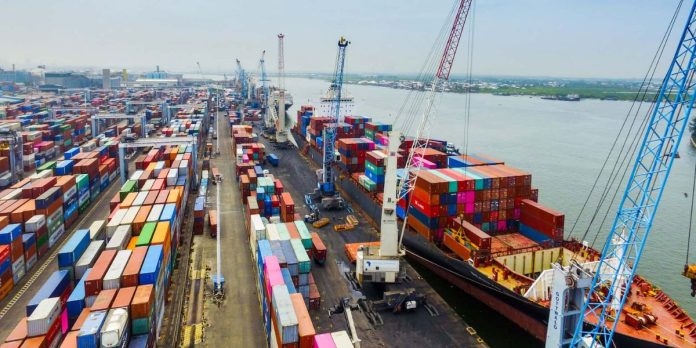
Clearing agents operating at Nigeria’s seaports have expressed divergent views on the National Single Window (NSW) platform, which went live in its first phase on Tuesday.
While some industry groups believe the initiative will streamline documentation and procedures for import, export and transit cargo, others argue that the platform duplicates existing processes and contravenes provisions of the Nigeria Customs Service Act 2023.
The National Association of Government Approved Freight Forwarders (NAGAFF) insisted that the NSW project is not a duplication of functions but rather a harmonisation of trade processes anchored in law and international conventions.
The association was reacting to the position of the National Council of Managing Directors of Customs Licensed Agents (NCMDLCA), which had urged the federal government to suspend the implementation of the initiative.
Speaking with LEADERSHIP, the secretary general of NAGAFF, Godfrey Nwosu, said the Single Window initiative would not only facilitate trade but also attract foreign direct investment (FDI) into the country.
According to him, the platform is designed to simplify port processes and reduce cargo diversion to neighbouring countries.
“It is a tool to promote trade facilitation, attract foreign direct investment and reduce the diversion of cargo to neighbouring countries,” Nwosu said.
However, the NCMDLCA maintained that the NSW was introduced with unspecified and multiple charges that could increase the cost of clearing goods at Nigerian ports.
The national president of NCMDLCA, Lucky Amiwero, said the initiative was already overburdened with charges imposed by various government agencies on importers and licensed customs agents, thereby making Nigerian ports among the most expensive in the world.
In a petition to the Presidency, Amiwero argued that the NSW portal conflicts with existing legal frameworks guiding customs and tax administration.
“The National Single Window portal has no relation with the Nigeria Tax Administration Act, which is meant strictly for tax matters.
It usurps, duplicates and contravenes several provisions of the Nigeria Customs Service Act 35 of 2023. It also runs contrary to international best practices and domestic frameworks on trade facilitation,” the petition stated.
In response, NAGAFF described the Single Window project as a forward-looking reform designed to eliminate duplicative procedures across multiple government agencies operating at ports.
The association also cautioned against actions that could slow reforms aimed at improving maritime sector efficiency.
“The freight forwarding industry must move forward with reforms that promote efficiency, transparency and competitiveness. NAGAFF stands firmly in support of the NSW project and urges all stakeholders to embrace it for the greater good of Nigeria’s economy,” Nwosu said.
He further urged stakeholders to allow the first phase of the project to run its course before drawing conclusions about its effectiveness.
Nwosu added that the initiative would enhance transparency in port operations, lower the cost of doing business, improve Nigeria’s competitiveness in global trade, and align the country with international best practices under the World Trade Organisation (WTO) Trade Facilitation Agreement.
We’ve got the edge. Get real-time reports, breaking scoops, and exclusive angles delivered straight to your phone. Don’t settle for stale news. Join LEADERSHIP NEWS on WhatsApp for 24/7 updates →
Join Our WhatsApp Channel