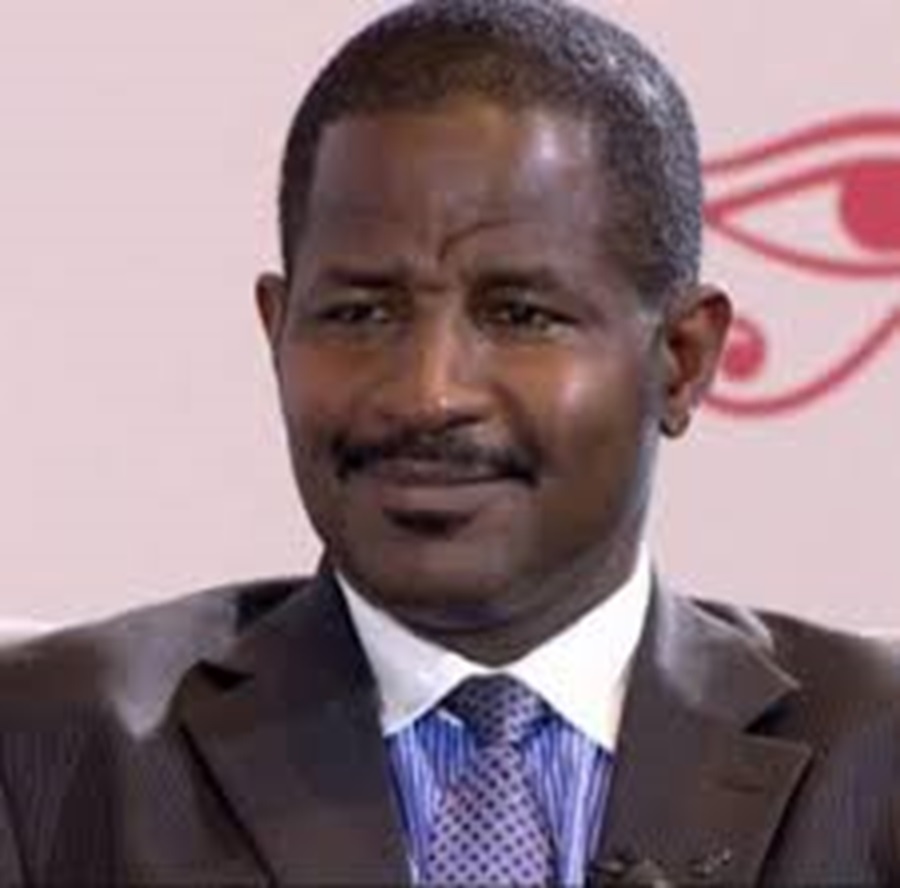
Former executive vice chairman/CEO of the Nigerian Communications Commission (NCC), Dr. Bashir Gwandu has called on African representatives to the ITU’s World Radiocommunications Conference 2027 (WRC-27) to stand united in securing spectrum allocations critical for mobile connectivity in rural areas.
Gwandu, who is also a former CEO of the National Agency for Science and Engineering Infrastructure (NASENI), spoke at the recently concluded Sub-Saharan Spectrum Management Conference 2024 in Nairobi, Kenya.
Gwandu who also held various chairmanship positions at the both the ITU and Commonwealth including the ITU Radiocommunications Advisory Group (the RAG), The Joint Task Group, and Commonwealth ITU Group (CIG) made the call during his opening remarks on the 600MHz spectrum discussions.
In an opening statement, Dr. Gwandu, who spoke as an Independent Spectrum Expert, highlighted the need for honest discussions among African nations to avoid internal conflicts that could weaken the continent’s position on the world stage. “When we meet as a family, we must be honest with ourselves. We, as Africans, too often fight each other for the back seat, neglecting each other’s interests,” he said.
Dr. Gwandu who played a key role in founding the ATU (African Telecommunications Union) WRC coordination meetings, expressed disappointment that the continent’s focus on collaborative efforts is waning.
At the core of the discussions was the 600MHz (3GGP n71) band, a key frequency range that many countries worldwide are increasingly allocating for IMT to support 4G and 5G networks. While several nations in Regions 2 and 3, as well as some in ITU Region 1, have designated this band for mobile, some African countries are not yet ready to make the switch to co-primary allocation.
However, he stressed that African countries still not ready to adopt IMT in this band should not obstruct others that are ready to proceed.
“The world is moving toward IMT in the 600 MHz band,” Dr. Gwandu emphasised, noting that diverse regional needs mean different countries may proceed at varying paces.
Meanwhile, as Africa faces a 50 per cent urban-to-rural connectivity gap and high energy costs, Gwandu argued that considerations and decisions must be flexible enough to support each country’s unique circumstances. Solutions suitable for smaller nations, like Rwanda or Benin, may not be viable for geographically larger, more populous countries like Nigeria or Namibia.
At the WRC-23 conference, a controversial decision allowed Egypt to move forward with its 600 MHz primary mobile allocation while Rwanda, Guinea, Benin, and Cameroon blocked requests from 10 other African nations with similar aspirations.
Dr. Gwandu argued that this action went against the ATU’s rules, which state that when eight or more countries oppose a proposal, it should not receive recognition under the AFCP (African Common Proposals) framework. He pointed out that with 11 nations opposing the NOC (No Change) position, the ATU should have allowed those seeking the 600 MHz allocation to move forward.
We’ve got the edge. Get real-time reports, breaking scoops, and exclusive angles delivered straight to your phone. Don’t settle for stale news. Join LEADERSHIP NEWS on WhatsApp for 24/7 updates →
Join Our WhatsApp Channel