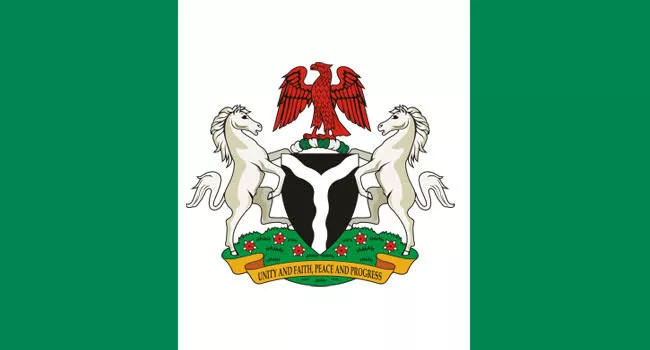
The Financial Action Task Force (FATF), at its October 2025 plenary in Paris, France, has officially removed Nigeria from the list of jurisdictions under increased monitoring, commonly known as the grey list.
This was revealed by the director/chief executive officer of the The Nigerian Financial Intelligence Unit (NFIU), Ms. Hafsat Abubakar Bakari.
The FATF is the world’s foremost standard-setting body for combating money laundering, terrorist financing and proliferation financing.
Mrs Bakari said, “This milestone marks a historic moment in Nigeria’s fight against serious financial crimes. The delisting of Nigeria underscores the country’s commitment to global standards in combating money laundering, terrorist financing and proliferation financing.”
Nigeria was represented at the plenary by a high-level delegation which included the attorney-general of the federation and minister of justice; the minister of finance and coordinating minister of the economy; the minister of interior and the director/chief executive officer of the NFIU.
Speaking on behalf of Nigeria, the minister of Finance, Mr. Wale Edun, reaffirmed Nigeria’s commitment to strong anti-money laundering and counter-financing of terrorism systems noting Nigeria’s ambition was never limited to simply completing the Action Plan and exiting the grey list.
The attorney-general of the federation, Prince Fagbemi also expressed Nigeria’s gratitude to the FATF for extending an invitation to the country to join the guest jurisdictions initiative as this will enable the country, represented by the NFIU, to participate under its own flag in the meetings of the FATF for the next one year and contribute to the global discussions on international AML/CFT/CPF standards and policies.
Nigeria was placed on the FATF grey list in February 2023, following the identification of strategic deficiencies in its Anti-Money Laundering and Countering the Financing of Terrorism (AML/CFT) framework
Over the past two years, Nigeria has worked resolutely to address these concerns through a 19-point Action Plan developed in collaboration with the FATF and its regional counterpart, the Inter-Governmental Action Group Against Money Laundering in West Africa (GIABA).
LEADERSHIP Weekend recalls that to achieve this feat, Nigeria “Enacted and enforced the Money Laundering (Prevention and Prohibition) Act, 2022 and the Terrorism (Prevention and Prohibition) Act, 2022; operationalisation of the Beneficial Ownership Register, improving corporate transparency and accountability; enhanced capacity of the intelligence, law enforcement and security agencies in detecting, analysing, and prosecuting complex financial crimes and implemented stronger supervisory and preventive measures by the public and private sector authorities to prevent the abuses of Nigeria’s financial system to facilitate criminal activity, among others things “.
Meanwhile, President Bola Tinubu has welcomed Nigeria’s delisting from the Financial Action Task Force (FATF) grey list.
In a statement by his spokesman, Bayo Onanuga, the president described the development as “a major milestone in Nigeria’s journey towards economic reform, institutional integrity and global credibility.”
This decision follows Nigeria’s successful and timely completion of its FATF Action Plan, marking over two years of sustained effort, reform and inter-agency coordination aimed at strengthening the country’s Anti-Money Laundering and Counter-Financing of Terrorism (AML/CFT) framework.
In February 2023, the FATF placed Nigeria on the grey list. The message from the global community was clear: the nation needed more vigorous enforcement, better coordination, and greater transparency. Rather than treat this as a setback, Nigeria viewed it as a call to action.
Under President Tinubu’s strategic leadership and in line with the economic transformation agenda of his administration, Nigeria implemented far-reaching legal, institutional and operational reforms.
This was achieved through the coordination of the Nigerian Financial Intelligence Unit (NFIU), working in conjunction with the Attorney-General of the Federation and Minister of Justice, the Minister of Finance, and the Coordinating Minister of the Economy and the Minister of Interior.
President Tinubu applauded the vital support from the Secretary to the Government of the Federation, the Minister of Aviation, the Minister for Budget and Economic Planning, the Minister for Defence, the Minister for Foreign Affairs, the Minister for Solid Minerals, the Minister of State for Finance, the National Security Adviser as well as the leadership of the National Assembly and the Judiciary, in the attainment of the laudable achievement.
President Tinubu commended the Director/Chief Executive Officer of the NFIU, Ms Hafsat Abubakar Bakari, and the staff for their diligence in ensuring the complete and timely implementation of the country’s Action Plan. He noted that the NFIU’s work has led to the recognition by the international community of the strides Nigeria has made in strengthening its measures to tackle serious crimes.
“Without their dedication and sacrifice, today’s success could not have been achieved. I thank them for their efforts and urged other stakeholders to emulate their standards”, President Tinubu said.
President Tinubu also commended all ministries, agencies, their heads and private sector representatives who contributed to the delisting through their active participation in the National Task Force on AML/CFT.
Among these are the Governor of Central Bank of Nigeria, the Registrar-General of the Corporate Affairs Commission, the Chief of the Defence Staff, the Director-General of the Department of State Services, the Executive Chairman of the Economic and Financial Crimes Commission, the Chairman of the Independent Corrupt Practices Commission, the National Coordinator National Counter-Terrorism Centre, the Chairman National Drug Law Enforcement Agency.
Others are the Commissioner/Chief Executive Officer of the National Insurance Commission, the Comptroller-General of the Nigeria Customs Service, the Managing Director Nigeria Export Processing Zones Authority, the Inspector-General of Police, and the Director-General Securities and Exchange Commission, as well as all their dedicated staff.
President Tinubu acknowledged the strong support of international partners, the Governments of France, Germany, the United Kingdom, the United States, the United Nations and the European Commission, for their steadfast technical assistance during Nigeria’s reform process.
We’ve got the edge. Get real-time reports, breaking scoops, and exclusive angles delivered straight to your phone. Don’t settle for stale news. Join LEADERSHIP NEWS on WhatsApp for 24/7 updates →
Join Our WhatsApp Channel