Rising building material prices, foreign exchange volatility and elevated interest rates continue to inflate mortgage and insurance costs, LEADERSHIP learnt.
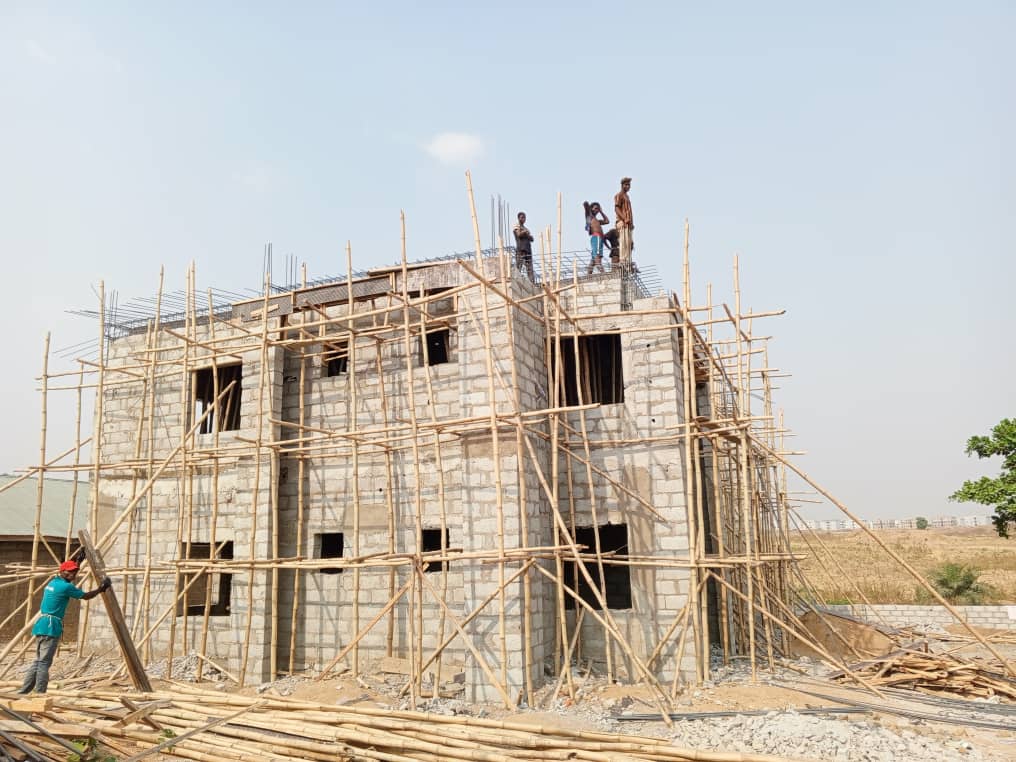
Hence, developers are grappling with tighter liquidity, a high cost of building reinforcements, which leads to project delays, repricing of contracts, and cost overruns.
Property analysts warn that the combined impact of high construction costs, FX instability, and limited access to finance will force some developers to slow or phase their projects. Only those with off-take guarantees or strong joint-venture backing are now sustaining construction momentum.
The ripple effect is squeezing both developers and tenants, widening the country’s housing deficit and deepening affordability challenges.
Findings reveal that many Nigerians now spend as much as 60 per cent of their income on rent, a situation that underscores the worsening housing crisis nationwide.
The relentless rise in rent has pushed household budgets to the brink, eroding disposable income, shrinking savings, and driving up loan and mortgage costs.
With the Monetary Policy Rate (MPR) hovering between 26.75 and 27.5 per cent, mortgage and construction loans have become prohibitively expensive.
Nigeria’s real estate market experienced an active but turbulent first half of 2025, characterised by soaring inflation, rising building material costs, and limited mortgage access.
Rental growth dominated housing markets across Lagos, Delta, Oyo, Ogun, Abuja, and Port Harcourt, as affordability challenges forced potential homebuyers to retreat to suburban and fringe areas.
Despite high activity in luxury and urban fringe developments, inflation, currently above 22.97 per cent, continues to squeeze both developers and tenants.
Nigeria’s housing deficit has now surpassed 28 million units, with fewer than 700,000 new homes produced annually. This imbalance has triggered skyrocketing rents, particularly in Lagos, where a standard one-bedroom apartment in the Lekki–Ajah corridor now costs approximately N2.2 million per year, which is almost twice the average urban income of N1.2 million.
In Abuja, areas such as Lugbe, Gwarinpa, and Lokogoma are witnessing substantial residential expansion driven by demand for affordable housing near the city centre.
Conversely, prime zones such as Ikoyi, Victoria Island, and Abuja’s Central Business District have seen slower sales and weaker occupancy, as oversupply and high service costs have dampened demand.
Commercial property occupancy is under pressure as firms scale down or relocate due to surging operational expenses.
States such as Ogun and Oyo are also expanding housing schemes in Ibeju-Lekki, Agbara, Badagry, and Ibadan. Emerging residential hubs, including Sango, Sagamu, Mowe, Arepo, and Ikorodu, are drawing investors with their lower land costs and more affordable living options.
Analysts predict continued pressure on the rental market through the second half of 2025 as urban migration accelerates. The focus will shift toward mid-income housing, digital property platforms, and institutional funding.
Chairman of the Association of Capital Market Valuers (ACMV), Chudi Ubosi, said the first half of the year saw significant increases in both rental and capital values.
“Real estate tends to lag behind inflationary trends, but values have surged sharply in line with the currency devaluation and government policies driving inflation beyond 30 per cent annually,” he said.
Ubosi added that many tenants are defaulting as rents skyrocket, while developers now prefer off-plan sales to raise capital instead of borrowing from financial institutions.
Agents, he noted, are also cutting fees as clients struggle to meet transaction costs.
Similarly, former chairman of NIESV Lagos branch, Gbenga Ismail, noted that demand remains strong in mid-income and affordable housing segments, particularly in Lagos’ outskirts and Abuja’s fringes.
However, inflation and high interest rates have eroded purchasing power, leaving many prospective buyers unable to complete transactions.
He projected that, while residential demand would remain firm due to population growth and urban expansion, commercial property may continue to underperform, except in hospitality, flexible workspace, and sustainable, tech-driven developments.
Architect and estate developer Onyeisi Michael observed steady demand for both residential and short-term properties, despite inflationary pressures and unstable foreign exchange rates.
He highlighted that monetary policy changes have hindered access to construction loans, while developers heavily rely on off-plan sales to mitigate financing constraints.
Meanwhile, CEO of Greenchell Homes and Property, Ezekiel Oke, stated that inflation and high building costs are pushing more people toward renting, saying that “Short-let apartments remain profitable, especially in Lagos, Port Harcourt, and Abuja, but long-term rentals are suffering from defaults due to constant rent adjustments,” he said. “Buyers are increasingly cautious, seeking detailed cost breakdowns and properties with proven return on investment potential.”
We’ve got the edge. Get real-time reports, breaking scoops, and exclusive angles delivered straight to your phone. Don’t settle for stale news. Join LEADERSHIP NEWS on WhatsApp for 24/7 updates →
Join Our WhatsApp Channel