
The National Agricultural Development Fund (NADF) has unveiled a new blended finance initiative aimed at unlocking billions of naira in private sector investment for Nigeria’s agricultural sector.
The move is part of efforts to bridge the longstanding agricultural financing gap and accelerate economic growth.
The initiative was launched yesterday at a blended finance workshop for fund managers in Lagos, organised by NADF in partnership with Convergence Blended Finance,a global network dedicated to mobilising private capital into emerging and frontier markets.
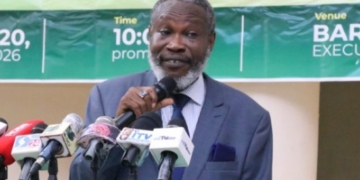
Speaking at the event, the executive secretary of NADF, Mohammed Abu Ibrahim, represented by the fund’s general manager for partnerships and investor relations, Nasir Ingawa, said Nigeria’s ambition to transform agriculture into a major driver of economic development would require significantly more capital than government resources alone could provide.
According to him, NADF is repositioning itself as a strategic catalyst within the agricultural finance ecosystem by connecting investors with viable agribusiness opportunities and helping structure investments that attract commercial financing.
Ibrahim explained that the fund does not intend to compete with commercial banks, development finance institutions, or asset managers, but rather to serve as a convener that brings together investors, technical experts, guarantee providers, and agribusiness operators.
“Our role is not simply to fund projects. Our role is to facilitate, convene, curate credible and investable pipelines, and expose those opportunities to partners who have the capital, technical expertise and market discipline required to take them forward.
Agriculture is central to Nigeria’s food security, job creation, industrial growth, export potential and prosperity. Public capital alone cannot finance the transformation of Nigeria’s agricultural sector. Private capital alone will also not flow at the scale required unless the risks are better understood, better allocated and better managed,” he said.
The head of Africa at Convergence Blended Finance, Aakif Merchant, said agriculture remains one of Nigeria’s most important economic sectors, accounting for between 30 and 35 per cent of employment, yet continues to attract insufficient investment because it is widely perceived as a high-risk sector.
Merchant noted that recent regulatory provisions allowing pension funds to allocate up to 10 per cent of their portfolios to alternative investments could create a major opportunity to channel institutional capital into agriculture and agribusiness ventures.
He said blended finance offers a practical mechanism for attracting such investment by combining public, development and philanthropic funding with private capital in ways that reduce risk exposure and improve commercial viability.
“What we’re here to talk about today is how we mobilise capital that’s sitting on the sidelines in Nigerian pension funds, Nigerian insurance companies and even cross-border investors into the various SMEs so that we can enhance yields in Nigerian agriculture and create a larger base of employment.
Unfortunately, agriculture in Nigeria is perceived as a high-risk sector. We are here to talk about the use of blended finance as a financial structuring approach to de-risk investment and mobilise capital that is sitting on the sidelines into this sector for the benefit of the country,” Merchant said.
We’ve got the edge. Get real-time reports, breaking scoops, and exclusive angles delivered straight to your phone. Don’t settle for stale news. Join LEADERSHIP NEWS on WhatsApp for 24/7 updates →
Join Our WhatsApp Channel