The Nigerian government aimed to recover degraded land, preserve ecosystems, and provide sustainable livelihood opportunities for communities in line with the ‘Great Green Wall Initiative’ for the African Union’s Sahara and Sahel programme.
There was a need to address desertification, land degradation, and biodiversity loss, promote climate change resilience by ecosystems and communities, and improve food security in Nigeria. This was why the National Agency for the Great Green Wall was established. True to its name, the agency, especially under the current administration, has not disappointed.
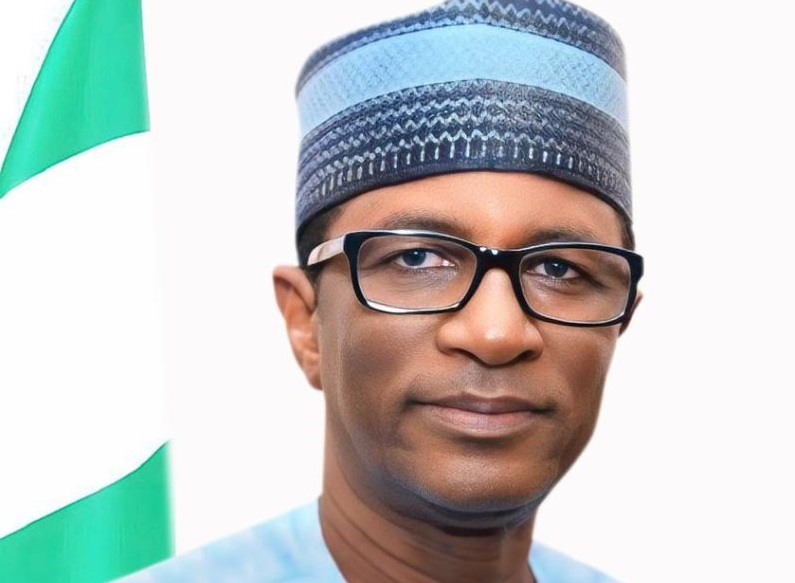
The implementation of the NAGGW initiative has never been as intense and deliberate as it is under the administration of its current Director-General/CEO, Saleh Abubakar, who is driving the implementation of its mandate in 11 frontline states.
The current administration’s goals are community-driven, with a focus on land rehabilitation and natural resource conservation, poverty alleviation, food security enhancement, employment generation, livelihood enhancement, and capacity development of the affected communities to improve their resilience to climate change and climate variability in the dry lands of Nigeria.
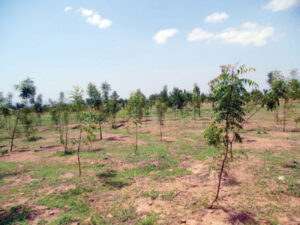
The agency’s afforestation department is tasked with reclaiming the affected communities through Afforestation and land management approaches such as the establishment of shelterbelts, orchards, woodlots, Nursery Development and management, Oasis Development, sand dune fixation/ stabilization, Grazing resource management, agroforestry, etc.
The objectives of the afforestation activities include a plan to increase the forest cover of the various communities through new beating up and new planting of the various agroforestry models: shelterbelts, orchards, and woodlots, and the creation of jobs/employment for the local populace engaged from the nursery stage to the pre-and post-planting activities stages.
The NAGGW prides itself on being an agency committed to improving the livelihoods of the affected communities, reducing the apparent manifestation of poverty, and building resilience against climate challenges.
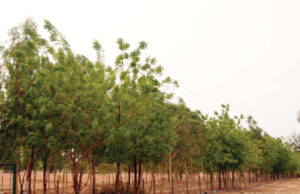
The focus is also to raise adequate and healthy seedlings using viable seeds in a conducive environment for afforestation activities, analyse the agricultural systems of communities to climate change for the increase in food security, and carry out land management practices through stabilization/rehabilitation of active sand dunes in the affected communities.
To achieve that aim, the federal government, through the NAGGW, has commenced a series of activities aimed at reforestation of the country, improving food security, and addressing the many challenges posed by climate change.
Part of the activities is pre-planting, planting and post-planting management for the establishment of (shelterbelts, woodlots, Indigenous tree species plantations, Acacia Senegal/steel plantations, social forestry, institutional planting and large-scale restoration of degraded lands). The agency is also now involved in the construction of perimeter fencing for plantations, procurement of Nopal/opuntia cactus cladodes for the establishment of acacia Senegal/seyal & nopal/opuntia cactus plantation, construction of solar-powered boreholes with complete accessories for plantations, construction of solar powered boreholes, surface water tank (Braithwaite) with complete accessories (including drip irrigation) for plantations.
The government has also commenced the procurement, restocking, rebagging, pruning and fueling for the establishment of plant nurseries and capacity building of small-scale farmers (women and youths) on the processing of Neem, Balanite (non-timber forest products) and beekeeping which was carried out in the 11 frontline states funded under Natural Resources Development Fund (NRDF) Work Plan and Budget, Ecological Fund Office (EFO) and Capital Appropriation.
The states include Adamawa, Bauchi, Gombe, Kebbi, Sokoto, Zamfara, Katsina, Kano, Jigawa, Yobe and Borno.
The report of events from the agency shows that the funds from the Ecological Fund were utilised in the implementation of the 2024 afforestation projects across the country, especially in the frontline states. For instance, the agency completed the project in Borno state, completing the procurement, restocking, rebagging, pruning, and fueling for the establishment of a plantation in the state of 250,000 seedlings.
The National Agency for the Great Green Wall (NAGGW) is at the forefront of combating desertification and land degradation, in accordance with the United Nations Convention on Combating Desertification (UNCCD). At the NAGGW, we are committed to improving the livelihoods of the affected communities, reducing the apparent manifestation of poverty, and building people’s resilience against the phenomena of climate change.
The federal government committed to President Bola Ahmed Tinubu’s Renewed Hope Agenda. As the immediate past president of the Heads of States and Governments of the Pan African Great Green Wall (PAGGW), Tinubu has recommitted to the national well-being of protecting and conserving the African ecosystem.
The Director-General has said his administration “will therefore continue to play a leading role in fulfilling the laudable vision of the African Union and its Heads of State and Governments when in 2007 they adopted and launched the Great Green Wall in the Sahel and Sahara Initiative (GGWSSI).”
That explains why the agency has been relentless in ensuring the reforestation and preservation of the Nigerian ecosystem, with a focus on food security, among other things.
Details of the activities of the NAGGW under Abubakar revealed that the organisation has also completed the procurement, restocking, rebagging, pruning and fueling for the establishment of plant nurseries in Kebbi State with 250,000 seedlings particularly in Tsullawa and Yamama Arewa local government area and Argungu local government area in 2024.
That is also the situation in Rumfar Ake and Kanwa Zurmi LGA of Zamfara State where 250,000 seedlings were planted to reforest the areas. From Kano State to Sokoto State and Jigawa State, the project has been completed in about 10 LGAs with the procurement, restocking, rebagging, pruning and fueling of 250,000 seedlings in each state for the establishment of plant nurseries. However, the project is ongoing in Katsina state.
NAGGW has also commenced the construction of five solar-powered boreholes with complete accessories for woodlot plantation in 11 states of the North. The benefiting states are: Gombe, Adamawa, Sokoto, Yobe, Bauchi, Jigawa and Zamfara. Others are Katsina, Kebbi, Kano and Borno States. The boreholes are provided to ameliorate the impact of drought in the North.
Apart from that, the federal government, through NAGGW has begun the establishment and maintenance of 35Ha Woodlot Plantation in Kebbi State as well as Sokoto, Zamfara, Katsina, Jigawa and Borno States. The states of Kano, Adamawa, Bauchi, Gombe and Yobe are among the beneficiaries of the ongoing woodlot plantation scheme.
Worthy of note is the fact that the government is currently executing the construction of perimeter fence of 10ha woodlot plantation in Kano State. This is different from the construction of perimeter fence for the establishment of shelterbelt plantations in Katsina State, Katsina State, Jigawa and Kebbi states. Others that are enjoying the dividend of governance include Sokoto, Zamfara, Borno and Kano states.
NAGGW is also carrying out the pre-planting, planting and post-planting for the establishment of Shelterbelt Plantation in the benefiting states of the North.
The Great Green Wall Initiative for the Sahara and Sahel programme was initiated and adopted by the Head of Governments and States of the African Union to address the issues of desertification, land degradation, biodiversity loss, promote climate change resilience by ecosystems and communities, and improve food security in the about twenty-one countries of the Sahel region in Africa.The NAGGW is funded through NRDF, Ecological Fund Office (EFO) and Capital Appropriation.
This agency typifies Nigeria’s coordinated effort to address issues of land degradation and desertification, ensure ecosystem management and restoration, protect the country’s natural capital, provide sustainable development of land resources, and ultimately ensure that the country’s ecosystem is prepared to withstand the travails of climate change.
We’ve got the edge. Get real-time reports, breaking scoops, and exclusive angles delivered straight to your phone. Don’t settle for stale news. Join LEADERSHIP NEWS on WhatsApp for 24/7 updates →
Join Our WhatsApp Channel