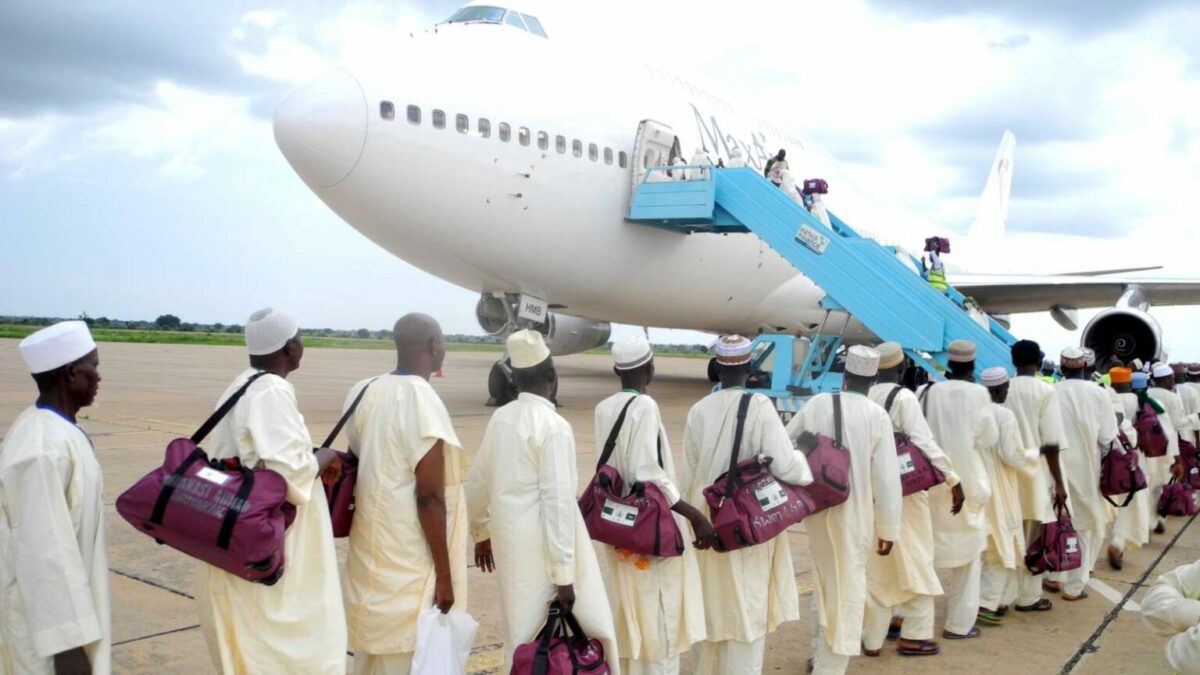
The National Hajj Commission of Nigeria (NAHCON) is working with state governments to protect ordinary Nigerian pilgrims from the rising cost of Hajj as Saudi Arabia introduces sweeping reforms to the organisation and delivery of the annual pilgrimage.
Chairman of NAHCON, Ambassador Ismail Abba Yusuf, said the commission was exploring a model that would enable state pilgrims’ welfare boards to establish private companies that could operate within Saudi Arabia’s new business-to-business (B2B) framework without exposing pilgrims to high commercial costs.
Saudi Arabia’s reforms are moving the Hajj administration from a traditional, government-led model towards a more commercial, digitised, and strictly regulated system, with private tour operators expected to play a significantly greater role.
Yusuf said the change posed a particular challenge for Nigeria because the majority of its pilgrims are from low-income backgrounds and often save for years to fulfil their religious obligation.
He said eliminating the lowest Hajj service package could make the pilgrimage increasingly expensive for Nigerian Muslims unless measures are taken to cushion the impact.
“Eighty to 90 per cent of pilgrims from Nigeria are poor people who, out of commitment to their religion, save over time to be able to perform the sacred duty,” Yusuf said.
According to him, private operators would naturally have to factor in staff costs, taxes, and other overheads when setting prices for pilgrims, potentially pushing the cost of Hajj beyond the reach of many Nigerians.
He said the commission, therefore, considered state-backed private companies a possible way of preserving the welfare-oriented character of Nigeria’s Hajj administration while complying with Saudi Arabia’s new commercial structure.
“For the states, they are already state employees, and then you can remove all that and the issue of taxes,” he said, arguing that the arrangement could provide an indirect subsidy to pilgrims without necessarily requiring a direct government subsidy.
The proposal forms part of Nigeria’s broader response to Saudi Arabia’s Hajj reforms, which require international pilgrim organisations to increasingly operate through approved B2B arrangements.
Yusuf said Nigeria had initially faced the prospect of moving almost all its pilgrims into the private tour-operator system, but NAHCON negotiated a phased transition with the Saudi authorities.
Under the arrangement, the transition to private tour operators will begin with 30 per cent of Nigeria’s pilgrims for the 2027 Hajj and is expected to be completed over three years.
The NAHCON chairman said the commission’s priority was to ensure that compliance with Saudi Arabia’s regulations did not come at the expense of access to Hajj for ordinary Nigerians.
He added that NAHCON was also accelerating its digital transformation programme to bring Nigeria’s Hajj administration in line with Saudi Arabia’s Vision 2030.
The reforms include the increasing use of digital platforms for pilgrim registration, visa processing, accommodation, transportation and access to holy sites.
Yusuf said NAHCON was investing in equipment, staff training and digital infrastructure while working to ensure that the necessary systems were replicated across the states.
The commission is also carrying out nationwide sensitisation programmes to prepare state Hajj officials and other stakeholders for the new operating environment.
He said the changes required a major shift in how Hajj was administered in Nigeria, insisting that the country must comply with Saudi regulations while protecting the interests of its pilgrims.
Yusuf said the objective was to strike a balance between meeting Saudi Arabia’s new standards and ensuring that the sacred journey remained accessible to Nigerians who had spent years saving to perform it.
We’ve got the edge. Get real-time reports, breaking scoops, and exclusive angles delivered straight to your phone. Don’t settle for stale news. Join LEADERSHIP NEWS on WhatsApp for 24/7 updates →
Join Our WhatsApp Channel