
The National Agricultural Land Development Authority (NALDA) has unveiled plans to establish fish villages across riverine communities as part of efforts to increase domestic fish production, reduce Nigeria’s dependence on fish imports and strengthen food security.
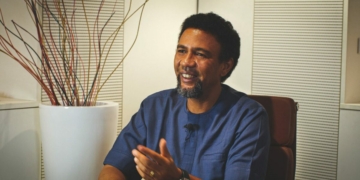
NALDA’s Executive Secretary, Cornelius Adebayo, said the initiative would provide critical infrastructure for fish farmers rather than direct government involvement in fish production, describing the project as part of the agency’s broader strategy to develop agricultural infrastructure across key value chains.
Speaking with journalists in Abuja, Adebayo said the Authority had already commenced work on its first fish village in Akwa Ibom State, although progress had slowed because of funding constraints. He expressed optimism that the project would be completed before the end of the year.
According to him, Nigeria currently imports more fish than it produces locally, making investment in aquaculture essential to closing the supply gap while creating jobs and improving livelihoods in coastal and riverine communities.
He explained that NALDA’s intervention would focus on constructing fish ponds and related facilities before allocating them to organised groups of farmers under a lease arrangement designed to ensure sustainability and enable the authority to replicate similar projects in other parts of the country.
Adebayo said the fish village model would mirror the agency’s crop development programme, where farmers are clustered to improve access to infrastructure, extension services, financing and security.
He noted that earlier fish centres established in some northern states had faced operational challenges due to insecurity, prompting the agency to redesign its approach by concentrating more on areas with natural comparative advantages for fisheries.
The Executive Secretary added that NALDA also plans to develop poultry clusters alongside fish villages to improve the country’s protein production, stressing that government should concentrate on providing infrastructure while allowing private farmers to manage production.
He said the authority’s broader agricultural development strategy prioritises infrastructure such as land clearing, mechanisation centres, irrigation facilities and farm estates instead of distributing farm inputs, arguing that the approach would attract greater private sector investment and deliver long-term benefits to farmers.
Adebayo maintained that the agency was creating platforms where financial institutions, agribusinesses, aggregators and service providers could work together to build a sustainable agricultural ecosystem capable of supporting increased food production and rural economic growth.
He said, “Nigeria imports more than we produce in terms of fish. We are hoping to be able to support in that direction.
We’ve been able to start just one project in that area, in Akwa Ibom. It’s the fish village we’re building in Akwa Ibom. But due to releases, it’s been slow. We’re hoping that we’ll be able to complete that project before the end of this year.”
“We are hoping to be able to develop fish villages, we’ll be able to develop poultry clusters, because our protein content can meet up to what we need to do.
‘“For both the fish clusters and the poultry clusters, what that brings to the table is the infrastructure. We are building the poultry houses, building the fish ponds and allocating them to the farmers in groups. They will pay for it over time because we need sustainability and enough revenue to replicate the projects elsewhere,” he added.
We’ve got the edge. Get real-time reports, breaking scoops, and exclusive angles delivered straight to your phone. Don’t settle for stale news. Join LEADERSHIP NEWS on WhatsApp for 24/7 updates →
Join Our WhatsApp Channel