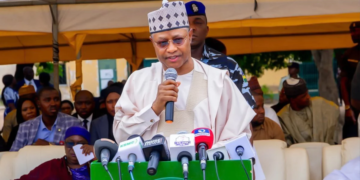
The recent formal notice issued by the Nigerian Broadcasting Commission (NBC) to broadcast stations across Nigeria – warning of stricter enforcement of the Nigeria Broadcasting Code, particularly regarding neutrality and the avoidance of personal opinion – has reopened a familiar debate in the country’s media space: how to balance professionalism with press freedom in a deeply polarised political environment.
In a statement released and widely circulated, the NBC noted a troubling pattern in which broadcast platforms are increasingly used in ways that undermine their core responsibility to inform the public with “accuracy, balance, and professionalism.”
The NBC is empowered by law to regulate Nigeria’s broadcasting sector, with responsibilities spanning licence issuance, content monitoring, and enforcement of the Nigeria Broadcasting Code. It sets operational standards for radio and television, promotes professionalism and balance, and safeguards public access to accurate and responsible information.
The NBC’s position is both understandable and defensible. In a country where political divisions are sharp and public trust in institutions remains fragile, the call for fairness, balance, and restraint in broadcasting is not misplaced. The airwaves are powerful, and when misused, they can inflame tensions, spread misinformation, and deepen existing fault lines. A regulatory reminder that broadcasters must avoid turning news into platforms for partisan advocacy speaks to the need for a more responsible media culture.
However, good intentions alone do not resolve the issue. The challenge lies in how such directives are defined, interpreted, and enforced. Broadcast journalism – particularly in the political sphere – is not limited to merely relaying events. It involves explaining policies, interrogating power, and helping citizens make sense of complex national issues. In this context, the line between “personal opinion” and informed analysis is often thin. A blanket discouragement of anything resembling opinion risks creating a climate of caution, where broadcasters may avoid critical engagement altogether for fear of sanctions.
Such an outcome would serve neither the media nor the public. Nigeria’s democracy depends not only on the free flow of information but also on meaningful interpretation of that information. When journalists and analysts are unable – or unwilling – to provide context, question authority, or highlight inconsistencies in governance, public discourse is diminished. What remains is a form of reporting that tells citizens what happened, but not why it matters.
There is no doubt that sections of the media have, at times, blurred the line between journalism and political alignment. Some broadcast platforms have been accused of promoting narrow interests under the guise of analysis. Addressing this problem is necessary. Yet, in doing so, the NBC must avoid a one-size-fits-all approach that treats all forms of commentary as suspect.
News reporting, editorial commentary, and analytical programming are not the same, and regulation must reflect these differences. A directive that fails to clearly distinguish between these categories risks stifling legitimate journalistic functions alongside the excesses it seeks to curb.
Beyond this is the question of fairness in an evolving media landscape. While the NBC regulates traditional broadcast outlets, a significant portion of political conversation has shifted to digital platforms—particularly Facebook, X, and TikTok—as well as messaging platforms like WhatsApp and Telegram, which often reinforce echo chambers. These spaces operate with far fewer restrictions, allowing a wide range of opinions – both informed and dangerous – to circulate freely.
We believe that tightening control over broadcasters without addressing the broader digital ecosystem may create an uneven playing field. Traditional media, bound by stricter rules, could become less competitive and less attractive to audiences seeking robust debate and diverse perspectives. At the same time, unregulated spaces may continue to thrive as the primary arenas for political expression, regardless of the quality or accuracy of the content they host.
This imbalance does not strengthen media responsibility; it merely shifts influence elsewhere. The NBC must therefore proceed with caution. Promoting professionalism in broadcasting is a legitimate and necessary goal, but it must not come at the expense of critical journalism. Neutrality should not be interpreted as silence, and responsibility should not become a pretext for excessive control.
What is required is a more nuanced approach – one that clearly defines the boundaries between news and opinion, encourages ethical standards without suppressing analysis, and recognises the realities of a rapidly changing media environment.
Ultimately, the strength of Nigeria’s democracy lies in its ability to accommodate not just information, but informed debate. The task before the NBC is to regulate in a way that protects both.
We’ve got the edge. Get real-time reports, breaking scoops, and exclusive angles delivered straight to your phone. Don’t settle for stale news. Join LEADERSHIP NEWS on WhatsApp for 24/7 updates →
Join Our WhatsApp Channel