On Sunday, 21 June 2026, in Maraban Jos, Igabi Local Government Area of Kaduna State, Nigeria witnessed one of the most barbaric acts of jungle justice in recent memory. Malama Ummulkhairi, a mother of five and an Islamic teacher, was brutally lynched and her body set ablaze by a mob.
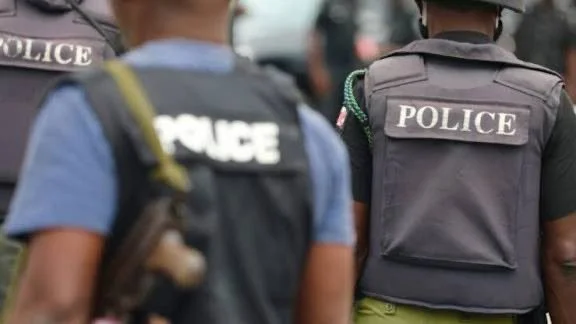
What makes this tragedy particularly damning is that it did not occur on the streets in the heat of a rumour. The victim was already in police custody. Officers had rescued her from an initial attack over unproven allegations of child theft. Yet a large mob later stormed the Maraban Jos Police Station, allegedly overpowered the officers, dragged her out, killed her, and burned her corpse in full public view. This was not a failure of intelligence. It was a catastrophic collapse of the state’s most basic responsibility: the protection of life, especially for those in its custody.
Eyewitness accounts paint an even more disturbing picture. According to multiple testimonies, the Divisional Police Officer (DPO) allegedly took the woman by the hand and led her toward the waiting mob despite desperate pleas from those present. One eyewitness reportedly cried out that handing her over would result in her death. Another woman who tried to intervene was warned that she, too, would be burned. These allegations directly contradict the official police narrative that the station was simply overpowered. The Kaduna State Police Command has condemned the act as “barbaric” and has arraigned 24 suspects, with more arrests expected. However, the alleged role of the DPO demands an immediate, transparent, and independent investigation. If proven, such conduct represents not mere negligence but active complicity in extrajudicial killing.
This incident is a textbook failure of the rule of law. Once suspects are taken into custody, the state assumes full responsibility for their safety. The Nigerian Police Force is not a neutral bystander. It is the custodian of the citizen’s right to life and fair hearing as guaranteed by the 1999 Constitution. When that custody is breached, and the suspect is delivered to the mob, the state does not merely fail — it becomes an accomplice. The widower, Muhammad Aliyu, described the heartbreaking moment his children asked for their mother. His 14-year-old son has been deeply traumatised, repeatedly speaking of wanting justice for his mother. The family’s pain is immeasurable. The Nigerian Police Force must bear full responsibility. It should immediately investigate the DPO and any other officers involved. If found culpable, they must face criminal prosecution, not internal disciplinary measures alone. The Force must also provide comprehensive compensation to Malama Ummulkhairi’s family — financial, educational support for the children, and psychological care. Anything less would be an insult to justice.
The broader implications are chilling. Mob justice thrives where institutions are weak or perceived as biased. In a country already battling governance fatigue, insecurity, hunger, and eroding trust, incidents like this accelerate the breakdown of social order. Citizens who see the police unable or unwilling to protect those in custody begin to take the law into their own hands. This creates a dangerous precedent. Today, it is an unproven allegation of child theft. Tomorrow, it could be political, ethnic, or religious accusations. When the state loses its monopoly on legitimate violence, anarchy beckons.
Philosophically, this tragedy exposes a profound moral failure. The social contract demands that the state protect the weak and uphold due process, even for the accused. When the police, the very embodiment of state authority, allegedly facilitate the delivery of a citizen to a bloodthirsty mob, it violates the basic covenant between government and the governed. The 1999 Constitution is clear: every person is entitled to the dignity of the human person and the right to life. These rights do not disappear at the gates of a police station. The failure to protect Malama Ummulkhairi is not just an operational lapse — it is a moral indictment of how far some institutions have drifted from their constitutional mandate.
The Muslim Lawyers Association of Nigeria (MULAN) has rightly condemned the killing and called for a thorough investigation of the security personnel involved. Their demand is not an attack on the police but a defence of the rule of law. Every Nigerian, regardless of the allegation against them, deserves protection while in custody. Failure to enforce this principle undermines the legitimacy of the entire justice system.
The Kaduna State Government and the Nigeria Police Force must act decisively. A full, independent investigation must be concluded swiftly. The DPO and any complicit officers must face criminal charges if evidence warrants it. The family must receive substantial compensation and support. Beyond this case, the police must review station security protocols to prevent mobs from overpowering officers. Training on crowd control, use of non-lethal force, and the absolute duty to protect detainees must be reinforced.
Nigeria cannot continue to tolerate jungle justice. The blood of Malama Ummulkhairi cries out for accountability. Her death must not become another statistic in our long catalogue of mob violence. It must become the moment when the state recommits itself to the sacred duty of protecting every citizen, especially those in its care. Anything less would signal that the rule of law is negotiable — and that is a price no nation can afford to pay.
We’ve got the edge. Get real-time reports, breaking scoops, and exclusive angles delivered straight to your phone. Don’t settle for stale news. Join LEADERSHIP NEWS on WhatsApp for 24/7 updates →
Join Our WhatsApp Channel