The Nigerian Communications Commission (NCC) has said that although fibre infrastructure now extends across all 36 states and the Federal Capital Territory, the absence of a fair, transparent and sustainable wholesale fibre market is preventing operators, businesses and consumers from fully benefiting from the country’s expanding broadband networks.
The commission warned that unless access to fibre infrastructure becomes more competitive and cost-reflective, Nigeria’s ambitions to deepen broadband penetration, accelerate digital transformation and expand Fibre-to-the-Home (FTTH) adoption could remain constrained despite significant investments in network infrastructure.
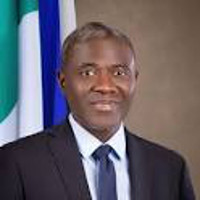
Executive Vice Chairman and Chief Executive Officer of the NCC, Dr Aminu Maida, made the remarks in Lagos while speaking at an industry forum on fibre infrastructure, where he advocated the development of a wholesale fibre market that would encourage infrastructure sharing, improve competition and lower deployment costs.
Maida said Nigeria’s challenge was no longer the availability of fibre infrastructure but ensuring equitable and affordable access to the existing networks.
“Nigeria has fibre across the states, but what we lack is a fair access market. The challenge today is not necessarily the absence of fibre, but ensuring that everyone can access that fibre on transparent, fair and sustainable commercial terms.”
According to him, a competitive wholesale fibre market would enable telecommunications operators, Internet Service Providers (ISPs), and other digital service providers to lease existing infrastructure rather than duplicating investments, ultimately reducing costs and accelerating broadband deployment nationwide.
The NCC boss noted that infrastructure sharing would improve efficiency, expand digital inclusion and make high-speed internet services more affordable for homes and businesses.
“We need a market where infrastructure owners can recover their investments while access seekers can obtain capacity at fair, transparent and cost-based prices. That balance is critical for sustainable growth.”
However, despite Nigeria’s growing internet subscriber base, fixed broadband penetration remains relatively low. The commission noted that only about 265,000 homes are currently connected through Fibre-to-the-Home services, highlighting a significant gap between national fibre deployment and last-mile connectivity to households.
Maida stressed that strengthening wholesale fibre access would support emerging technologies, including artificial intelligence, cloud computing, fintech services, smart cities and digital public infrastructure, all of which require reliable high-capacity broadband connectivity.
He further called on infrastructure companies, network operators and other industry stakeholders to collaborate to establish a pricing framework that is transparent, commercially sustainable and capable of attracting fresh investment in broadband infrastructure.
“Our objective is to create a market that encourages investment while ensuring that infrastructure is efficiently utilised for the benefit of consumers and the wider economy.”
The commission maintained that developing a robust wholesale fibre ecosystem would be instrumental in achieving Nigeria’s digital economy targets by improving broadband affordability, extending connectivity to underserved communities and supporting the country’s growing demand for high-speed internet services.
We’ve got the edge. Get real-time reports, breaking scoops, and exclusive angles delivered straight to your phone. Don’t settle for stale news. Join LEADERSHIP NEWS on WhatsApp for 24/7 updates →
Join Our WhatsApp Channel