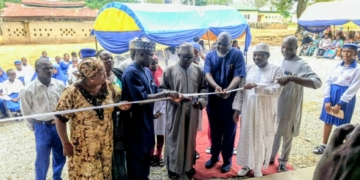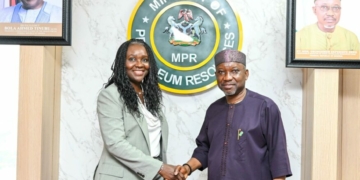

Nigeria LNG Limited (NLNG) and the Nigerian Content Development and Monitoring Board (NCDMB) have broken ground on a Research and Innovation Centre for Computer and Electrical Engineering (RICCEE) at Rivers State University, Port Harcourt, a joint project aimed at boosting the university’s technology training, research and industry readiness.
The facility, which NLNG calls its largest institutional human-capacity investment so far, is intended to deepen Rivers State University’s ability to produce industry-ready engineers and generate locally developed solutions for Nigeria’s energy and industrial sectors.
RICCEE will host a professorial chair and act as a research-and-development hub where academics and industry experts collaborate on projects with commercial potential.
At the ceremony, NLNG managing director Adeleye Falade—represented by Sophia Horsfall, NLNG’s general manager for external relations and sustainable development—said the centre underscores the company’s commitment to sustainable human capital development.
“RICCEE will bridge the gap between classroom knowledge and practical industry needs by creating hands-on training, joint research and commercialisation pathways,” he said.
NCDMB executive secretary Felix Ogbe, represented by the board’s director of capacity building, Abayomi Bamidele, described the groundbreaking as a milestone for the board’s human capital development institutional strengthening programme.
He urged the centre to become a “hub of discovery, creativity and enterprise” where students and researchers tackle real-world problems and industry finds dependable research partners.
Rivers State University cice-chancellor Prof. Isaac Zeb-Obipi said the project supports the university’s 2026–2030 strategic plan to expand research collaboration, innovation and entrepreneurship. He described RICCEE as a potential world-class facility where academic ideas can be converted into usable products, services and technologies.
Facilities and focus areas
Site and scale: The centre will occupy about 9,336 square metres on the university campus.
Laboratories: Planned labs include Electronics and Signal Processing, Robotics and Embedded Systems, Software Engineering, and Digital Forensics and Cybersecurity.
Support spaces: The facility will include offices, equipment storage and technical administration areas to support research and teaching.
Sustainability: The design incorporates solar-ready infrastructure, energy-efficient lighting and other measures to lower operating costs and improve reliability for research activities.
Expected outcomes
RICCEE is part of NCDMB’s broader effort to strengthen tertiary institutions through upgraded infrastructure, modern research facilities and industry-aligned training. NLNG and NCDMB expect the hub to produce graduates with practical skills, stimulate indigenous innovation for Nigeria’s industrial priorities, and generate research that can be commercialised across the energy and technology sectors.
We’ve got the edge. Get real-time reports, breaking scoops, and exclusive angles delivered straight to your phone. Don’t settle for stale news. Join LEADERSHIP NEWS on WhatsApp for 24/7 updates →
Join Our WhatsApp Channel