
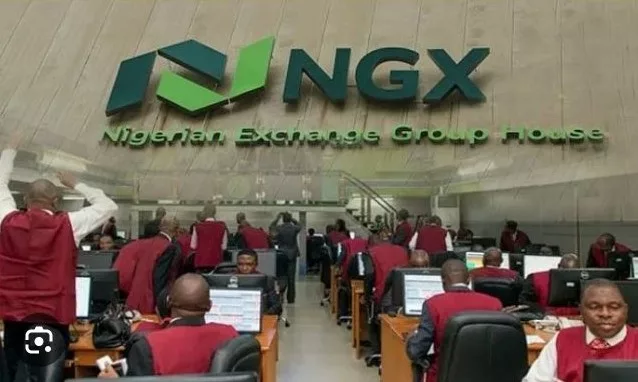
Capital market analysts have expressed support for the Nigerian Exchange (NGX)’s newly introduced volume-based trade thresholds, saying the reform will reduce price volatility in premium stocks and strengthen market stability.
The analysts said the revised framework would limit the influence of low-volume transactions on share prices, improve liquidity management, and enhance investor confidence as participation in the Nigerian capital market continues to grow.
The reform follows the Securities and Exchange Commission (SEC) ‘s approval on June 16, 2026, of a revised tiered volume threshold governing share price movements on the NGX.
Under the new pricing methodology, the Exchange has replaced the uniform 100,000-unit threshold with a tiered structure linked to the market value of individual stocks.
According to the NGX, stocks trading at N1,000 and above will now require a minimum of 10,000 shares to be traded before their prices can move. Equities priced between N500 and below N1,000 will require at least 50,000 shares to trigger price adjustments, while stocks trading below N500 will continue to require a minimum of 100,000 shares.
The development represents a major shift in the Exchange’s price discovery mechanism and is expected to reshape trading strategies, particularly in highly priced equities where relatively small transactions had historically been sufficient to influence prices.
Market analysts noted that the new thresholds would help moderate sharp price swings in premium stocks by ensuring price movements are supported by more meaningful trading volume.
Head of Research at GTI Capital Limited, Abiodun Ogunniyi, described the reform as a positive development that addresses longstanding concerns among market operators.
According to him, one of the major challenges facing high-priced stocks under the previous framework was the difficulty of achieving price movements due to the significant transaction values required.
Ogunniyi said the revised structure would make trading in premium equities more efficient while encouraging greater retail investor participation.
He further argued that many retail investors had previously avoided high-priced stocks due to perceived barriers to entry, adding that the new framework could broaden investor participation in such equities.
Beyond the pricing methodology, Ogunniyi urged regulators to continue reviewing free-float requirements, noting that inadequate market liquidity remains one of the major challenges confronting the Nigerian capital market.
Managing director of Globalview Capital Limited, Aruna Kebira, described the reform as a return to a framework previously adopted by the Exchange.
“This was how it used to be. High-priced stocks required 10,000 units, medium-priced stocks required 50,000 units, while lower-priced stocks required 100,000 units. So, in many ways, the Exchange is returning to a framework that operators are already familiar with,” Kebira said.
He observed that the Nigerian market has evolved significantly over the years, with several listed companies now commanding market capitalisation running into trillions of naira.
“We now have stocks worth trillions of naira in market capitalisation. Requiring the same volume threshold across all categories no longer reflects market realities,” he explained.
Kebira dismissed suggestions that the Exchange was merely responding to market pressure, stressing that regulatory frameworks must evolve in line with changing market conditions and growing sophistication.
The proposed amendments form part of the changes to Part XI of the NGX Trading License Holders’ Rules, which deal with pricing methodology and price movements.
The framework introduces a three-tier classification system for equities based on share prices and prescribes corresponding minimum trading quantities required before market prices can adjust.
Analysts believe the reform will ultimately enhance market integrity, improve price discovery, and reduce excessive volatility in premium stocks, thereby fostering a more efficient and resilient capital market.
We’ve got the edge. Get real-time reports, breaking scoops, and exclusive angles delivered straight to your phone. Don’t settle for stale news. Join LEADERSHIP NEWS on WhatsApp for 24/7 updates →
Join Our WhatsApp Channel